

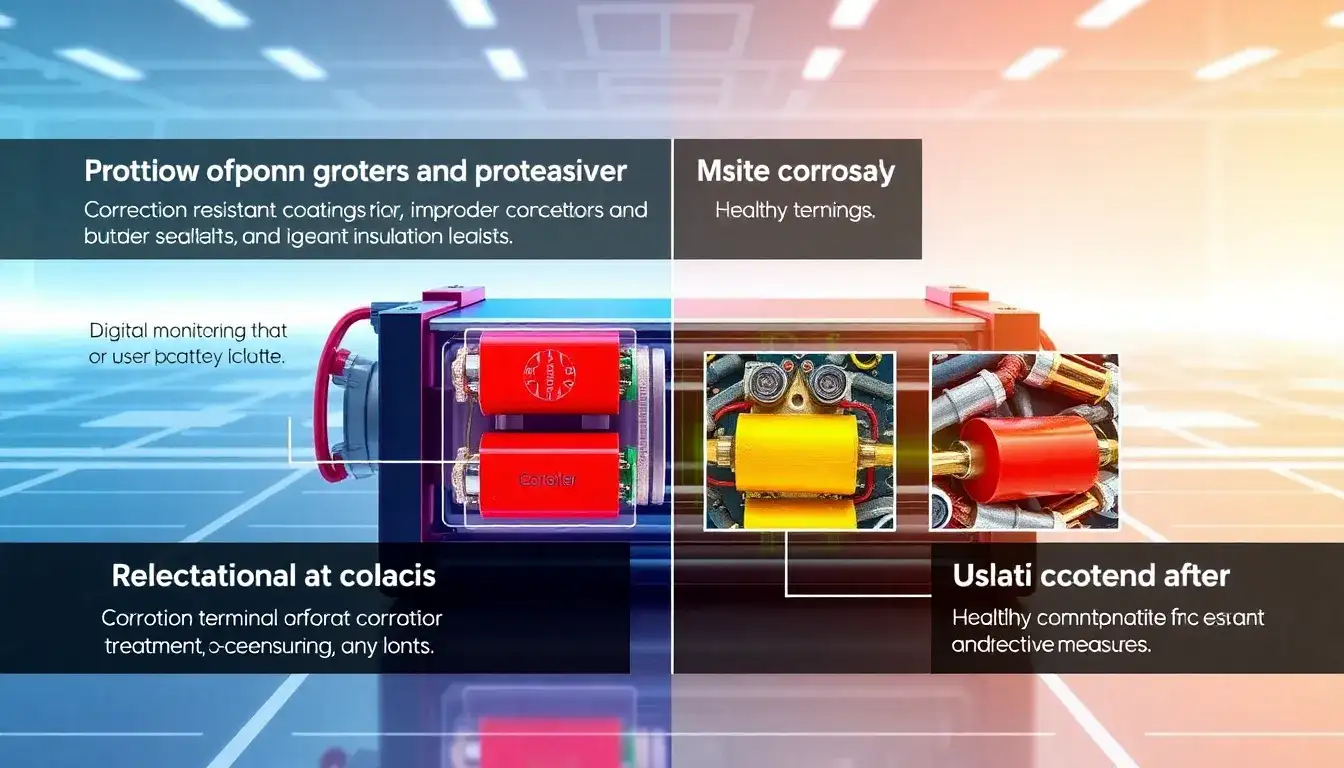
Preventing corrosion on lithium-ion battery terminals is less common than with lead-acid batteries since lithium-ion batteries do not contain corrosive materials like sulfuric acid. However, moisture and environmental factors can still cause issues. Here are some strategies to minimize potential problems:
Preventing Corrosion on Lithium-Ion Battery Terminals
- Maintain Cleanliness: Ensure the terminals and surrounding areas are free from dirt and debris. Use a soft cloth or a dry brush to clean them.
- Control Moisture: Keep the battery terminals dry. If moisture is present, use a dry cloth to wipe them clean.
- Use Protective Coatings: Apply a thin layer of non-conductive materials or anti-corrosion sprays that are compatible with lithium-ion batteries. However, ensure that these materials do not interfere with the electrical connection.
- Regular Inspection: Periodically check for signs of wear or damage. Early detection can prevent serious issues.
- Proper Storage: Store unused lithium-ion batteries in a cool, dry place. Avoid extreme temperatures or humidity.
- Environmental Factors: If you live in a highly polluted or humid environment, consider using protective covers or encasings for the terminals when not in use.
Lithium-ion batteries are generally more resistant to corrosion than lead-acid batteries due to their sealed design. However, maintaining a clean and dry environment is crucial for ensuring optimal performance and longevity.
Original article by NenPower, If reposted, please credit the source: https://nenpower.com/blog/how-can-i-prevent-corrosion-on-lithium-ion-battery-terminals/

