

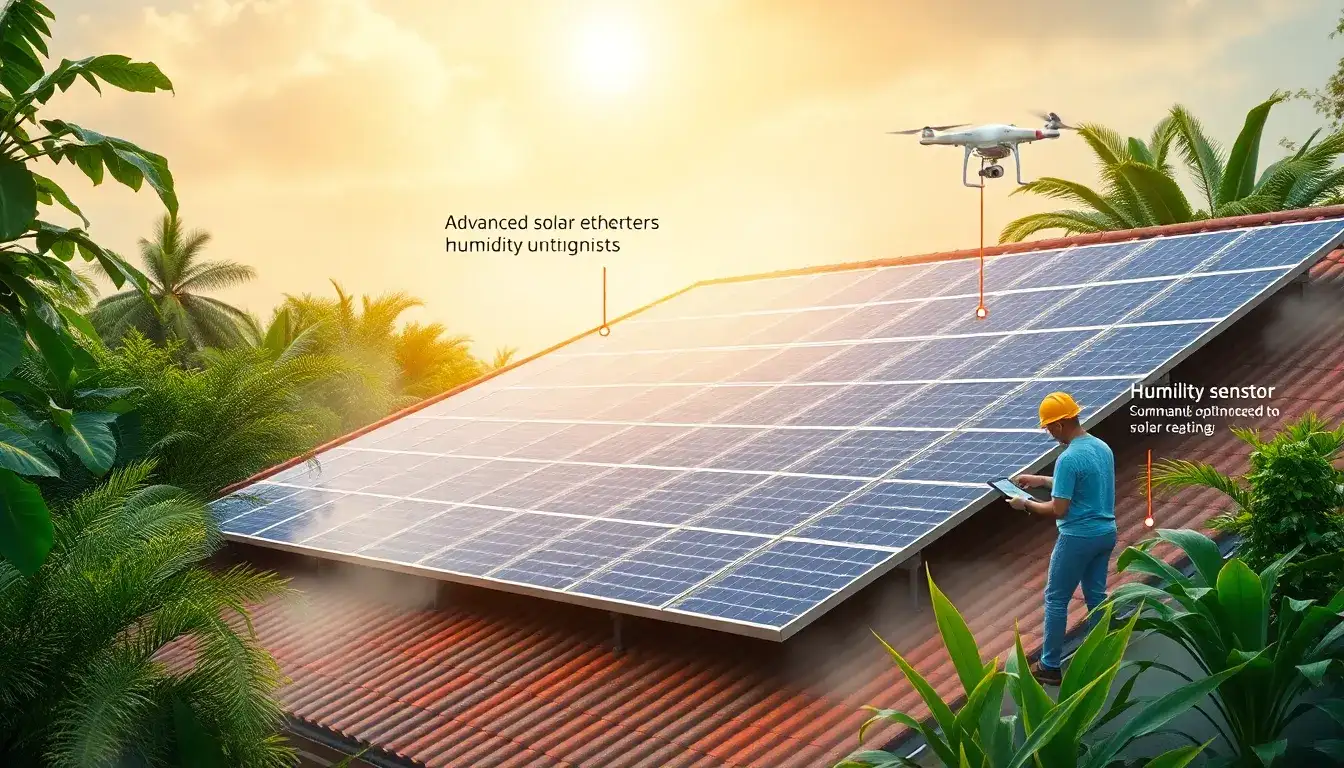
To mitigate humidity’s effects on solar panels, implement these strategies:
1. Choose humidity-resistant solar panels
Opt for panels with enhanced sealing, corrosion-resistant materials (e.g., anodized aluminum frames), and hydrophobic coatings to repel moisture and prevent internal damage.
2. Improve airflow and positioning
Install panels with adequate spacing and optimal tilt angles to reduce moisture buildup and enhance self-cleaning during rain. Avoid shading-prone areas to minimize dew retention.
3. Regular cleaning and maintenance
Clean panels with a soft brush and soapy water to remove mold, algae, or dust layers caused by humidity. Frequency should increase in humid/dusty climates.
4. Apply advanced coatings
Use anti-reflective and hydrophobic coatings to improve light absorption and prevent water/dirt accumulation.
5. Monitor environmental conditions
Install humidity sensors to track moisture levels and deploy automated cleaning systems or desiccants in enclosures for moisture control.
6. Utilize emerging technologies
Consider bifacial panels (capture light from both sides) or perovskite solar cells, which maintain efficiency in humid conditions.
7. Optimize structural components
Ensure stainless steel fasteners and proper insulation to prevent corrosion and moisture intrusion.
8. Leverage weather patterns
Design systems to benefit from rain-cleaning effects and avoid prolonged dew exposure through morning tilt adjustments.
For immediate action, prioritize cleaning and airflow improvements, while long-term solutions should focus on panel selection and hydrophobic coatings.
Original article by NenPower, If reposted, please credit the source: https://nenpower.com/blog/how-can-i-mitigate-the-effects-of-humidity-on-my-solar-panels/

