

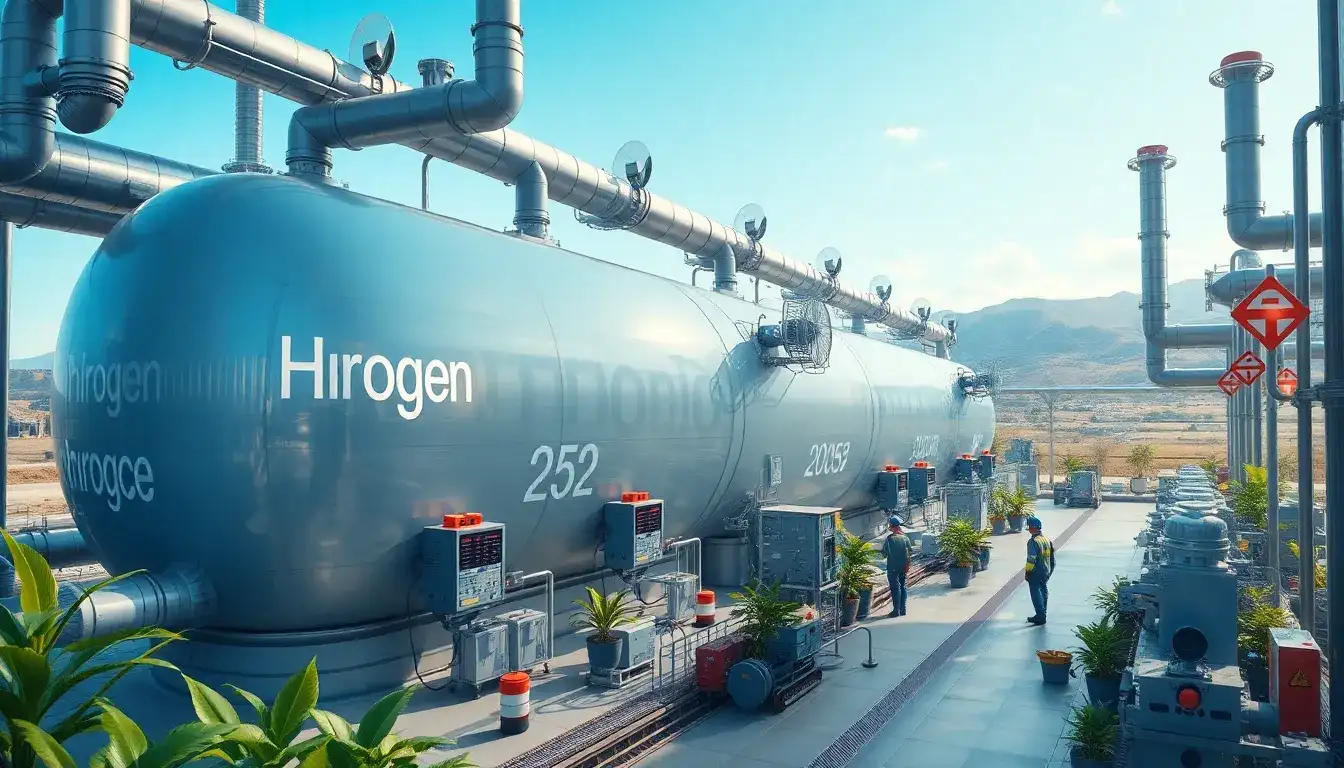
Hydrogen storage facilities ensure proper ventilation through a combination of passive and active design features tailored to the unique properties of hydrogen gas.
Key Ventilation Principles for Hydrogen Storage
- Hydrogen Buoyancy: Hydrogen is much lighter than air, so unlike heavier fuels (e.g., gasoline vapors, propane) that accumulate near the floor, hydrogen tends to rise and accumulate near ceilings, roofs, or high points in a facility. Proper ventilation must account for this characteristic to prevent dangerous gas pockets.
- Ventilation Objectives: The main goal is to prevent the formation of flammable hydrogen-air mixtures by dissipating any leaked hydrogen quickly and preventing accumulation. Adequate ventilation reduces the risk that hydrogen concentration will reach its lower flammable limit (LFL), which is about 4% by volume (with design aiming for dilution below approximately 1% for safety).
Ventilation Strategies
- Passive Ventilation:
- Incorporates roof or eave vents to allow hydrogen to escape naturally due to its buoyancy and airflow.
- Inlet openings should be placed low on exterior walls to allow fresh air entry.
- Outlet vents should be at high points, such as near the ceiling or roof, to effectively release hydrogen.
- Outdoor installations benefit from natural ventilation and are ideal where feasible.
- Active (Mechanical) Ventilation:
- Mechanical exhaust ventilation can be required for indoor storage areas, with ventilation rates specified to ensure sufficient air exchange. For example, a typical guideline is at least 1 cubic foot per minute (cfm) per square foot of floor area over the storage zone.
- Systems should operate continuously or be designed with appropriate controls to activate if leaks are detected.
- Manual shutoff controls should be accessible at safe locations outside the storage area.
Design Considerations
- Ventilation system design must consider the facility’s specific configuration, including ceiling height, roof shape, and potential leak sources.
- Computational fluid dynamics (CFD) modeling is often used by experts to optimize ventilation layout and effectiveness.
- Ventilation alone may not be sufficient for high-pressure hydrogen storage; additional mitigation measures such as leak detection, gas monitoring, and explosion prevention systems should be integrated.
Summary Table of Hydrogen Ventilation Features
| Feature | Description |
|---|---|
| Gas Characteristics | Hydrogen is lighter than air, tends to accumulate high |
| Ventilation Type | Passive vents (roof/eave) + active mechanical exhaust |
| Vent Placement | Inlets low on exterior walls, outlets high near ceiling/roof |
| Ventilation Rate | Minimum ~1 cfm per sq ft floor area (mechanical ventilation) |
| System Operation | Continuous ventilation preferred; manual shutoff required |
| Additional Safety Measures | Leak detection, CFD design, explosion mitigation |
By carefully incorporating these ventilation principles and system designs, hydrogen storage facilities can effectively minimize the risk of hydrogen accumulation and ensure safe handling of this flammable gas.
Original article by NenPower, If reposted, please credit the source: https://nenpower.com/blog/how-can-hydrogen-storage-facilities-ensure-proper-ventilation/

