

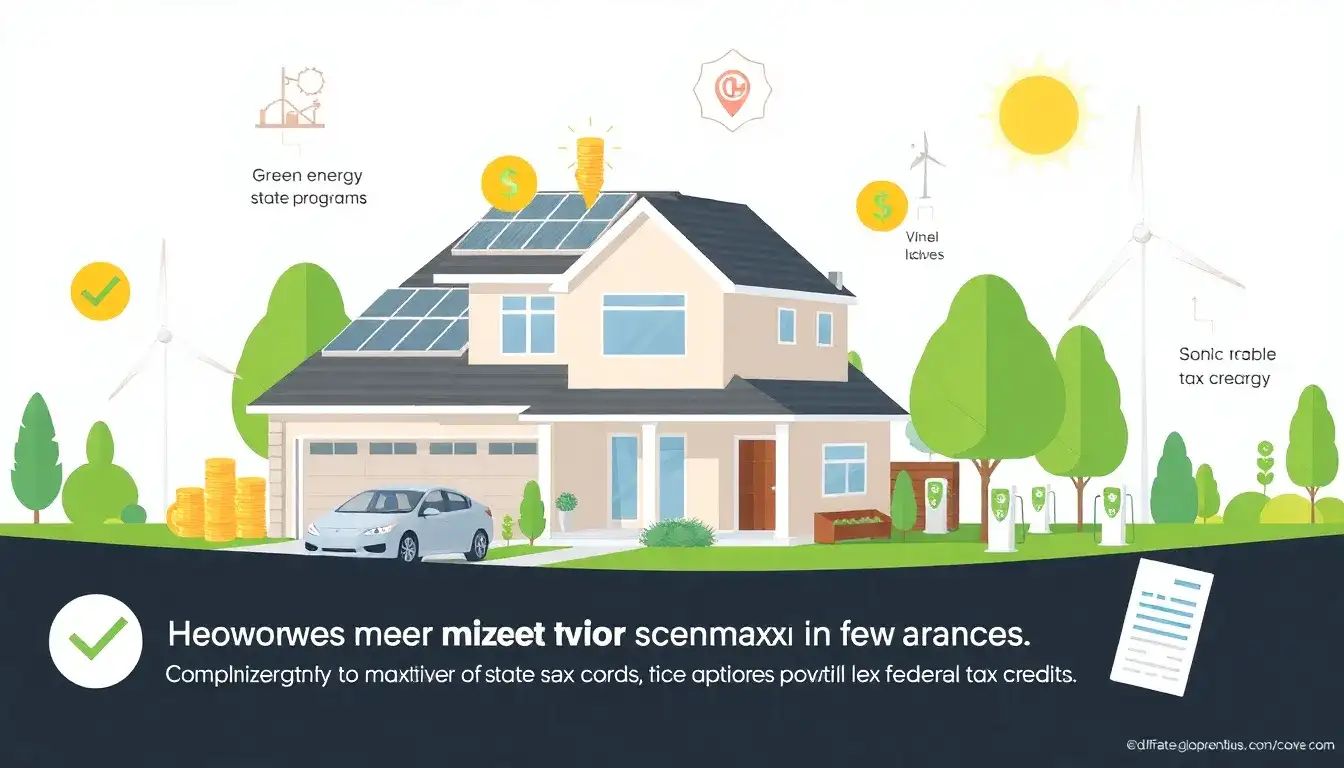
Homeowners can maximize their savings by strategically combining state incentives with federal tax credits for energy-efficient home improvements. Here’s a step-by-step guide on how to do this effectively:
Understanding Federal Tax Credits
- Eligibility and Limits: The Energy Efficient Home Improvement Credit offers up to $3,200 annually for qualifying improvements like exterior doors, windows, heat pumps, and biomass stoves. This includes a maximum of $1,200 for general energy-efficient improvements and an additional $2,000 for heat pumps and biomass systems.
- Claiming Credits: Use Form 5695 to claim these credits on your federal tax return. The credits are nonrefundable, meaning they can only reduce your tax liability for the year, not generate a refund if you owe less in taxes than the credit amount.
Combining with State Incentives
- Identify State Incentives: Research available state and local rebates or incentives for energy-efficient improvements. These can include cash rebates, property tax reductions, or other benefits specific to your state.
- Eligibility for Both: Check if your state incentives apply to the same improvements that qualify for federal tax credits. Some state incentives might be specifically labeled as rebates and could affect your federal credit eligibility.
- Calculating Total Savings: Calculate your total savings by adding any state incentives to the federal tax credits you qualify for. Ensure that any rebates from parties connected to the sale (e.g., manufacturers) are properly accounted for in your federal credit calculations.
- Maximizing Annual Claims: Spread your improvements over several years to maximize annual federal credits while still benefiting from state incentives. This strategy helps ensure you don’t exceed annual federal limits while still capturing available state benefits.
- Consult a Tax Professional: Given the complexity of combining federal and state incentives, it’s advisable to consult with a tax professional to ensure compliance and maximize your savings.
By following these steps and understanding both federal and state opportunities, homeowners can significantly reduce the cost of energy-efficient improvements while enhancing their home’s value and efficiency.
Original article by NenPower, If reposted, please credit the source: https://nenpower.com/blog/how-can-homeowners-maximize-their-savings-by-combining-state-incentives-with-federal-tax-credits/

