

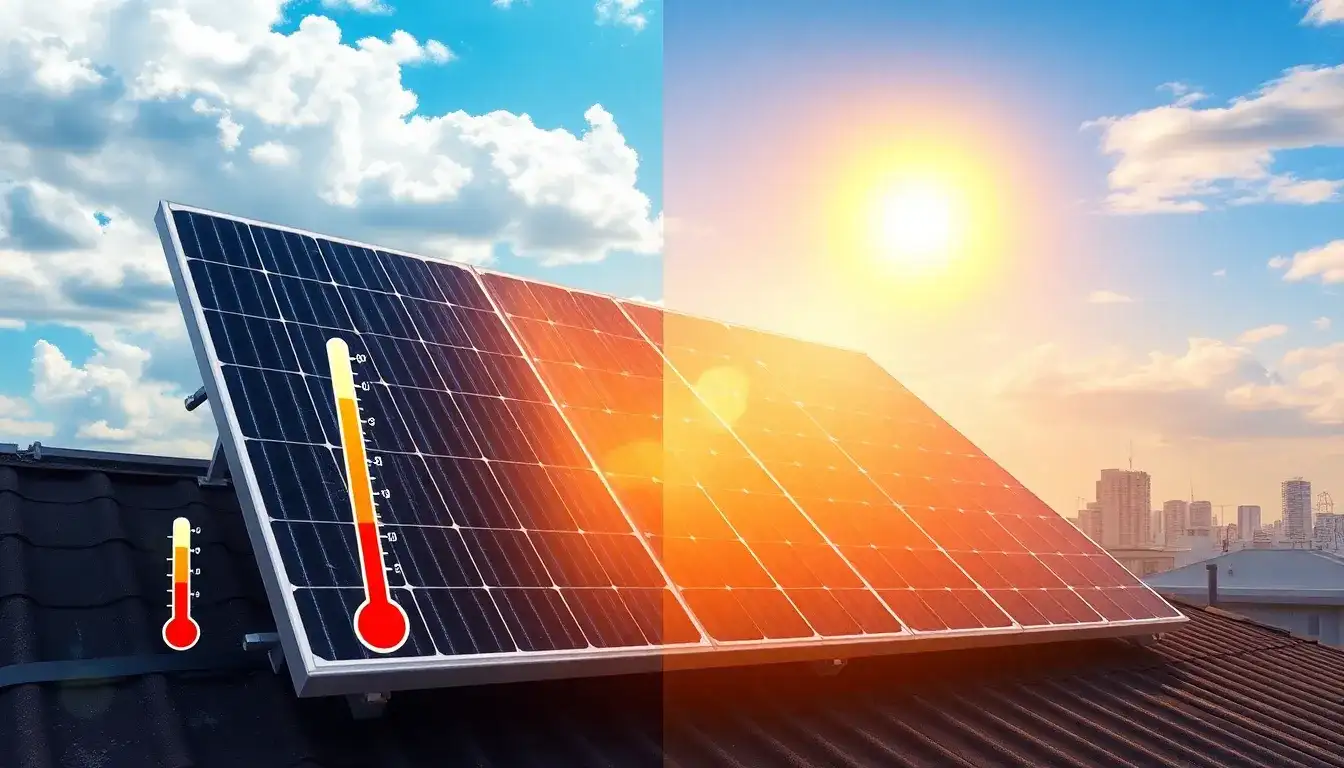
Impact of High Temperatures on Solar Panels and Their Warranty
- Efficiency Reduction and Power Output Decline
Solar panels are tested and rated at 25°C (77°F), and their efficiency decreases with every degree Celsius rise above this temperature due to increased resistance in photovoltaic cells. Typically, panels lose about 0.2% to 0.5% efficiency per degree Celsius above 25°C. While this reduces energy output, the effect is usually minimal and does not directly void warranties if within normal operating conditions. - Thermal Stress and Long-Term Degradation
Prolonged exposure to high heat can cause thermal expansion and contraction of solar panel materials, leading to microcracks, solder joint fatigue, and degradation of internal components over time. This can affect the long-term reliability and performance of the panels. - Warranty Coverage on Product and Power Output
Most solar panel warranties come in two forms:- Product warranty (typically about 10 years) covers defects or failures due to manufacturing or materials.
- Power output warranty (usually 25 years) guarantees the panels will produce a certain percentage (often 90% or more) of their rated capacity by the end of the term.
High temperatures alone, within the normal operating limits specified by manufacturers (e.g., panels can withstand up to approximately 65°C or 149°F surface temperature), generally do not void warranties. However, if heat causes physical damage due to abnormal conditions outside design specs, such as extreme heatwaves causing material failure, warranty claims may be affected.
- Conditions That May Void Warranty
Extreme heat-induced damage outside typical climate conditions, or secondary damage caused by thermal expansion (such as cracked glass or broken seals), might not be covered if deemed as misuse or improper installation. Additionally, damage from associated extreme weather events (hail, flooding) is usually excluded from manufacturer warranties and may fall under homeowner’s insurance instead. - Choosing Durable Panels and Proper Installation
Selecting Tier 1 quality solar panels with low temperature coefficients and proven heat resistance helps ensure better warranty performance and longevity in hot climates. Proper installation also mitigates risks linked to thermal stress and ensures warranty compliance.
Summary Table: High Temperatures and Solar Panel Warranty Impact
| Aspect | Effect of High Temperature | Warranty Impact |
|---|---|---|
| Efficiency | Slight performance drop per degree above 25°C | Normal, covered under power output warranty |
| Thermal stress (expansion/contraction) | Potential microcracks and component wear over time | May affect long-term warranty if damage occurs |
| Maximum operating temperature | Panels tolerate up to ~65°C surface temperature | Warranty valid if within manufacturer specs |
| Extreme or abnormal heat damage | Material failure or cracks | Possibly excluded, depends on cause and proof |
| Associated weather damage | Hail, flooding, wind damage | Usually excluded, covered by homeowner insurance |
| Panel quality/temperature coefficient | Lower coefficient panels perform better in heat | Higher warranty reliability with Tier 1 brands |
Conclusion
High temperatures reduce solar panel efficiency slightly and can contribute to long-term degradation through thermal stress. However, solar panels are designed to withstand typical high temperatures, and the standard product and power output warranties generally account for this operating range. Warranty claims related to heat are unlikely to be denied if damage is within normal environmental exposure. Extreme heat damage beyond design limits or caused by secondary weather events may not be covered under warranty and might require insurance claims. Choosing high-quality panels and professional installation is key to maintaining warranty validity in hot climates.
Original article by NenPower, If reposted, please credit the source: https://nenpower.com/blog/how-can-high-temperatures-impact-the-warranty-of-solar-panels/

