

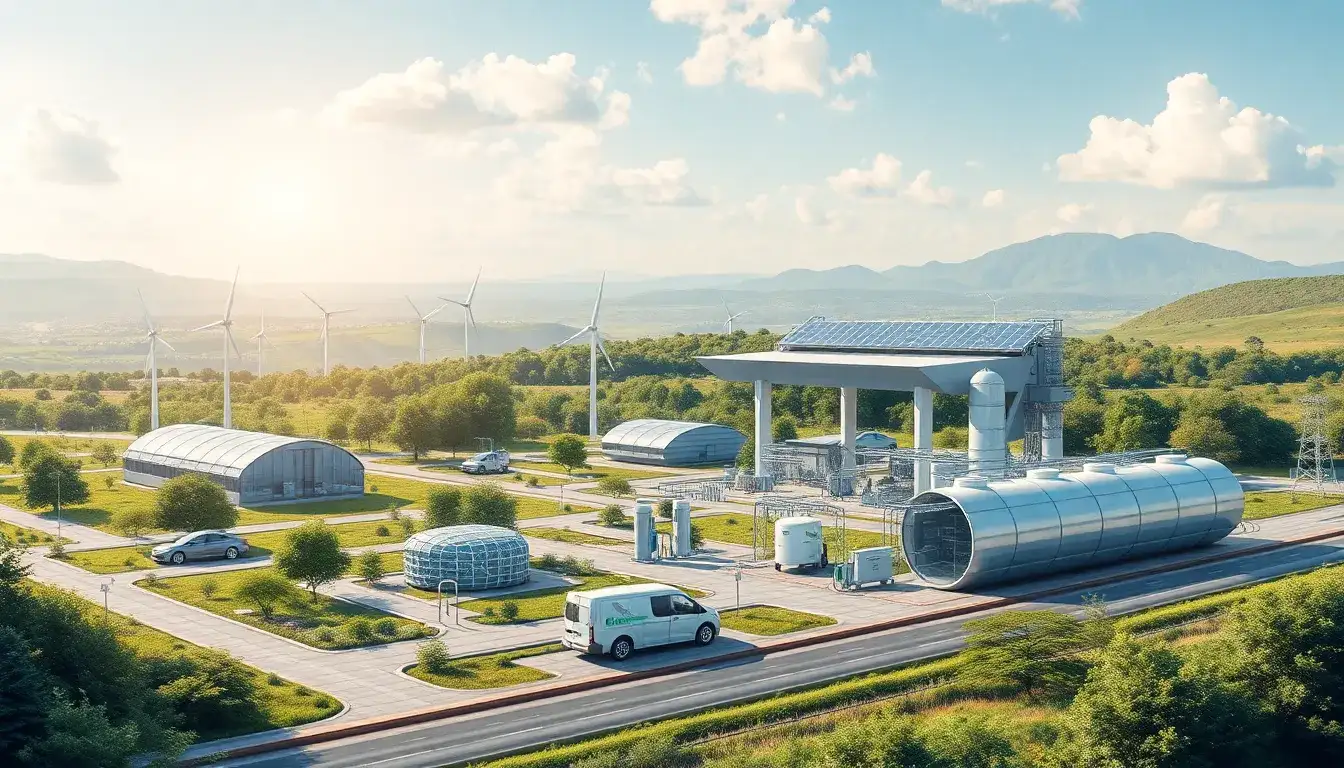
Green hydrogen can significantly contribute to achieving a carbon-neutral energy grid through several key mechanisms:
Decarbonizing Electricity Generation
Green hydrogen is produced by electrolysis of water using electricity generated exclusively from renewable sources such as wind, solar, or hydroelectric power, resulting in zero direct carbon emissions during production. Once produced, green hydrogen can be used as a clean fuel to generate electricity, either via fuel cells or hydrogen-adapted combustion turbines. This provides a pathway to replace fossil fuel-based baseload power sources like coal and natural gas, which currently contribute heavily to carbon emissions. By enabling electricity generation without CO₂ emissions, green hydrogen supports a fully decarbonized power grid.
Addressing Renewable Intermittency and Grid Stability
One of the main challenges of renewable energy like wind and solar is their intermittency—the sun doesn’t always shine, and the wind doesn’t always blow. Green hydrogen acts as an energy storage medium, capturing surplus renewable power when production is high and storing it as hydrogen. This stored hydrogen can then be converted back to electricity during periods of low renewable generation, effectively balancing supply and demand on the grid to maintain reliability and stability. This bridging capability allows for higher penetration of renewables without risking blackouts or reliance on fossil-fuel backup.
Enabling Sector Coupling and Wider Decarbonization
Beyond electricity generation, green hydrogen can decarbonize hard-to-abate sectors that are part of overall grid and energy systems, such as industrial processes (e.g., fertilizer manufacturing) and heavy transportation (e.g., hydrogen-fueled buses). This integration supports a broader carbon-neutral energy ecosystem, leveraging the grid’s renewable electricity to produce hydrogen that powers multiple sectors.
Summary Table
| Contribution | Description |
|---|---|
| Zero-Emission Power Generation | Hydrogen produced from renewables fuels electricity generation with no CO₂ emissions, replacing fossil fuels. |
| Energy Storage & Grid Balancing | Acts as a long-duration energy storage medium, mitigating the intermittency of solar and wind, and ensuring grid stability. |
| Industrial & Transportation Decarbonization | Powers sectors difficult to electrify directly, further reducing overall carbon footprint. |
In conclusion, green hydrogen is a versatile and clean energy vector that supports a carbon-neutral energy grid by enabling zero-carbon electricity generation, addressing renewable intermittency, and expanding decarbonization beyond the power sector, thus playing a pivotal role in the transition to a sustainable energy future.
Original article by NenPower, If reposted, please credit the source: https://nenpower.com/blog/how-can-green-hydrogen-contribute-to-achieving-a-carbon-neutral-energy-grid/

