

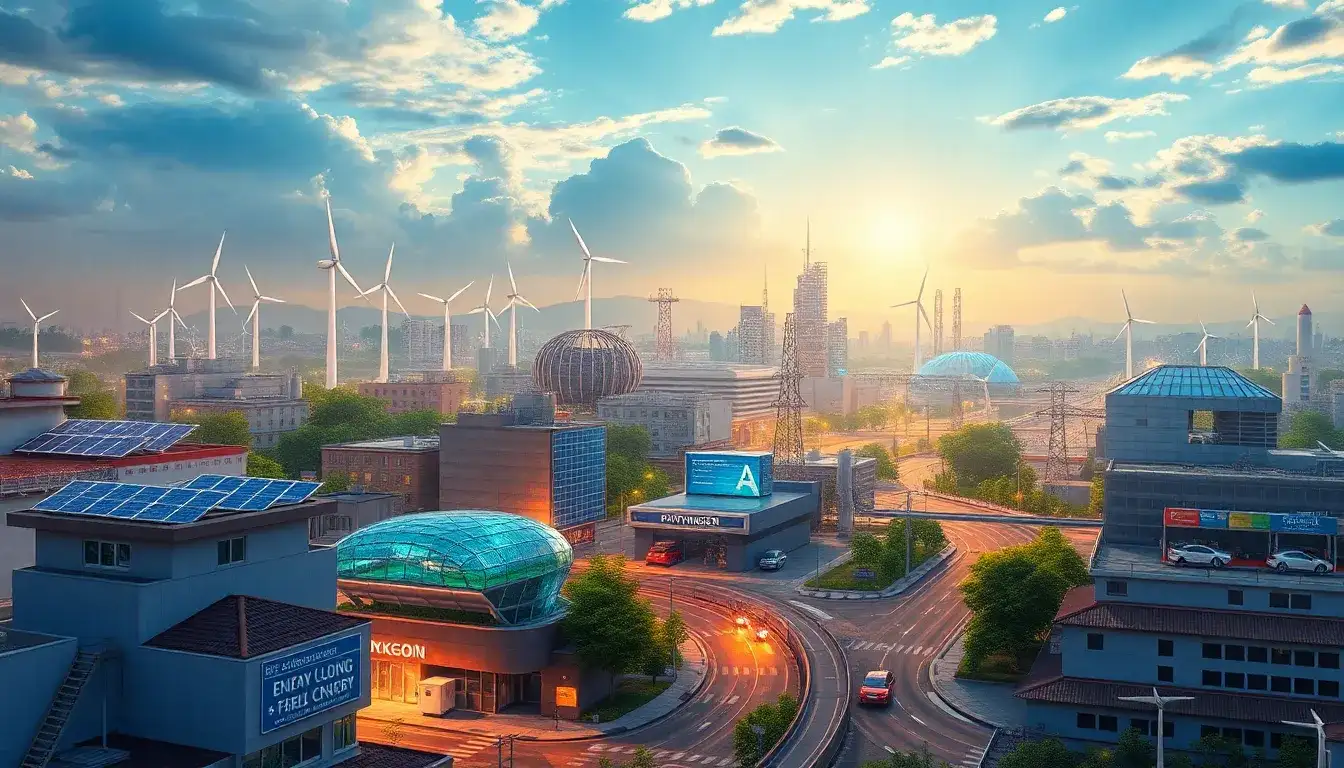
Green hydrogen can be integrated into existing energy infrastructure through a combination of strategic production, storage, distribution, and policy-driven measures. The integration focuses on adapting and expanding current systems while leveraging the unique benefits of green hydrogen, which is produced via renewable energy-powered electrolysis. Here are the key aspects of integration:
Production Integration
- Green hydrogen is generated by splitting water using electricity from renewable sources like wind and solar (electrolysis). Efficient integration requires coupling electrolyzers with renewable energy systems and grid modernization to provide clean, reliable power.
- Scaling up electrolyzer capacity from current megawatt levels to terawatts by 2050 is essential to meet demand and decarbonization targets.
Storage and Distribution
- Existing hydrogen infrastructure is limited, so developing advanced storage systems and resilient distribution networks is vital. This includes pipelines, tankers, refueling stations, and bunkering facilities adapted or newly built to handle hydrogen’s physical and chemical properties.
- Some natural gas infrastructure can potentially be repurposed or blended with hydrogen, though this poses technical challenges and requires careful design considerations.
Sectoral Integration
- Green hydrogen offers advantages for sectors difficult to decarbonize with electricity alone, such as long-haul trucking, aviation, shipping, and heavy industry.
- It also complements smart grids by providing long-term energy storage and electricity generation during periods of peak demand.
Policy and Investment Framework
- Ensuring green hydrogen integration demands substantial investment in infrastructure, research, and development. Global spending on clean hydrogen infrastructure is expected to ramp significantly by 2050, reaching up to USD 170 billion annually.
- Governments worldwide are supporting green hydrogen through incentives, research funding, and regulatory mandates to accelerate adoption and infrastructure buildout.
Summary Table of Integration Aspects
| Aspect | Key Actions | Challenges | Benefits |
|---|---|---|---|
| Production | Scale electrolyzers; integrate renewables | Energy intensity; grid adaptation | Zero-emission hydrogen production |
| Storage & Distribution | Develop pipelines, tankers, storage | Hydrogen’s low volumetric density; infrastructure scarcity | Enables broad hydrogen use and transport |
| Sectoral Use | Replace fossil fuels in transport, industry | Retrofitting existing equipment | Decarbonizes hard-to-electrify sectors |
| Policy & Investment | Funding, incentives, regulations | Coordinating multi-sector efforts | Accelerates market growth |
In conclusion, integrating green hydrogen into existing energy infrastructure involves enhancing renewable energy-powered production, expanding hydrogen-specific transport and storage networks, targeting sectors where it has clear advantages, and supporting the transition with robust policy and investment frameworks. These steps collectively enable green hydrogen to become a scalable, low-carbon energy vector within the current energy landscape.
Original article by NenPower, If reposted, please credit the source: https://nenpower.com/blog/how-can-green-hydrogen-be-integrated-into-existing-energy-infrastructure/

