

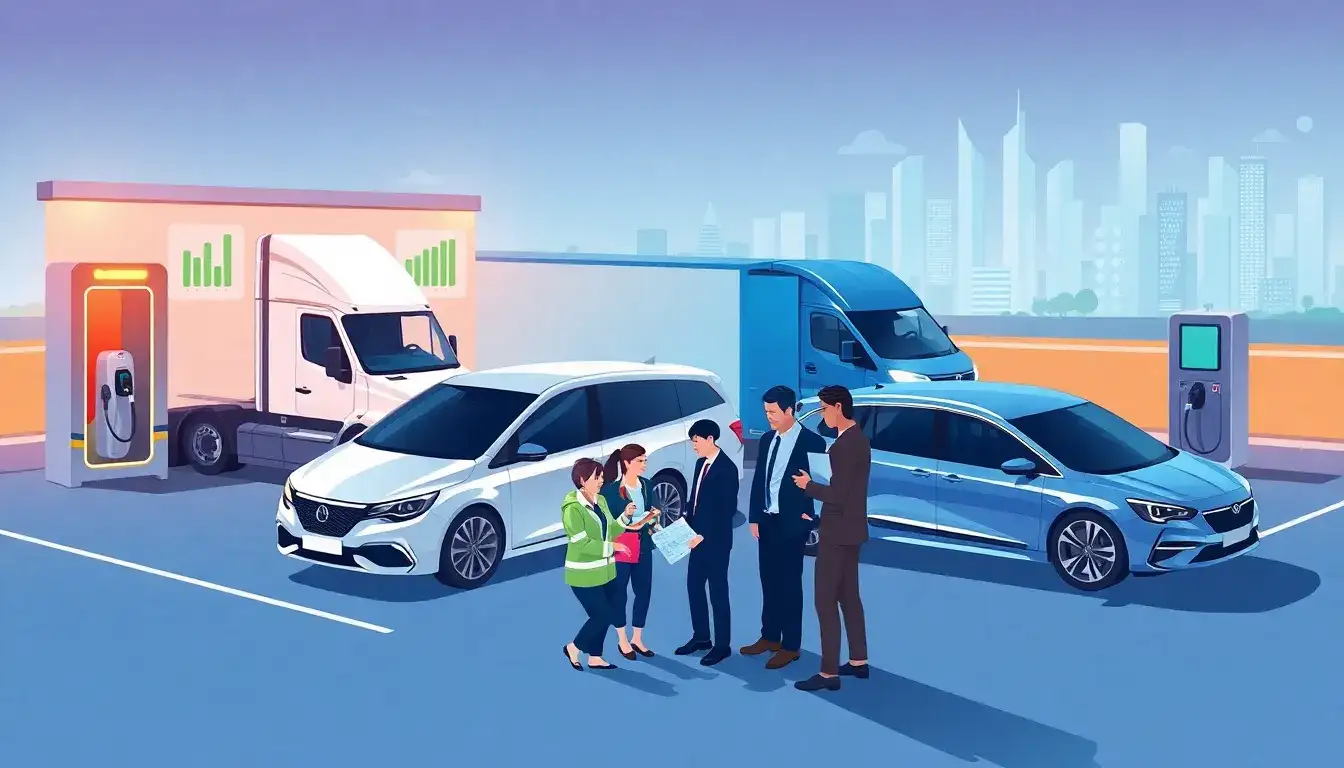
Fleet managers can minimize opportunity costs when transitioning to electric vehicles (EVs) by implementing strategic strategies in charging, vehicle selection, and operational optimization. Here are some key approaches:
Strategic Charging Practices
- Nighttime Charging: Charge vehicles during off-peak hours when electricity rates are lower to save costs and ensure full batteries at the start of the day.
- Rotating Schedules and Staggered Charging: Stagger charging times across the fleet to prevent bottlenecks and maximize charger utilization.
- Home Charging: Allow drivers to charge at home, reducing commute-related delays and extending daily range.
Optimizing Vehicle Selection
- Choose the Right EVs: Select vehicles that meet specific fleet needs, ensuring efficiency and range capabilities without compromising payloads.
Leveraging Incentives and Smart Energy Management
- Take Advantage of Federal and Local Incentives: Utilize tax credits and local programs to offset electrification costs. For example, the Clean Vehicle Tax Credit offers up to $7,500 for lighter commercial vehicles and up to $40,000 for heavier ones.
- Smart Energy Management: Implement software that optimizes energy use and allows participation in demand response programs, enabling fleets to profit from flexibility markets.
Operational Efficiency
- EV Fleet Management Software: Use platforms that optimize vehicle utilization, operations, and driver satisfaction while managing different charging scenarios.
- Energy as a Service (EaaS): Consider models that guarantee uptime and transfer operational risks away from fleet managers.
By adopting these strategies, fleet managers can effectively mitigate opportunity costs and ensure a smooth transition to electric vehicles.
Original article by NenPower, If reposted, please credit the source: https://nenpower.com/blog/how-can-fleet-managers-minimize-opportunity-costs-when-switching-to-evs/

