

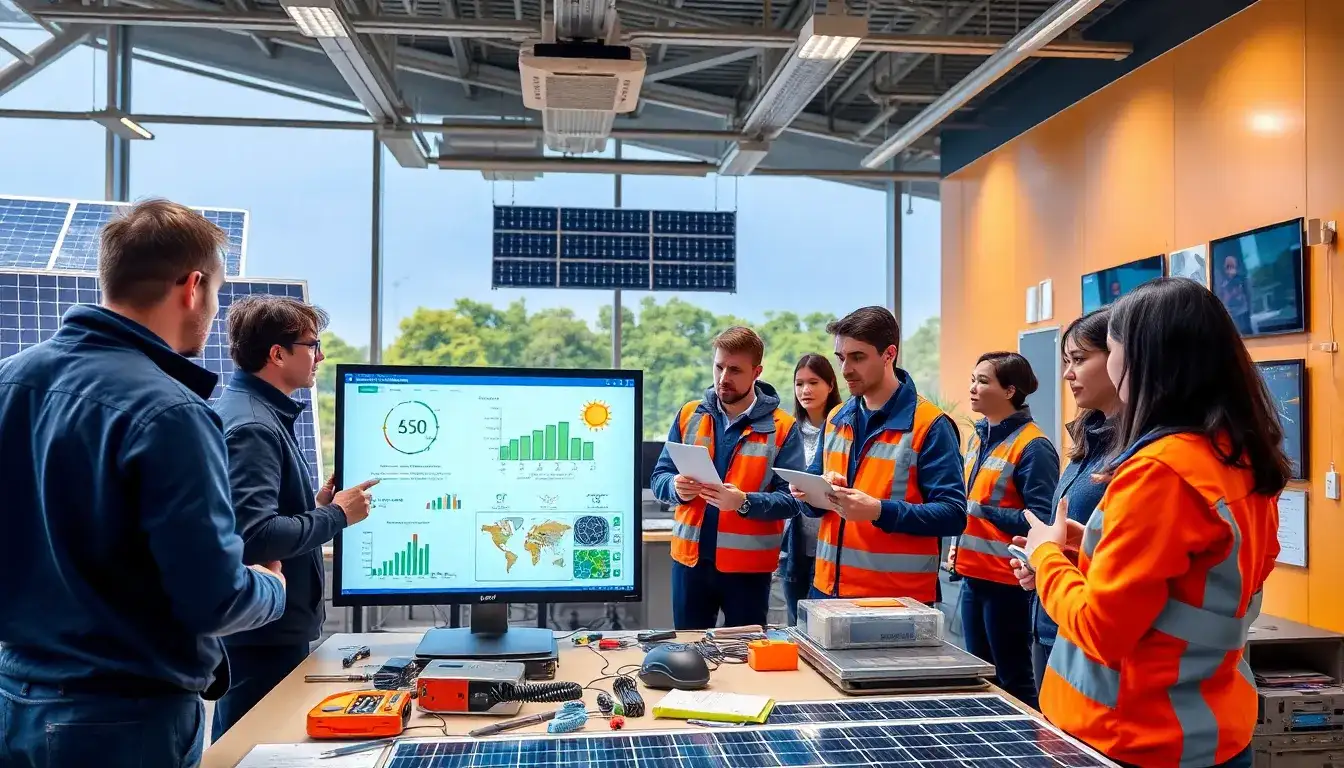
Educational institutions can effectively train their staff to maintain and manage solar energy systems by leveraging specialized solar training programs and certifications offered by established organizations and institutions. Here is a comprehensive approach for training staff in this field:
Key Methods for Training Staff in Solar Energy Systems
1. Enroll Staff in Professional Solar Training Courses
- Institutions can enroll their technical or facilities staff in comprehensive solar training programs that cover system design, installation, maintenance, and troubleshooting.
- Organizations like Solar Energy International (SEI) offer both online and in-person courses designed specifically for solar professionals, providing foundational and advanced knowledge on photovoltaic (PV) technologies and system maintenance.
- SEI also provides a Solar Professionals Trainer Certificate, which equips staff to deliver solar training internally, allowing the institution to build its own ongoing training capacity.
2. Utilize Government-backed Training Initiatives
- The U.S. Department of Energy supports programs such as the Solar Training and Education for Professionals (STEP), which helps bridge gaps in solar workforce education and promotes industry-relevant training.
- STEP supports training in solar operations and maintenance, making it an excellent resource for educational institutions seeking current and credible curriculum aligned with industry standards.
- These programs also help staff stay connected with the latest solar technology developments and regulatory requirements.
3. Partner with Local Solar Training Schools and Institutes
- Institutions can collaborate with local solar academies and community colleges offering solar technical programs. Examples include:
- The Solar Energy Center at Farmingdale State College (NY)
- Salt Lake Community College (UT)
- Florida Solar Energy Center (FL)
- Solar Energy International (CO)
- Midwest Renewable Energy Association (WI)
- These partnerships enable staff to receive hands-on training and certifications that are regionally relevant.
4. Provide Safety and System-specific Training
- Staff should undergo dedicated training on solar safety and specific system types (e.g., battery-based photovoltaic systems) to ensure safe and effective maintenance operations.
- SEI offers free courses covering fundamental math skills and solar safety essential for managing solar installations.
5. Develop Internal Training Capacity
- By certifying select staff as trainers through programs like SEI’s Solar Professionals Trainer Certificate, institutions can create a sustainable training program to continually upskill their workforce as new technologies and system upgrades emerge.
Summary Table of Training Options
| Training Provider/Program | Format | Focus Areas | Benefits for Educational Institutions |
|---|---|---|---|
| Solar Energy International (SEI) | Online/In-person | PV technology, maintenance, trainer certification | Comprehensive, industry-recognized, train-the-trainer |
| U.S. Department of Energy STEP Program | Funding/Support | Solar operations, regulations, workforce gaps | Up-to-date industry standards, broader solar education |
| Local Solar Training Schools & Colleges | In-person | Hands-on system installation and maintenance | Region-specific training, practical experience |
| Free Online Courses (e.g., RE101) | Online | Basic math, solar safety | Entry-level knowledge, accessible to all staff |
By combining external certified training, government resources, and internal capacity building, educational institutions can ensure their staff are well-equipped to maintain and manage solar energy systems efficiently and safely. This approach supports sustainability goals and reduces operational costs associated with solar installations.
Original article by NenPower, If reposted, please credit the source: https://nenpower.com/blog/how-can-educational-institutions-train-staff-to-maintain-and-manage-solar-energy-systems/

