

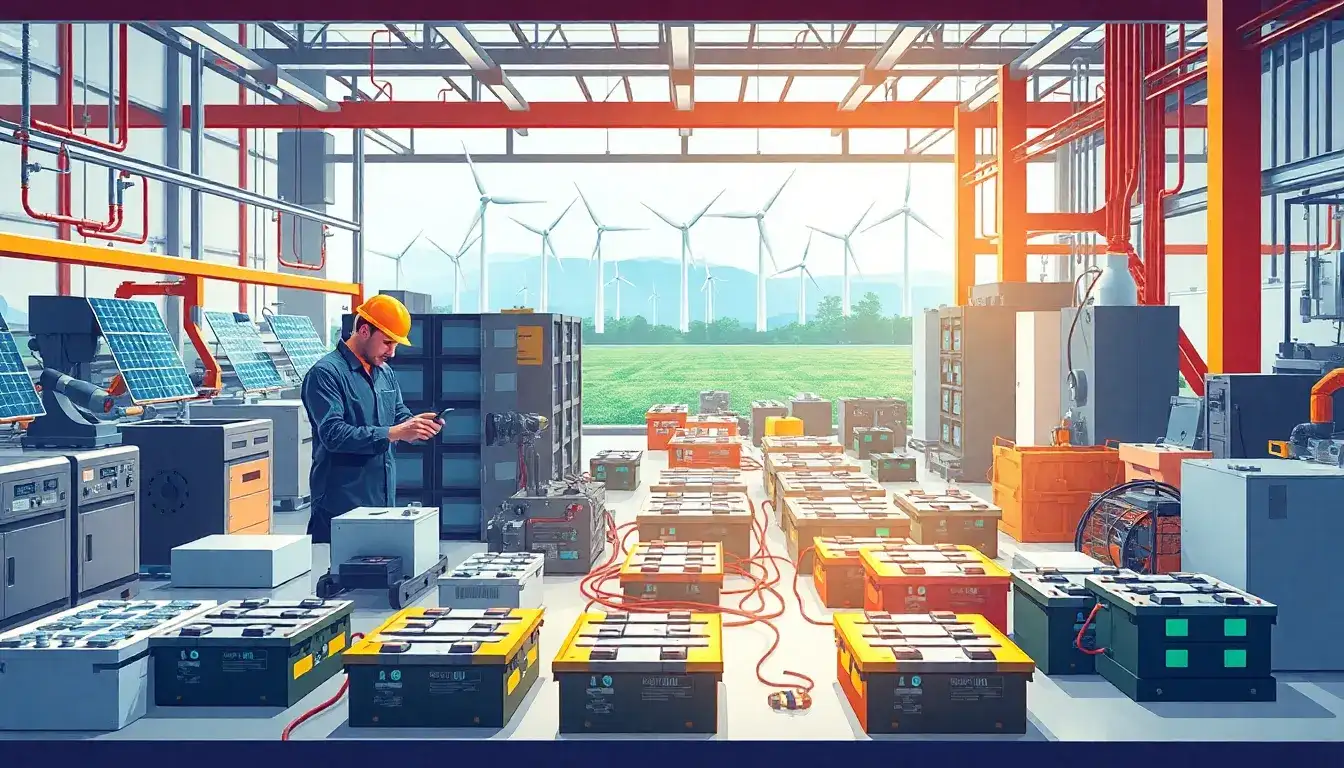
Companies can leverage second-life batteries—used electric vehicle (EV) batteries repurposed for stationary energy storage—to achieve substantial cost savings and sustainability benefits through several key strategies:
Cost Savings from Second-Life Battery Use
- Reduced Capital Expenditures (CapEx): Second-life batteries can lower the upfront costs of Battery Energy Storage Systems (BESS). For example, Sparkion’s technology bypasses weak cells within repurposed battery packs, increasing usable capacity per cycle and reducing BESS cost-per-kWh by up to 60%, cutting CapEx to half compared to traditional systems. Deloitte reports that repurposed second-life batteries may be 50% to 70% more economical than new batteries and energy storage systems.
- Lower Energy Bills: Businesses using second-life batteries in BESS can reduce their electric utility charges by storing energy during low-cost periods (e.g., when renewable generation is high) and deploying it during peak demand times, thus lowering overall electricity expenses.
- Extended Battery Service Life and Maximized Value: While EV batteries are deemed no longer fit for automotive use after their first life, about 80% of their capacity often remains intact for another decade of use in stationary applications, extending total battery value and spreading manufacturing costs over a longer period.
- New Revenue Streams and Waste Cost Reduction: Original Equipment Manufacturers (OEMs) and battery owners can monetize retired EV batteries by selling or leasing them to repurposing companies or end users of second-life storage solutions. This practice not only generates revenue but also reduces battery waste management costs.
Additional Business Benefits Supporting Cost Efficiency
- Scalability and Flexibility: Second-life battery platforms, often modular and compatible across chemistries and manufacturers, can be scaled and customized for specific site goals and demands.
- Intelligent Energy Management: AI-driven control systems optimize the charging, discharging, and overall deployment of stored energy across assets like EV charging stations, maximizing efficiency and cost savings.
- Sustainability and Supply Chain Resilience: By reusing EV batteries, companies reduce demand for virgin raw materials such as lithium, cobalt, and graphite, which are under increasing pressure. This supports greener operations and mitigates risks related to material scarcity and volatile prices.
- Energy Resilience and Circular Economy Contribution: Utilizing second-life batteries enhances energy resilience against utility outages and contributes to a circular economy by extending battery lifecycle and reducing environmental impact.
In summary, companies leveraging second-life batteries can achieve significant cost savings by decreasing capital and operational expenses on energy storage, generating additional revenue from battery reuse, reducing dependence on costly raw materials, and improving energy management efficiency—all while advancing sustainable and circular energy practices. This approach enables up to 60% reduction in storage system cost-per-kWh and substantially lowers electric bills, making it an economically and ecologically advantageous strategy.
Original article by NenPower, If reposted, please credit the source: https://nenpower.com/blog/how-can-companies-leverage-second-life-batteries-to-achieve-cost-savings/

