

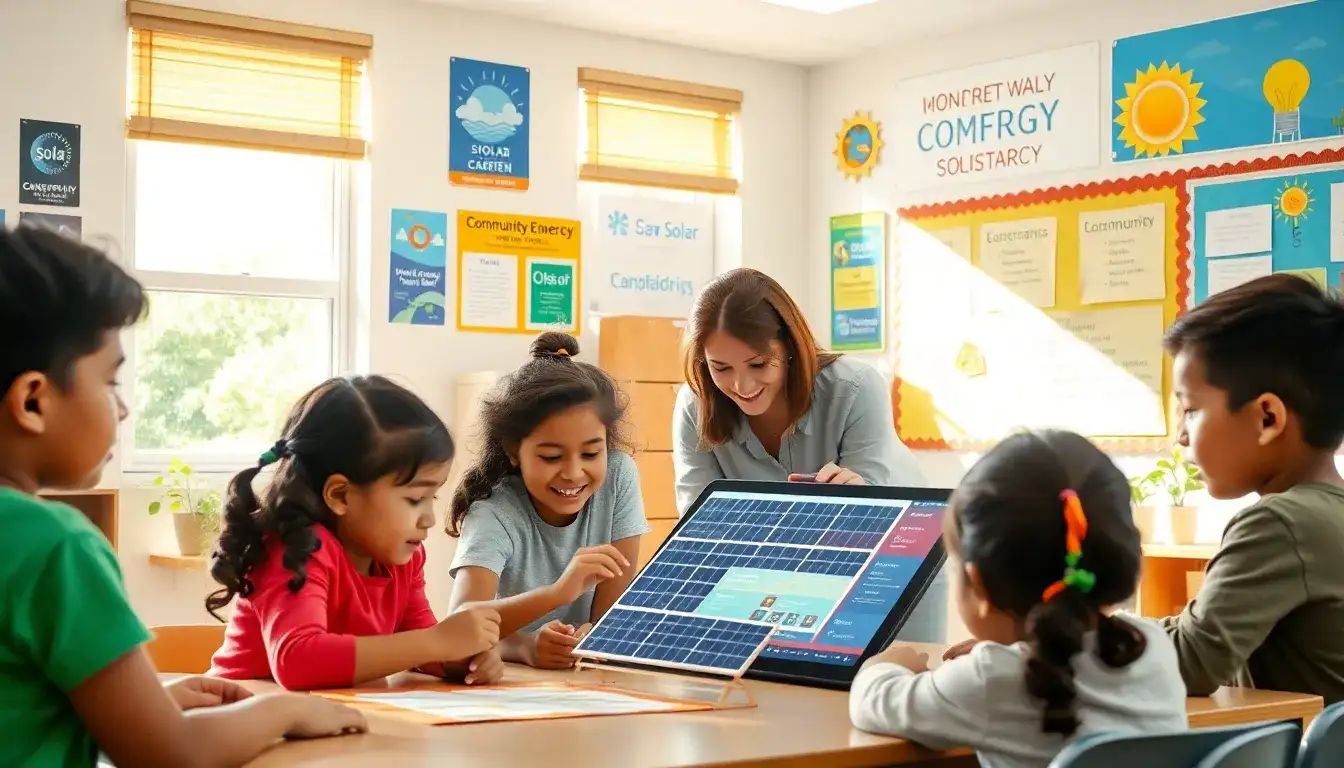
Community partnerships can significantly enhance the integration of solar energy education into school curricula by providing resources, expertise, and real-world learning opportunities that schools alone might not be able to offer.
How Community Partnerships Support Solar Energy Education
- Access to Expertise and Resources: Partnering with local solar energy companies, non-profits, and community solar programs allows schools to tap into specialized knowledge and materials. These partners can offer workshops, guest lectures, and curriculum support that bring up-to-date solar technology and energy concepts directly into the classroom.
- Hands-on, Project-Based Learning: Community organizations can help establish project-based activities such as installing solar panels on school rooftops or monitoring community solar arrays. This practical experience deepens students’ understanding of solar technologies and energy systems beyond textbook learning.
- Promoting Environmental Awareness and Justice: Partnerships often include education on the environmental benefits of solar energy and its role in environmental justice, helping students explore broader social impacts of renewable energy adoption in their own communities.
- Inspiring Career Pathways: By connecting students with professionals and community programs, partnerships can spark interest in renewable energy careers, nurturing the next generation of solar energy leaders and innovators.
- Community Engagement and Ripple Effect: Involving the broader community through partnerships fosters wider adoption of solar energy practices. Schools become hubs for raising awareness and demonstrating solar benefits, amplifying impact beyond students to families and local residents.
Examples and Programs
- Programs like Solar Schools that install solar panels on campuses and use real-time data for interactive learning demonstrate the value of community partnerships in providing tangible, engaging solar education.
- Community solar projects, often supported through partnerships, enable students to learn about collaborative solar energy generation and billing credits, making abstract concepts concrete.
In summary, community partnerships provide critical support by making solar energy education more engaging, practical, and connected to real-world applications, thereby enriching curricula and empowering students with knowledge and skills for a sustainable future.
Original article by NenPower, If reposted, please credit the source: https://nenpower.com/blog/how-can-community-partnerships-help-integrate-solar-energy-education-into-the-curriculum/

