

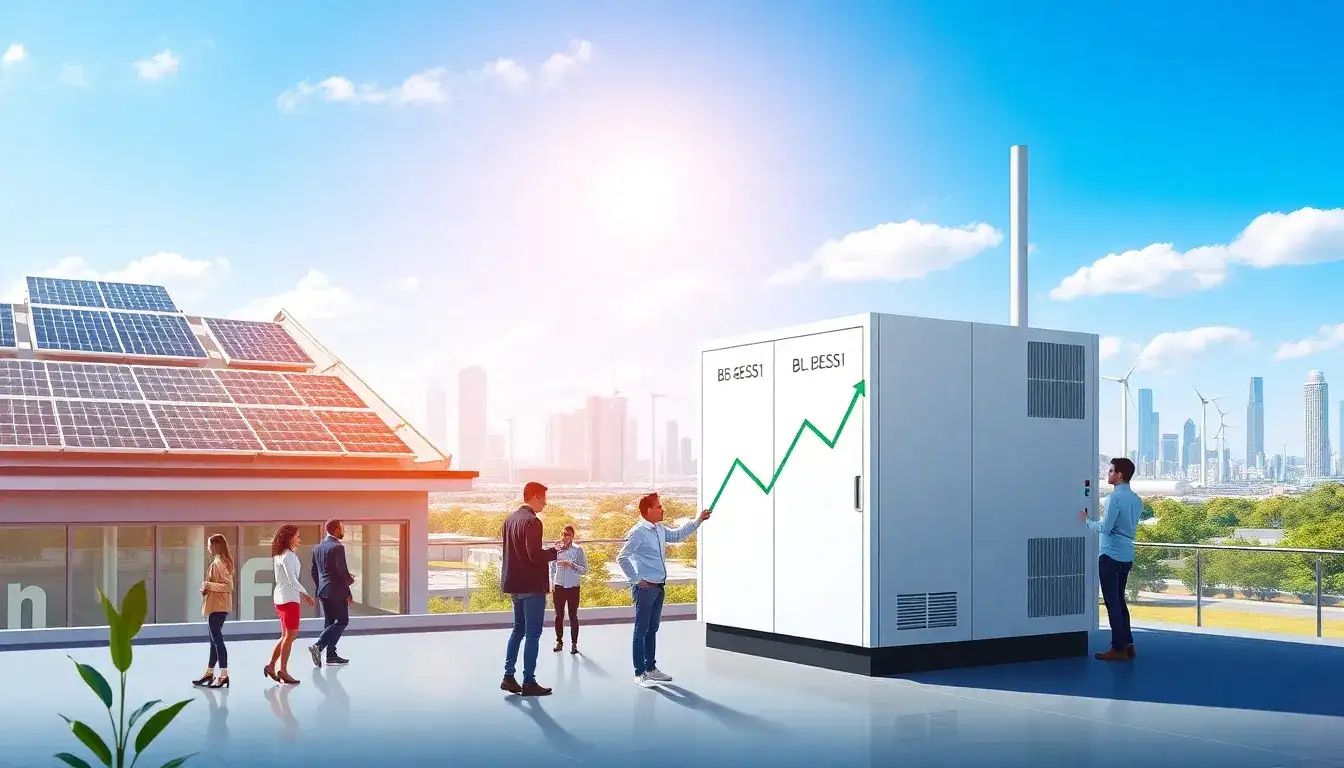
Battery storage systems can significantly reduce electricity costs for businesses in several key ways:
Cost Reduction Mechanisms
- Energy Arbitrage (Peak Shaving): Businesses can charge batteries during off-peak hours when electricity rates are lower and discharge the stored energy during peak demand times when rates are higher. This load shifting avoids high peak pricing and reduces electricity bills.
- Demand Charge Management: Many commercial electricity tariffs include demand charges based on the highest power usage during peak periods. Battery systems can smooth out these peaks by supplying stored energy locally, thus lowering demand charges and operational costs.
- Participation in Demand Response Programs: Batteries enable businesses to reduce grid consumption during peak demand upon request from utilities, often receiving financial incentives or reduced rates for such load management, further cutting costs.
- Backup Power and Reliability: Reducing costly power outages by providing backup power minimizes losses from downtime, spoiled goods, or operational interruptions, translating into indirect cost savings.
Integration with Renewable Energy
- Maximizing Solar or Wind Usage: When combined with on-site renewable generation, battery storage stores surplus energy generated during optimal conditions (e.g., daylight for solar) for use later when generation is low or absent. This reduces reliance on grid electricity and its associated costs.
- Avoiding Price Volatility: Stored renewable energy stabilizes energy costs by reducing exposure to fluctuating fossil fuel prices and grid supply risks.
Economic Considerations
- Initial Costs and ROI: Although initial investment ranges from approximately £7,500 to £28,000 for small to mid-sized commercial systems (including battery, inverter, and installation), long-term savings through energy cost reduction and incentives can yield a strong return on investment.
- Incentives and Tax Credits: Many regions offer financial incentives, such as tax credits, to reduce upfront costs and improve payback periods for battery storage installations.
Summary Table of Benefits
| Benefit | Description |
|---|---|
| Peak Shaving | Charge off-peak, discharge during peak to reduce bills |
| Demand Charge Reduction | Lower peak demand charges via stored energy |
| Demand Response Participation | Financial incentives for load reduction in peak periods |
| Renewable Energy Utilization | Store excess solar/wind energy and use when generation is low |
| Backup Power | Maintain operations during outages, avoiding indirect costs |
| Price Volatility Protection | Reduce impact of fuel and grid price fluctuations |
In conclusion, battery storage systems help businesses lower electricity costs predominantly by shifting energy consumption to cheaper times, reducing peak demand charges, enabling participation in grid incentive programs, and enhancing renewable energy use and energy reliability.
Original article by NenPower, If reposted, please credit the source: https://nenpower.com/blog/how-can-battery-storage-systems-help-reduce-electricity-costs-for-businesses/

