

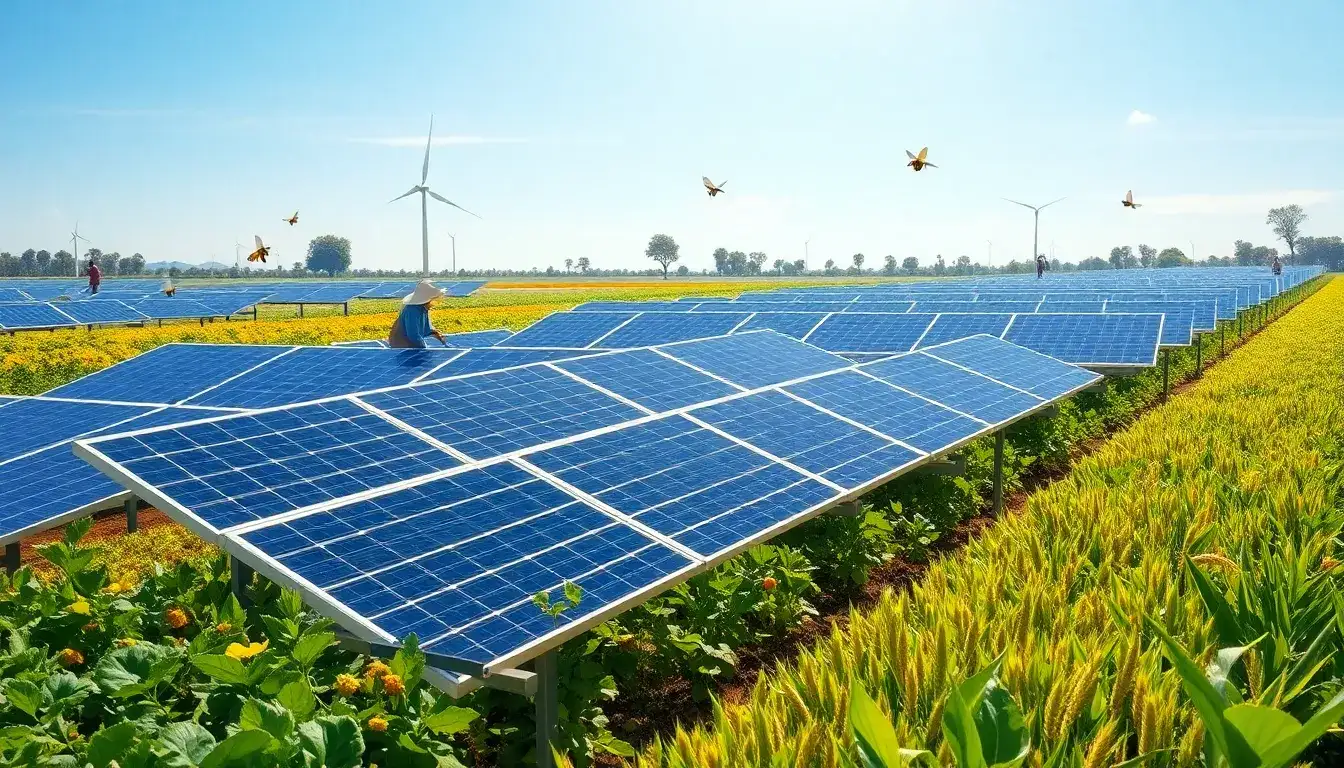
Agrivoltaics: Benefits of Co-locating Solar Panels and Agriculture
Agrivoltaics, the practice of co-locating solar photovoltaic (PV) panels with agricultural activities on the same land, offers significant mutual benefits to both solar energy production and farming.
Benefits to Agricultural Activities
- Improved Crop Yield and Resilience: Crops grown under or near solar panels often experience higher yields and better resistance to extreme weather, including droughts. For example, studies have shown that certain crops like chiltepin peppers, jalapeños, and cherry tomatoes produced significantly more fruit—up to double the amount—when grown in agrivoltaic systems compared to traditional open-field agriculture.
- Enhanced Water Use Efficiency and Moisture Retention: The shading from solar panels reduces direct sunlight exposure and daytime air temperatures, creating a cooler microclimate that helps plants retain moisture. This leads to water-use efficiency improvements of 65% to 157% for various crops, reducing water stress during dry conditions.
- Microclimate Regulation: Agrivoltaic setups moderate temperature extremes by cooling the air during the day and keeping it warmer at night, benefiting plant growth and reducing heat-related stress.
- Support for Biodiversity and Pollinators: Different agrivoltaic configurations can incorporate habitats for pollinators and encourage biodiversity, which benefits agricultural productivity and ecosystem health.
Benefits to Solar Energy Production
- Increased Solar Panel Efficiency: The cooling effect from plant transpiration beneath the PV panels can marginally improve electricity generation. For instance, agrivoltaic systems have been observed to produce about 1% more electricity annually (with up to a 3% increase during summer months) compared to solar arrays without crops.
- Optimized Land Use: By combining agriculture and solar energy on the same land, agrivoltaics maximizes land use efficiency, an important consideration given the competition for land between food production and renewable energy infrastructure.
- Contributing to Climate Solutions: Integrating agrivoltaics supports sustainable food and energy goals simultaneously while potentially reducing local opposition to solar development by maintaining agricultural productivity.
Additional Social and Economic Benefits
- Increased Access for Historically Disadvantaged Farmers: Utilizing solar sites for farming can improve access to land for groups such as Black and immigrant farmers, promoting equity in agricultural opportunities.
- Water Savings: Beyond crop benefits, agrivoltaics can contribute to overall water savings in agricultural landscapes, important in drought-prone regions.
In summary, agrivoltaics enhances crop productivity and stress resilience while improving solar panel performance through natural cooling effects. It enables dual land use that supports sustainable agriculture and renewable energy goals, offering a promising pathway to address food, energy, and water challenges in an integrated manner. This synergy benefits farmers, energy producers, and communities alike.
Original article by NenPower, If reposted, please credit the source: https://nenpower.com/blog/how-can-agrivoltaics-benefit-both-solar-energy-production-and-agricultural-activities/

