

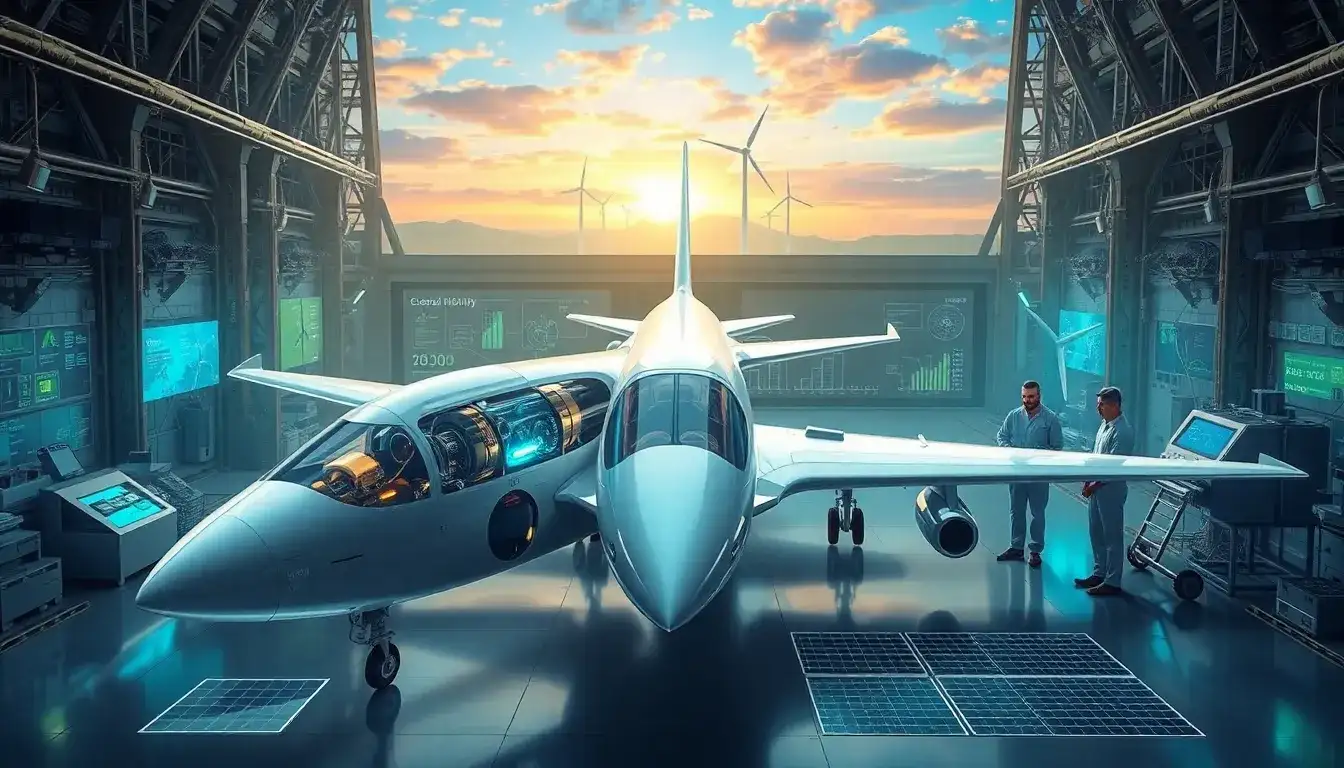
Fuel cell-powered aircraft are being actively developed as a promising pathway to achieve zero-emission aviation. Several major companies and startups are advancing hydrogen fuel cell technology to power aircraft, aiming to significantly reduce the climate and environmental impact of air travel.
Development of Fuel Cell-Powered Aircraft
Airbus ZEROe Project
Airbus launched the ZEROe project in 2020 to explore hydrogen propulsion for commercial aircraft, focusing on two main technologies: hydrogen combustion and hydrogen fuel cells. By 2025, Airbus selected hydrogen fuel cells as the propulsion method for their future aircraft after successful prototype and powertrain tests, including cryogenics research. The planned aircraft will be fully electric, powered by hydrogen fuel cells that convert hydrogen into electricity through a chemical reaction producing only water as a byproduct. The aircraft will have four propellers, each driven by its own fuel cell stack. Airbus also founded a joint venture with ElringKlinger called Aerostack to develop fuel cells that meet aerospace weight and safety standards. Their demonstrator achieved a 1.2-megawatt power level in tests, demonstrating viability for flight.
Startups like ZeroAvia and Universal Hydrogen
These companies are developing full hydrogen-electric engines that can be retrofitted into existing commercial aircraft and hope to have commercial flights powered by hydrogen fuel cells ready as early as 2025. Retrofitting offers a way to achieve zero-emission flying without needing entirely new aircraft designs.
MTU Aero Engines – Flying Fuel Cell (FFC)
MTU is developing an electric propulsion system called the Flying Fuel Cell, which uses the reaction between hydrogen and oxygen to generate electricity to power an electric motor driving the propeller. This system promises virtually emissions-free flight—only water vapor is emitted, with zero CO2, NOx, or particulates—and significant noise reductions due to the electric motor and propeller design. MTU aims to deploy this technology on short-haul regional routes soon, expanding to short- and medium-haul by 2050, achieving up to a 95% reduction in aviation climate impact.
Potential Impacts of Fuel Cell-Powered Aircraft
- Near-Zero Emissions: The chemical process in hydrogen fuel cells generates only water vapor, eliminating CO2 and harmful pollutants, drastically cutting aviation’s carbon footprint if hydrogen is produced from renewable energy sources.
- Noise Reduction: Electric motors powered by fuel cells produce significantly less noise compared to conventional jet engines, improving community noise pollution around airports.
- Sustainability: Hydrogen fuel cells can enable long-term decarbonization of the aviation sector, aiding global climate goals akin to the transformational effect electric vehicles have had in the automotive industry.
- Retrofit Potential: Fuel cell technology can be adapted to existing aircraft designs, accelerating the transition to greener air travel without waiting for entirely new fleets.
- Innovation in Propulsion: Combines electric propulsion benefits—such as higher efficiency, better responsiveness, and lower maintenance—with the energy density advantages of hydrogen fuel.
In summary, fuel cell-powered aircraft are progressing rapidly through prototype testing and early commercial development stages. Their adoption promises to revolutionize aviation by enabling zero-emission, quieter flights, contributing substantially to sustainable air travel and climate impact reduction. While widespread commercial deployment is still emerging, key players like Airbus, ZeroAvia, and MTU are spearheading this transition with tangible steps toward practical hydrogen fuel cell aviation within this decade and beyond.
Original article by NenPower, If reposted, please credit the source: https://nenpower.com/blog/how-are-fuel-cell-powered-aircraft-being-developed-and-what-are-their-potential-impacts/

