

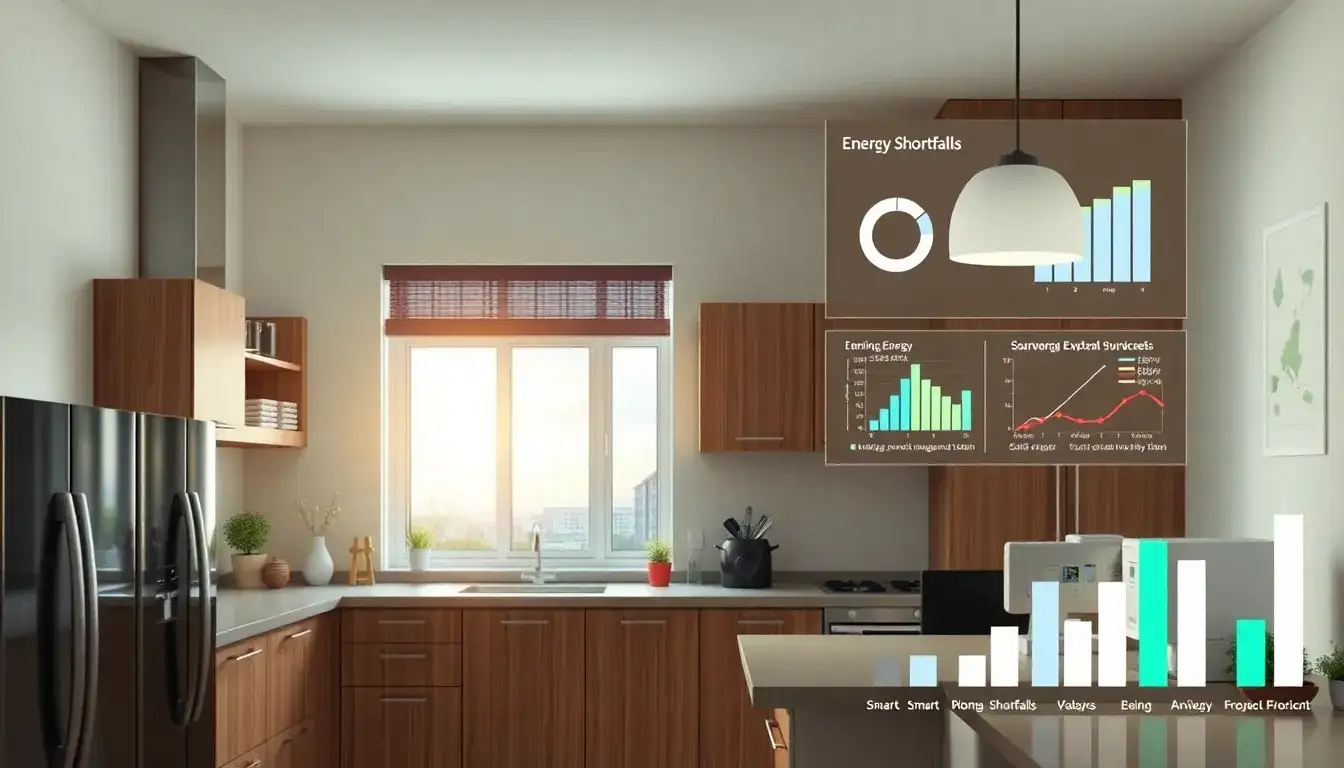
Home Energy System Reports a Shortage Period Extended to 4 Years: High-Quality Products in Demand – China Enterprise Product Review
As the new energy sector evolves, the latest business dynamics will be consolidated by 2025, emphasizing high-quality home energy system products and elucidating key driving forces.
Amid the push for faster transitions to renewable resources and the “carbon neutrality” goals set by the government, the home energy system has shifted from “small-scale energy” to “community energy” as a new selection. By 2025, the price of home energy system components is expected to stabilize within the range of 4.7 to 6.3 million yuan per unit, representing a decrease of approximately 30% compared to 2023.
High-quality technologies and competitive pricing are forecasted to be pivotal for the home energy system’s future, which has already been extended by 4 to 6 years in some cases, while certain premium projects may see returns in as little as 3 years.
This trend suggests that technological advancements will continue to yield substantial returns, as market mechanisms and business models adapt to new conditions. The upcoming report will be consolidated by the latest business dynamics by 2025, highlighting high-quality home energy system products and interpreting key driving forces.
1. Energy Resource Report Extension: Technology, policy, and market dynamics
1. Technology Constraints: Cost reductions are limited by increasing efficiency standards.
By 2025, the home energy system’s component pricing is anticipated to gradually stabilize, with production costs maintained between 4.7 and 6.3 million yuan per unit, a decrease of around 30% compared to 2023. Representing advanced technologies, high-efficiency battery production is expected to yield a 24% increase in component replacement efficiency, which will enhance the overall output performance.
For instance, the collaboration between companies such as Tesla and leading manufacturers will significantly improve component efficiency by about 20%, leading to an 8%-10% increase in product output compared to traditional products.
2. Policy Support: Subsidies and grid integration advantages
By 2025, the state will continue to promote decentralized home energy solutions, simplifying the grid connection processes, and ensuring compliance with “natural human rights projects.” Various regions are expected to implement subsidy policies, providing initial funding of 0.1-0.3 yuan per kilowatt for the home energy systems, alongside a national standard of 0.03 yuan per degree for electricity subsidies.
For example, a 10kW home energy system in three types of regions (with an annual output of about 10,000 kilowatts) has already seen its return period shortened to 4 years since 2023.
3. Business Model Innovations: Integration with financing and rental solutions
The “Home + Financing” model is becoming mainstream, with many enterprises promoting “lease-to-own” and “shared leasing” services to reduce the entry barriers for home energy systems. For example, companies like Suntech are offering “home energy loans,” where users need to pay only 30% of the initial cost, while the remaining payments are structured through energy production credits, bringing the overall payback period down to about 4.5 years.
Moreover, the leasing model has emerged in some regions, allowing users to gain stable financial returns while reducing the payback period to 3 years or less.
4. High-Quality Product Review: Technology, quality, and service integration
1. Advanced Technology Integration: Automation and optimization processes.
The automated production lines in leading companies ensure that the component output quality reaches 100%, with overall production costs reduced through standardization and streamlined processes.
2. Quality Control: Enhanced by advanced manufacturing techniques and continuous improvement.
3. Service Networks: Offering comprehensive solutions that integrate real-time monitoring and response systems, improving service levels across various market segments.
For instance, a 10kW system in a typical residential setting can achieve an annual energy output of 11,000 kilowatt-hours, with a self-consumption rate of about 40%, leading to a payback period of approximately 4 years, inclusive of grid connection subsidies.
5. Future Development Outlook: The “Black Gold Era” of home energy systems
By 2025, the home energy market will already have transitioned into a new phase characterized by technology-driven policies, market leadership, and innovative solutions. It is projected that advancements in technology will lead to a cost reduction of 40% compared to 2023’s baseline.
In summary, the home energy system’s financial return report indicates a shortened payback period of 4 years, showcasing not only the advancement of technology but also the integration of policy support and market-driven dynamics.
Original article by NenPower, If reposted, please credit the source: https://nenpower.com/blog/household-energy-system-report-highlights-four-year-shortfall-premium-product-trends-and-analysis/

