

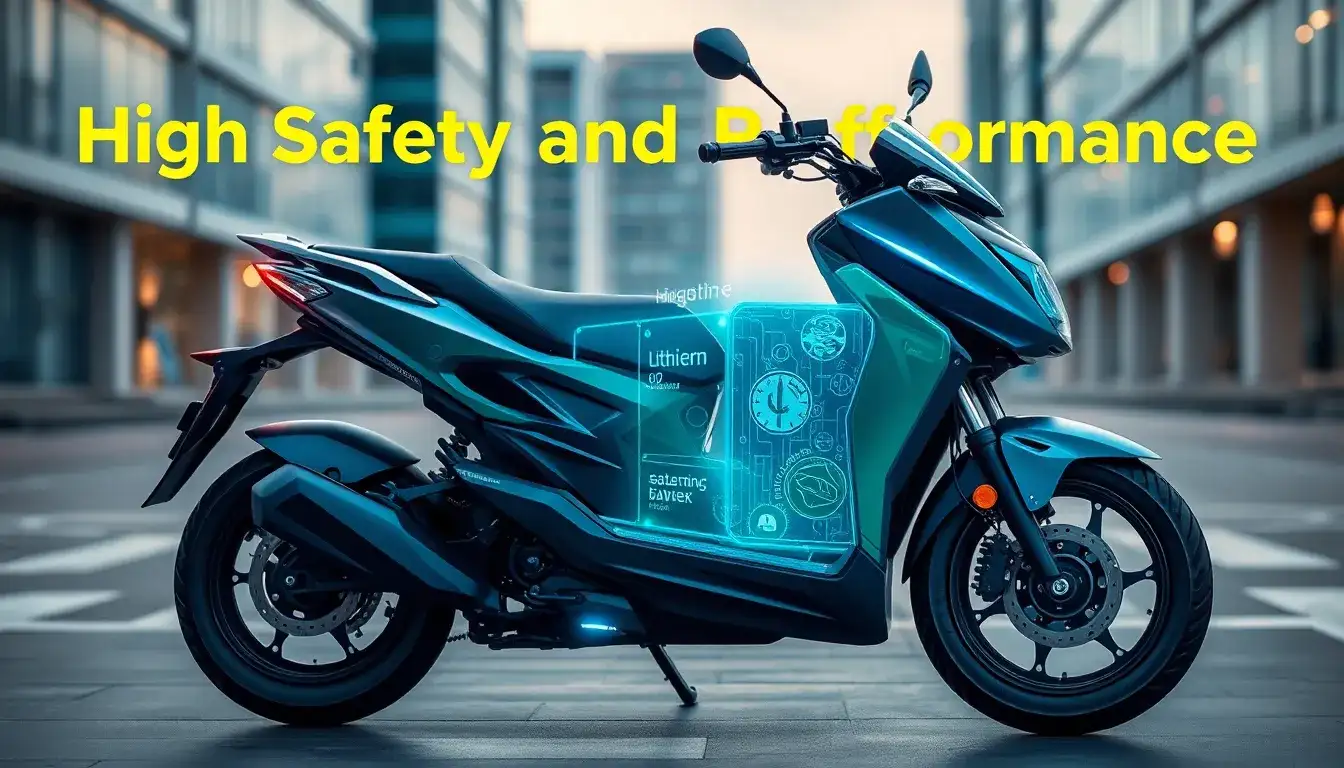
High Safety and Performance: The Lithium Iron Manganese Phosphate Technology from Xinheng Emerges as the Superior Solution for Electric Two-Wheeler Batteries
On April 30, 2025, a significant milestone was reached with the launch of the largest lithium manganese phosphate cathode material project in the country, bringing lithium manganese phosphate batteries back into the spotlight. As the demand for electric vehicles and two-wheelers intensifies regarding range, safety, and cost, lithium manganese phosphate batteries are becoming an upgraded alternative to traditional lithium iron phosphate batteries, accelerating the industry’s high-quality development.
Why is Lithium Manganese Phosphate So Well-Received?
Lithium manganese phosphate batteries are not a new concept. They represent an advanced version of lithium iron phosphate batteries, incorporating manganese into the olivine structure. This addition retains the high safety attributes of lithium iron phosphate while enhancing the voltage platform and energy density. Industry experts indicate that while the energy density of lithium iron phosphate batteries is nearing theoretical limits, lithium manganese phosphate can increase energy density by 15% to 20%, with significantly improved low-temperature performance, addressing the shortcomings of lithium iron phosphate in cold environments.
According to the QYResearch Global Lithium Manganese Phosphate Market Report 2024-2030, the market size for lithium manganese phosphate is expected to continue rising at a CAGR of 58.4% until 2030. Dongwu Securities predicts that by 2030, the market penetration of lithium manganese phosphate replacing lithium iron phosphate will exceed 30%.
Leading the charge in the lithium manganese phosphate battery industry is Xinheng Electric Power, renowned as the global leader in small power solutions. Utilizing cutting-edge manganese oxide precursor technology, Xinheng has significantly enhanced battery performance, making lithium manganese phosphate batteries the dominant technology for domestic electric two-wheeler lithium batteries. This success has solidified Xinheng’s position as the top player in global electric two-wheeler lithium battery shipments for seven consecutive years.
“The evolution of technology must balance performance and cost,” stated Xinheng’s technical head. “Through independent research and development of manganese oxide precursor materials, we have achieved large-scale production and improved manufacturing efficiency, allowing us to keep the overall battery costs lower than those of lithium iron phosphate, paving the way for market adoption.” Currently, Xinheng not only applies these batteries in domestic electric two-wheelers but also in AGV robots, forklifts, and portable energy storage solutions, leading the electric motorcycle market in Southeast Asia.
Three-Fold Solution to Industry Challenges: Safety, Cost, and Range
With a stable structure inherited from lithium iron phosphate, lithium manganese phosphate batteries exhibit minimal risk of thermal runaway during charging and discharging. Xinheng’s lithium manganese phosphate batteries have excelled in extreme tests, such as puncture, overcharge, and over-discharge, as per the Safety Technical Specification for Lithium-ion Batteries for Electric Bicycles (GB 43854-2024), effectively alleviating user concerns regarding lithium battery safety.
- Cost Optimization: Material costs are 5% higher, but overall costs are lower. Although the addition of manganese slightly increases material costs compared to lithium iron phosphate, leading companies have achieved cost reductions through process innovations and large-scale production. For instance, Xinheng’s self-developed precursor materials, combined with process improvements and automated production lines, result in overall battery costs that are lower than traditional lithium iron phosphate solutions. “This is crucial for the price-sensitive electric two-wheeler market,” noted an industry insider.
- Winter Range Reduction? Low-temperature performance has improved to 90%. Lithium iron phosphate batteries maintain only 60%-70% capacity at -20°C, significantly reducing winter range. In contrast, Xinheng’s lithium manganese phosphate batteries maintain a capacity retention rate of 90% at low temperatures, greatly alleviating users’ range anxiety. Additionally, with a high voltage platform of 4.1V, these batteries provide stronger power output for high-performance applications, making them the preferred choice in the Southeast Asian electric motorcycle market.
The Ambition of Lithium Manganese Phosphate Extends Beyond Two-Wheelers
Currently, companies like Tesla and Chery are testing lithium manganese phosphate batteries in mid-range models, while Xinheng’s successful experience in electric two-wheelers provides a proven model for broader applications of lithium manganese phosphate batteries. “The value of technology lies in solving real-world problems,” stated a leader from an electric two-wheeler company. “Users generally report that vehicles equipped with Xinheng’s lithium manganese phosphate batteries show significant improvements in range, even in winter without frequent recharging.” Positive market feedback confirms the commercial potential of this technology.
As a leading enterprise in the lithium manganese phosphate battery sector, Xinheng has dedicated 22 years to manganese-based battery research, establishing a comprehensive closed-loop ecosystem from precursor development and manufacturing to cathode material R&D, battery production, sales operations, and battery recycling. With a user base of 33 million globally, Xinheng has secured its status as a global leader in manganese-based batteries.
Xinheng has announced that its next-generation lithium manganese phosphate batteries will focus on enhancing fast charging and cycle life, while collaborating with upstream and downstream partners to further refine the industrial ecosystem. This initiative aims to provide users with stronger performance, higher safety, and better cost-effectiveness in lithium battery products. Additionally, Xinheng plans to continue promoting the industrial application of lithium manganese phosphate batteries across more sectors, in line with its ‘1246’ battery standardization strategy, to achieve the strategic goal of covering all application scenarios from 1 to 15 degrees.
It is anticipated that under the drive for dual carbon goals, lithium manganese phosphate batteries will accelerate the replacement of lead-acid batteries, becoming the core engine for upgrading the electric two-wheeler industry and offering better solutions for global green transportation. This transformation spurred by technological innovation has only just begun.
Original article by NenPower, If reposted, please credit the source: https://nenpower.com/blog/high-safety-and-performance-the-rise-of-manganese-iron-lithium-technology-in-electric-two-wheeler-batteries/

