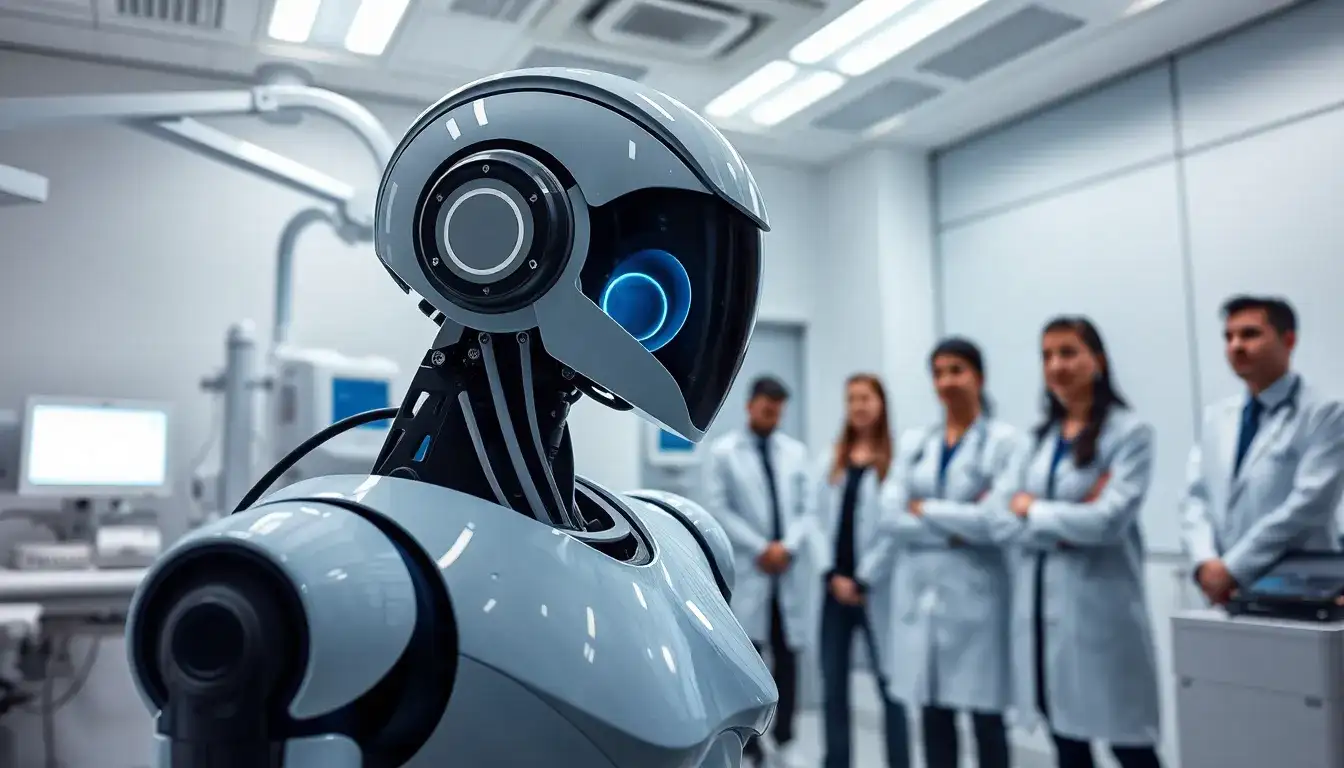
Recently, the Hefei Institutes of Physical Science, part of the Chinese Academy of Sciences, in collaboration with clinical experts from Anhui Medical University, successfully developed a Transcranial Magnetic Stimulation (TMS) medical robot. This innovation integrates visual positioning navigation with three-dimensional medical imaging reconstruction technology to achieve visualized precise navigation during treatment.
This product has received a Class II medical device certification and is currently being used in clinical treatments at several major hospitals within the province. TMS is a non-invasive neural modulation technique that has been widely adopted in various clinical fields, including psychiatry, neurology, and rehabilitation. It is one of the most commonly used non-invasive brain stimulation technologies today.
However, traditional TMS treatments primarily rely on handheld coils operated by clinicians, which can lead to low positioning accuracy, inconsistent results, and an inability to dynamically adjust during procedures. These limitations significantly hinder the stability and reproducibility of treatment outcomes and fail to meet the modern demands for precision and intelligence in neural modulation.
The research team, led by Huang Xuan, has extensive experience in machine vision, visual positioning navigation, and image reconstruction technologies. To address the challenges faced in the industry, the team has combined visual positioning navigation with magnetic resonance imaging (MRI) reconstruction technology, effectively overcoming technical bottlenecks associated with TMS medical robots and achieving visualized precise navigation treatment.
The intelligent navigation technology integrated into the system allows for rapid automatic registration of virtual and real images, enabling high-precision feature capture and tracking in both time and space. It visually displays the relationship between the patient’s brain regions and treatment target points in real-time through three-dimensional images.
According to the latest clinical treatment effect reports, the TMS medical robot can accurately target areas, avoiding stimulation of unrelated brain regions, which reduces side effects and shortens treatment duration. Currently, the team is collaborating further with clinical physicians to explore individualized treatment plans by utilizing big data modeling and AI algorithms to identify patients’ unique “symptom patterns.”
Original article by NenPower, If reposted, please credit the source: https://nenpower.com/blog/hefei-research-institute-develops-transcranial-magnetic-stimulation-medical-robot-approved-for-clinical-use/