

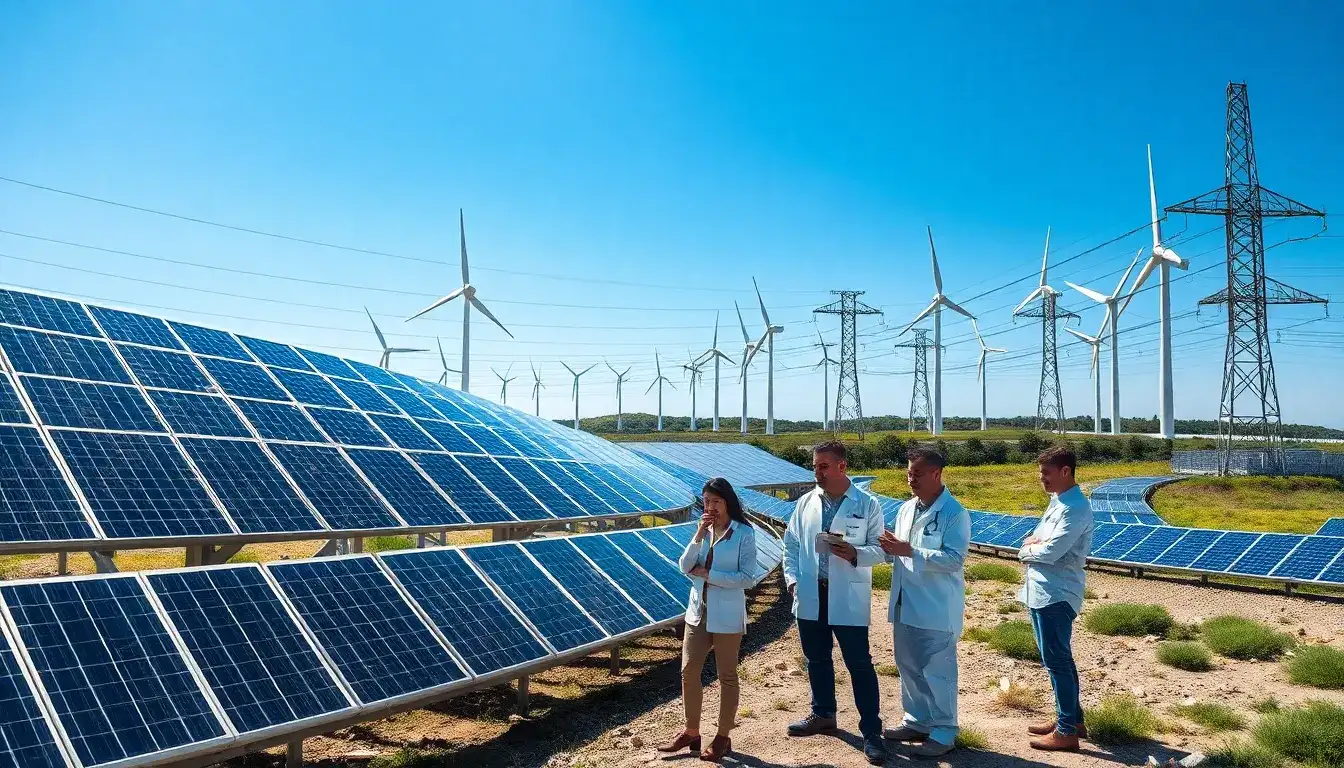
Show me the electrons! American energy dominance will require all of them
—
**June 16, 2025**
By Chad Farrell, Founder and Co-CEO, Encore Renewable Energy
Ensuring adequate energy resources to power the 21st-century digital economy in a cost-effective manner remains a priority for many business leaders. However, the ongoing turmoil from Washington, D.C., compels us to focus on defense rather than offense. Stability in policy is crucial for business growth, yet the constant changes at the federal level have created a stagnant economic climate. The U.S. energy sector is particularly affected, as project timelines often span multiple years, administrations, and legislative sessions.
This chaos in the nation’s capital often overshadows recent positive advancements in newer energy generation technologies, such as solar, wind, storage, geothermal, and hydrogen. These technologies can effectively address the escalating and costly impacts of climate change while also alleviating the immediate energy supply challenges necessary for establishing American energy dominance. To compete globally, especially against China and other nations, we need to maximize the number of electrons on the grid. This idea is currently championed by Chris Wright, the Secretary of the U.S. Department of Energy, emphasizing that it’s about energy addition, not subtraction.
It’s important to recognize that significant transformations in the U.S. energy market are already underway. The American economy, like many others worldwide, is increasingly moving towards electrification as a means of ensuring energy abundance. For instance, The Wall Street Journal recently reported that future economic growth hinges on electricity rather than oil. Amid this electrification, experts anticipate that new energy demand from data centers, artificial intelligence, manufacturing, and the electrification of transportation and buildings will drive U.S. electricity demand up by nearly 16% by 2029. This surge will necessitate at least 128 GW (128,000 MW) of new generation capacity—equivalent to adding the annual electrical consumption of Japan each year.
It’s time to accept that renewable energy is both inexpensive and efficient. John Ketchum, CEO of NextEra, a company that has built more gas-fired electrical generation in the U.S. over the past two decades than any other, has referred to renewables as the “bridge fuel” to future energy resources. Notably, the supply of turbines for gas generation is so limited that securing one could take until 2030 or later.
Utilities in the Midwestern United States face daunting challenges posed by extreme weather, aging infrastructure, and the urgent need to integrate renewable energy while maintaining grid reliability. State decarbonization laws complicate the process of bringing new power generation online. As utilities transition from fossil fuels to cleaner alternatives, they navigate supply chain issues, labor shortages, and new cybersecurity risks. Service providers must modernize their infrastructure to meet rising demand while keeping prices affordable—a significant challenge for utilities of all sizes.
A new regional DISTRIBUTECH event, DTECH Midwest, will offer a unique opportunity to explore the specific issues facing the power industry in the Midwest. This event includes tailored content for municipal and cooperative utilities, and registration is now open! Join us from July 14-16, 2025, in Minneapolis, MN. Learn more about what to expect here.
These trends have been validated both globally and domestically. In 2024, 90% of new global grid connections were for renewable energy resources, amounting to $2.1 trillion in new global investment. Similarly, in the U.S., 90% of new electric generation in the first three quarters of 2024 came from renewables, with solar accounting for 78% of that capacity. Renewable energy projects are also delivering economic benefits to communities nationwide. A recent analysis of economic impact reports found that a typical 5-megawatt community solar project generates $14 million in local economic activity and supports nearly 100 jobs.
The U.S. solar industry now faces proposed federal energy policy changes that could increase electricity prices for consumers, create rolling blackouts, and result in billions of dollars in lost investments, jeopardizing over 300,000 American jobs. The House-passed version of the One Big Beautiful Bill Act (OBBBA) aims to nearly repeal bipartisan clean energy tax credits, which have provided nearly 3:1 returns on public investment. These credits have supported hundreds of thousands of high-paying jobs and fostered a thriving domestic market of manufacturers and energy providers, making solar, in combination with energy storage, the most affordable, reliable, and rapidly deployable energy generation resource available.
Protecting these policies is essential for driving energy dominance and enhancing American national security through a diverse range of generation technologies. Failure by Congress to enact sensible energy policy under the OBBBA would lead to increased electrical costs for all Americans, the loss of hundreds of thousands of jobs, and stunted U.S. economic growth. We cannot afford to undermine the greatest American manufacturing renaissance and energy innovation success story in a generation and diminish our competitive standing with China.
We must safeguard these policies and advance with the understanding that the energy transition is already underway. Reach out to your Senators today!
Chad Farrell is the founder and co-CEO of Encore Renewable Energy, specializing in solar and energy storage solutions across the country. With over 25 years of professional experience in brownfields redevelopment and renewable energy project finance, development, and construction, he also serves on the Board of Directors for Vermont Businesses for Social Responsibility and the Advisory Board for the Alliance for Climate Transition. At Encore, Chad has led efforts to design, permit, finance, and construct nearly 100 community-scale solar PV and energy storage projects, totaling nearly $150 million in investment value, while raising over $600 million in capital and establishing a pipeline of over 700 MW of future projects worth nearly $1 billion.
Original article by NenPower, If reposted, please credit the source: https://nenpower.com/blog/harnessing-electrons-the-key-to-american-energy-dominance-in-the-21st-century/

