

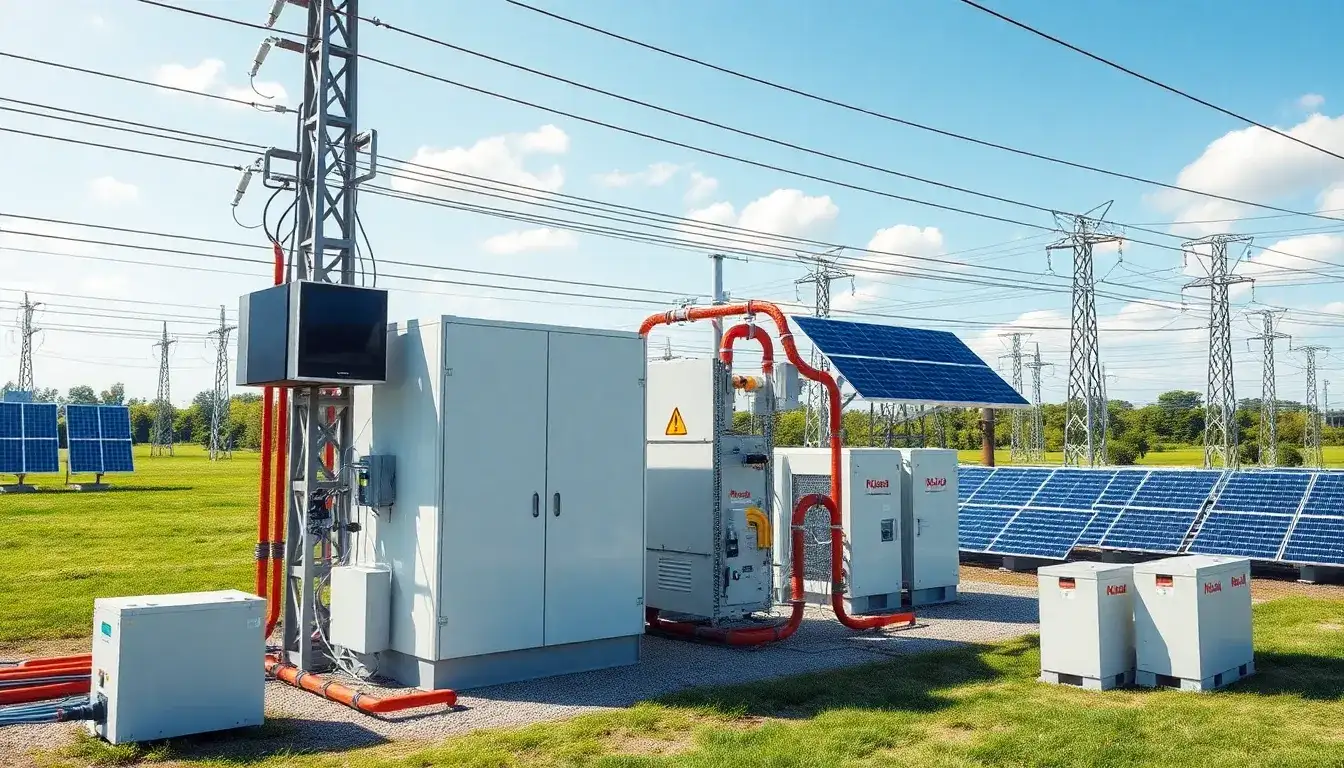
On May 17, the China Electrical Engineering Society released the Technical Guidelines for the Planning of Low-Voltage Side Distributed Energy Storage Systems in Power Distribution Areas (Draft for Comment). The guidelines highlight that energy storage systems should possess functionalities such as demand peak shaving, reactive power compensation, power support, and emergency response to meet the load characteristics and fluctuating demands within the power distribution area.
The document outlines the technical requirements for planning the configuration of low-voltage side distributed energy storage systems. It covers essential aspects such as system selection, capacity configuration, system integration, and dispatch strategies. The aim is to standardize technical principles and configuration methods, enhancing the effectiveness of distributed energy storage systems within low-voltage distribution networks.
This guidance applies to the planning of distributed energy storage systems in low-voltage distribution networks. It is proposed by the China Electrical Engineering Society and managed by the Energy Storage Technology Standardization Working Group of the Society. Major drafting entities include the Economic and Technical Research Institute of State Grid Jiangxi Electric Power Co., Ltd. and North China Electric Power University.
The guidelines primarily consider energy storage technologies such as lithium batteries, lead-acid batteries, and supercapacitors. For different types of power distribution areas, it generally recommends lithium battery technology for typical user-side distribution areas, while lead-acid battery technology is suggested for remote rural areas. In regions with significant load fluctuations, a mixed configuration of supercapacitors and batteries is recommended.
The selection of energy storage technology should fully account for the distributed characteristics of the power distribution area, which includes load demand, geographical distribution, and user electricity consumption patterns. By combining usage scenarios with economic considerations, the most suitable energy storage technology type should be chosen to fulfill functions such as peak shaving, reactive power compensation, and emergency support, while also enhancing the response efficiency of the power distribution system.
Furthermore, the location of the energy storage systems should be near high-load areas or critical power supply nodes. This includes, but is not limited to, urban commercial districts, concentrated residential buildings, or the distribution ends of remote villages, where there are high concentrations of users. This strategic placement aims to achieve localized load adjustments, reduce power losses, and improve the operational efficiency of the energy storage systems.
Original article by NenPower, If reposted, please credit the source: https://nenpower.com/blog/guidelines-for-planning-low-voltage-distributed-energy-storage-systems-in-power-distribution-areas/

