

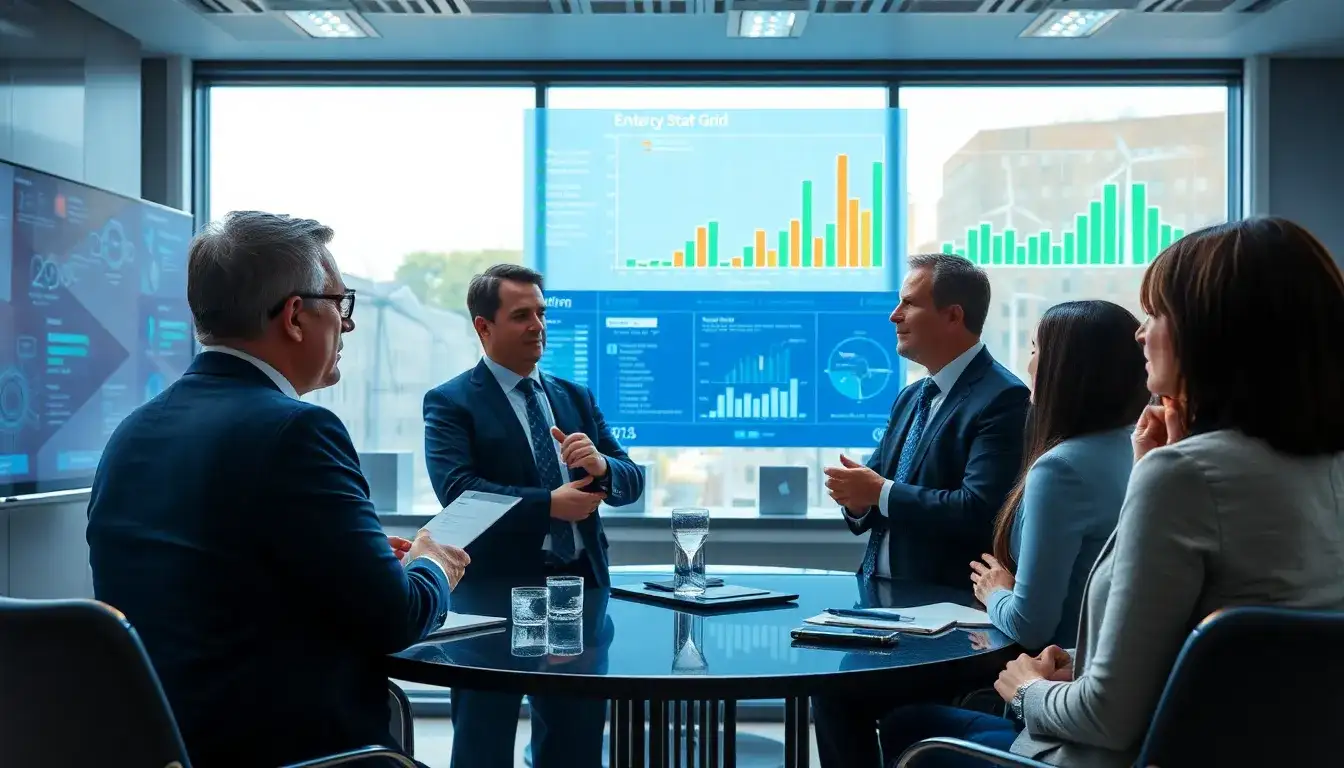
On May 20, 2025, the “Source-Grid-Load-Storage Intelligence” Qilu Energy Forum, organized by GoodWe, kicked off in Jinan. This forum focused on the transformations in the energy market prompted by new policies, the integrated development of source, grid, load, and storage, and innovations in business models. It attracted over a hundred guests, including government leaders, industry association experts, corporate representatives, and financial institutions, who gathered to discuss the opportunities and challenges of energy transition.
New Policies and the Era of Refined Operation for Distributed Solar Storage
Zhang Xiaobin, Executive Vice President and Secretary-General of the Shandong Solar Industry Association, presented on “Analysis of Distributed Solar Storage After New Policies.” He provided an in-depth interpretation of the new opportunities and challenges that distributed photovoltaics will face under the 2025 policy changes. He emphasized that new energy companies must enhance their management capabilities to adapt to market shifts. Zhang also shared emerging trends in distributed photovoltaics, including diversification of investment entities, shifts in strategic direction, and new models such as integrated source-grid-load-storage, green power direct supply, and virtual power plants.
The Acceleration of China’s New Energy 3.0 Era
Dr. Ma Yifeng elaborated on the reform of the electric power system and the development path of new energy in his presentation titled “Decoding Energy and Carbon Policies.” He described the four phases of transformation that China has undergone: “capital-raising for power generation, separation of government and enterprises, separation of generation and grid, and deepening power sector reform.” This has led to the establishment of a market framework that allows for centralized control and decentralized operations. By 2024, market-oriented power trading is expected to account for over 63% of total electricity transactions, with new energy installations exceeding 40% and a new storage capacity reaching 30 million kW. To address the challenges of high new energy consumption, policies are focusing on electricity pricing reform, green power trading, and virtual power plants, which will reshape the multidimensional value of electricity and drive the energy system toward efficiency, zero carbon emissions, and sustainability.
Addressing Industry Pain Points and Opportunities
In the context of deepening power sector reform and the wave of energy transition, industrial and commercial storage is experiencing “growing pains,” with both challenges and opportunities. Duan Mingxing, Secretary-General of the Energy Storage Leaders Alliance, analyzed the current challenges in the storage market regarding costs, safety, and business models in his talk titled “The Growing Pains of Industrial and Commercial Energy Storage.” He stressed the need for dual drivers of policy support and technological innovation. Only through continuous adaptation to policy and market dynamics, and by strengthening value creation, can the industry cultivate benchmark enterprises. In the future, commercial energy storage will adopt more flexible operational strategies and precise revenue models, becoming a crucial support for the integrated source-grid-load-storage system, and aiding the energy system’s transition to a more efficient, low-carbon, and sustainable new era.
Regional Development and the Importance of Integration
In the discussion on regional development, Zhong Hongjun, Secretary-General of the Solar Storage Committee of the Jiangsu Photovoltaic Industry Association, deeply analyzed the policy adjustments and market opportunities facing the photovoltaic industry. He emphasized the importance of integrated source-grid-load-storage as a new competitive arena. Zhong pointed out that although policy adjustments pose short-term challenges, the industry can transition to a more sustainable model of “self-consumption + storage + market trading” through technological innovation and improved market mechanisms. He also detailed the unique advantages that solar professionals possess for transitioning into the storage field and proposed a three-step implementation strategy. Finally, he shared insights on the vision of transforming the role of energy service providers, along with seven key guidelines for developing storage projects, offering valuable practical experiences and strategic guidance for the industry.
GoodWe’s Integrated Strategy for Source-Grid-Load-Storage Intelligence
Since 2020, GoodWe has recognized that with the significant integration of renewable energy sources like wind and solar into the grid, market-oriented reforms in electricity are essential. The construction of power stations must consider the cooperative development of source, grid, load, and storage. Wang Yingge, Vice President of GoodWe, shared the company’s innovative practices in the “Source-Grid-Load-Storage Intelligence” domain during his speech titled “Intelligence Across Thousands of Miles.” He stated that energy storage systems are key to balancing electricity supply and demand and enabling flexible energy dispatch. He showcased GoodWe’s technological advantages in industrial and commercial storage and microgrid scenarios. Furthermore, he highlighted GoodWe’s exemplary projects in zero-carbon initiatives, including the Guande Zero-Carbon House, Zero-Carbon Industrial Park, and Suzhou Smart Energy Building.
Dr. Dai Chensong, Deputy General Manager of GoodWe’s Smart Energy Division, elaborated on the strategic significance of new distribution networks as a crucial component of the new power system. He explained the concept of GoodWe’s integrated strategy and its interactive ecosystem. Dai emphasized that through intelligent technologies like solar-storage charging systems and virtual power plants, energy can be efficiently allocated and utilized, promoting the development of a green and intelligent distribution network. He also shared insights from pilot projects in Shandong focusing on the integration of source, grid, load, and storage, including examples of distributed self-consumption, virtual power plants, green electricity trading, and local consumption solutions, providing practical pathways and demonstration cases for constructing the “last mile” of the energy internet.
Roundtable Discussion: Navigating the Future Under New Policies
The roundtable was moderated by Wang Jin, Director of the National Energy Research Institute. Guests discussed the current energy sector’s policy environment, noting its complexity and dynamic adjustments pose challenges for enterprises, while also injecting new momentum into the industry’s transformation and upgrading. Under the guidance of these policies, the scale and distribution logic of the market “cake” are being reshaped. While companies face short-term pressures, long-term structural opportunities are gradually emerging. In this context, innovative practices represented by GoodWe’s “Source-Grid-Load-Storage Intelligence” provide important pathways for the industry to respond to new policies.
Focusing on user-side demand, the discussion emphasized the need for scenario-based solutions to capture market opportunities with differentiated competitive advantages. GoodWe’s “Source-Grid-Load-Storage Intelligence” plan integrates distributed energy, storage systems, and load terminals through an intelligent platform, optimizing resource allocation efficiency under policy-driven conditions. Hu Jianfei, GoodWe’s Energy Storage Business Director, proposed that extreme safety standards should drive the healthy development of the energy storage industry while constructing a profitable model of “self-consumption + dynamic trading” in commercial and industrial scenarios, providing a reference for linking policies and market mechanisms. Zhang Zhen, Director of the Shandong Hydrogen Valley New Energy Technology Research Institute, noted that companies with resource integration capabilities or technological advantages will lead the market. She emphasized the importance of moving beyond a single perspective to uncover new opportunities within policies, which resonates with GoodWe’s logic of “demand-driven resource integration and intelligent value optimization.”
Strategic Partnerships for Ecosystem Development
During the forum, GoodWe established strategic collaborations with several companies and financial institutions, including Zhejiang Xichu Intelligent Energy Co., Zhejiang Zhiyin Financial Leasing, Suzhou Tonghe New Energy Group, Shandong Hydrogen Valley New Energy Research Institute, and Huaxia Financial Leasing. This signing marks a significant step for GoodWe in terms of industrial chain collaboration and resource integration.
This forum provided a forward-looking practical model for energy transition. Through its “Source-Grid-Load-Storage Intelligence” integration strategy, GoodWe will continue to drive the digitalization of energy. The company aims to leverage technology as a spear and ecosystem as a shield, collaborating with partners to contribute to global green development.
Original article by NenPower, If reposted, please credit the source: https://nenpower.com/blog/gudewei-launches-source-grid-load-storage-intelligence-forum-to-explore-new-energy-development-strategies/

