

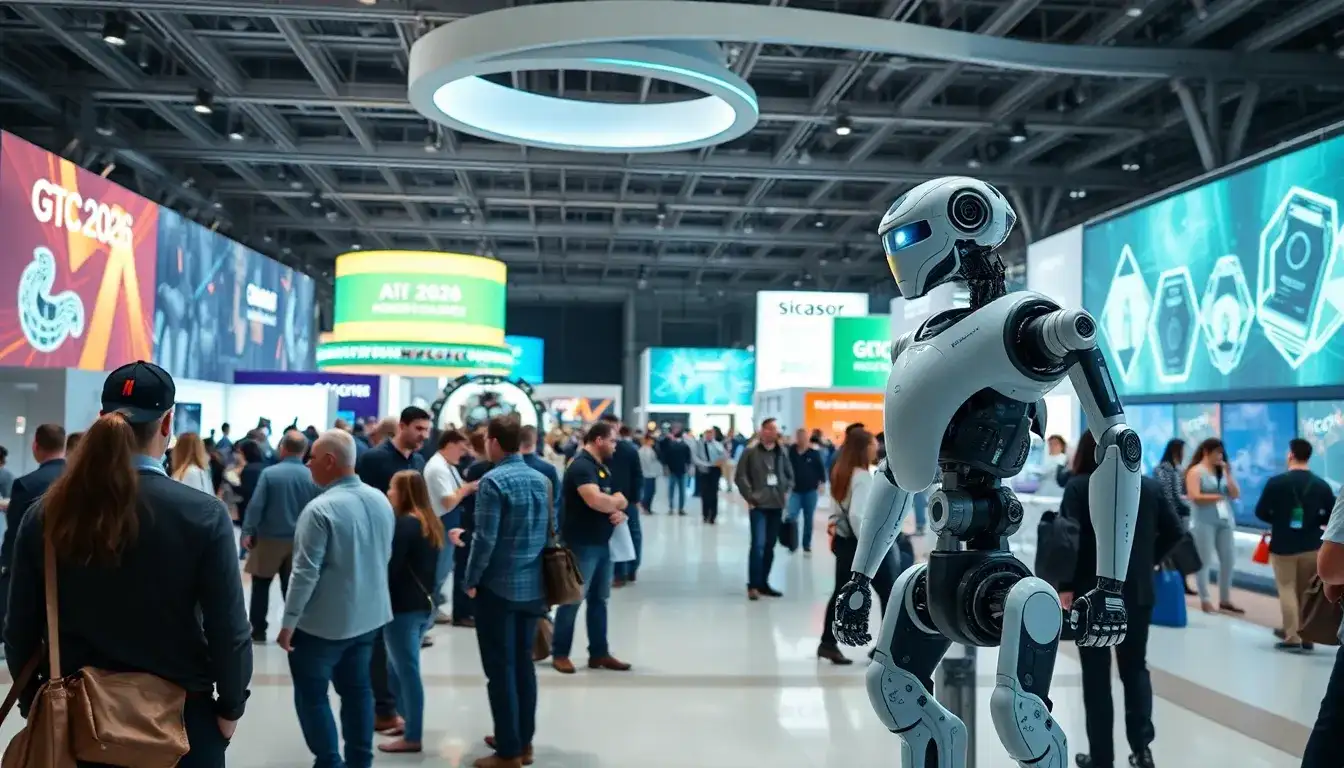
GTC 2026: San Jose, USA – AI and Robotics Exhibition
The GTC 2026 exhibition will take place from March 16 to 19, 2026, in San Jose, California. This annual event is one of the most influential conferences in the fields of artificial intelligence, robotics, accelerated computing, and future computing architecture. The conference will simultaneously occur at multiple venues in downtown San Jose, including the San Jose McEnery Convention Center and the SAP Center, continuing its hybrid format of both in-person and online presentations to showcase breakthroughs in next-generation AI technology and trends in industrial applications.
This year’s central theme will focus on cutting-edge topics such as generative AI, physical AI, AI factories, robotic autonomous systems, digital twins, quantum computing, edge computing, and industry-specific AI solutions. The conference will feature keynote speeches, technical forums, developer training sessions, industry summits, and exhibitions that highlight innovations across the entire value chain, from computing infrastructure to large model platforms, and from robot perception and planning to industrial automation and digital twins.
The keynote address will be delivered by NVIDIA CEO Jensen Huang at the SAP Center, where he will unveil the latest advancements in next-generation GPU architecture, AI chips, and robotics platforms. This address is anticipated to set the tone for the global AI and robotics industry for the year.
The exhibition section is a major highlight of GTC 2026, bringing together leading companies, research institutions, and innovative teams from around the world. They will showcase solutions across various fields, including AI chips, robotic systems, autonomous driving platforms, industrial digital twins, medical AI, financial technology AI, and communication network AI. Special emphasis will be placed on the industrial AI and robotics areas, focusing on autonomous factories, robotic digital twins, and the application of accelerated computing in robotic planning and simulation, as well as next-generation autonomous robotic technologies driven by AI.
The event will also feature a startup exhibition area, showcasing over 55 innovative companies from around the globe, covering sectors like robotics, AI platforms, sensors, automation, and industry applications, facilitating vital connections between capital and technology.
As a premier global event for AI and robotics technology, GTC 2026 aims not just to showcase technology but also to promote industry collaboration, ecosystem integration, and commercial implementation. Whether companies are looking to understand the latest trends in AI and robotics or seeking technology partnerships, investment opportunities, and ecosystem allies, GTC 2026 will be an unmissable global platform.
Exhibit Categories
- Intelligent Robots and Automation Systems
- Industrial Robots: Handling robots, welding robots, assembly robots, painting robots, and robot end-effectors.
- Service and Professional Robots: Medical robots, logistics robots, educational robots, cleaning robots, security patrol robots, agricultural robots, and administrative robots.
- Smart Handling and Assembly Technologies: Automated assembly lines, assembly workstations, AGV systems, and material handling systems.
- Core AI Technologies and Platform Systems
- Intelligent Algorithms and Control Systems: AI reasoning and decision-making systems, neural network controllers, and expert systems.
- Knowledge Engineering and Cognitive AI: Natural language processing, machine translation, and semantic understanding.
- AI Software and Systems: Industrial AI platforms, machine learning tools, and simulation software.
- Sensing and Vision Systems
- Sensing Technologies: Photoelectric, laser, ultrasonic, and temperature sensors.
- Machine Vision and Recognition: 2D/3D vision systems, image recognition, and object detection.
- Human-Machine Interaction and Intelligent Experience
- Human-Machine Interface Systems: HMI systems, voice recognition, and gesture recognition.
- Extended Reality Technologies (XR): Virtual reality, augmented reality, and mixed reality applications.
- Smart Hardware and IoT Ecosystem
- Smart Devices and Terminals: Smart wearables, smart health devices, and smart retail terminals.
- Smart Homes and Urban IoT: IoT gateways, edge computing nodes, and intelligent transportation.
- Robot Components and System Support
- Drive and Actuation Mechanisms: Servo motors, stepper motors, and electric drive systems.
- Control and Communication Systems: PLCs, industrial Ethernet, and wireless communication.
- Digital Technologies and Infrastructure
- Blockchain and Web3: Decentralized storage, smart contracts, and distributed identity management.
- Digital Economy and Platforms: Digital twins, digital infrastructure, and industrial digital solutions.
- Safety and Electrical Engineering
- Robot and Automation Safety: Safety light curtains, laser scanners, and emergency stop systems.
- Electrical Engineering and Connections: Power equipment, distribution systems, and electrical control modules.
- Research Achievements and Professional Services
- R&D and Prototypes: Research project results, robot prototypes, and innovative experimental results.
- Services and Ecosystem: System integration, after-sales support, talent training, and professional consulting services.
Market Overview
San Jose, located in the heart of Silicon Valley, is a key hub for AI and robotics innovation. It is home to a complete ecosystem that includes chip design, cloud computing, robot bodies, sensors, industrial automation, medical robots, and logistics robots. Unlike many single-focus cities, San Jose’s AI and robotics industry is built on a comprehensive value chain that integrates technology, capital, talent, and applications, ensuring it maintains a leading position globally in 2026.
According to the California AI Ecosystem Map published in 2026, California remains the absolute center for AI globally, boasting world-class research institutions, top universities, venture capital funds, and corporate AI centers. San Jose is at the geometric center of this ecosystem, hosting numerous AI and robotics companies’ headquarters or R&D centers.
This means that macro trends related to “AI and robotics in the US” will be reflected in San Jose with higher density, faster pace, and stronger capital leverage. The city is not only a place for using robots but also a core area for creating, investing in, and defining the future of robotics. Regional organizations like Silicon Valley Robotics provide long-term support for robotics startups, including incubation, funding connections, and technical exchanges, fostering a vibrant robotics innovation community.
For the market structure, San Jose’s AI and robotics market can be divided into three levels: foundational technologies and infrastructure, AI and robotics technology providers, and application and solution providers. Many companies in San Jose span two or even three of these levels, enhancing the speed of innovation in AI and robotics.
In conclusion, the GTC 2026 exhibition in San Jose will serve as a significant platform for showcasing advancements in AI and robotics, fostering collaboration, and driving innovation in these fields.
Original article by NenPower, If reposted, please credit the source: https://nenpower.com/blog/gtc-2026-the-premier-ai-and-robotics-exhibition-in-san-jose-usa/

