

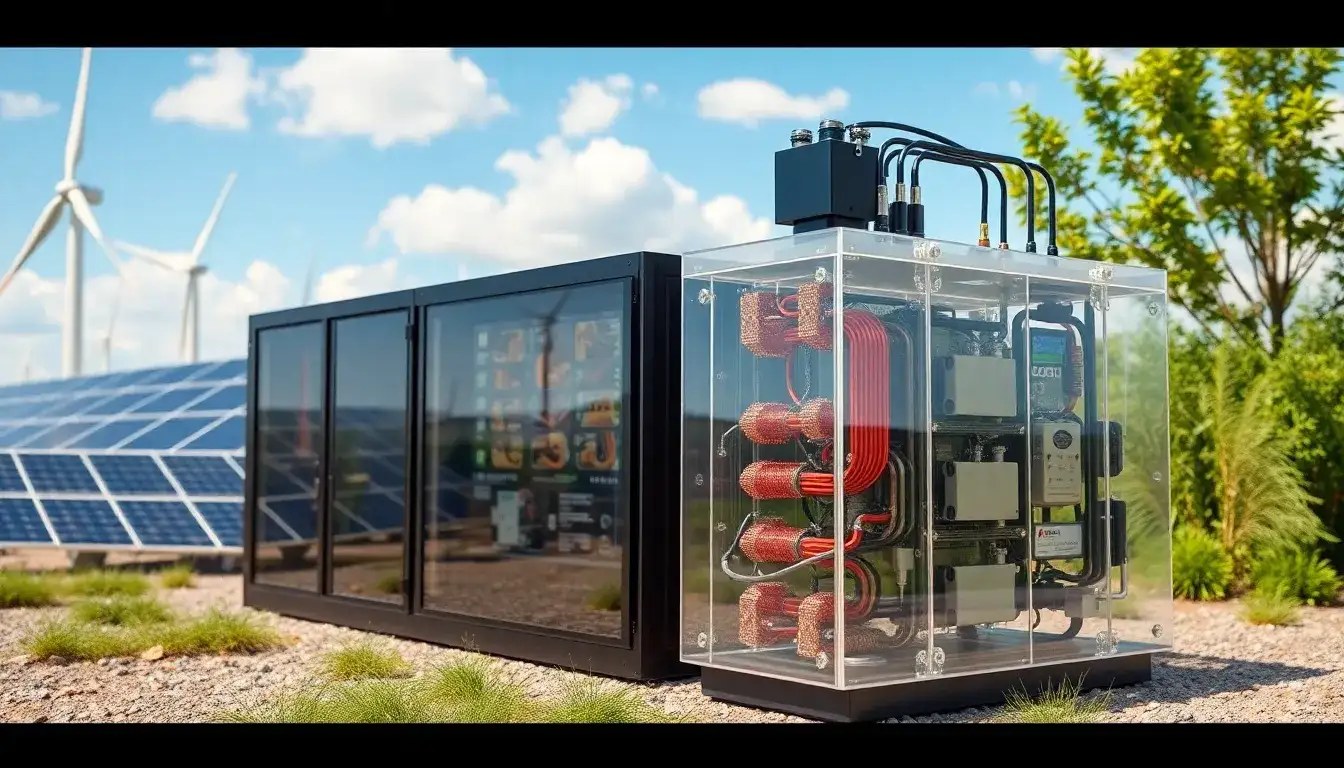
The Aqueous Organic Redox Flow Battery (AORFB) market is experiencing significant growth, fueled by the increasing integration of renewable energy sources and advancements in organic electrolyte chemistry that enhance performance. Despite the high upfront costs, the use of non-toxic materials along with government incentives is positioning AORFBs as crucial players in the transition to clean energy.
As of 2024, the AORFB market was valued at USD 1.4 Billion, with projections estimating it will reach USD 2.8 Billion by 2030, growing at a compound annual growth rate (CAGR) of 12.1%. This growth is primarily driven by the expanding deployment of renewable energy sources, such as solar and wind, necessitating reliable and scalable energy storage solutions to address intermittency issues. AORFBs are particularly well-suited for long-duration energy storage and offer flexible configurations for power and energy, making them ideal for both utility-scale and decentralized applications. Their use of non-toxic, water-based organic electrolytes provides significant environmental and safety advantages compared to traditional battery systems, aligning with global sustainability objectives and stricter environmental regulations.
Recent advancements in organic chemistry, membrane technologies, and system design have further improved the performance and economic viability of AORFBs, promoting their adoption in the market. Additionally, government support in the form of subsidies, tax incentives, and clean energy mandates is accelerating investments in this sector, highlighting the role of AORFBs as a key component in the shift towards low-carbon energy systems.
### Key Market Drivers
The global transition to renewable energy sources such as solar and wind is generating a substantial demand for reliable energy storage solutions to mitigate the intermittent nature of these resources. AORFBs stand out for their modularity and long-duration discharge capabilities, making them ideal for smoothing out fluctuations in renewable energy output. Unlike conventional batteries, AORFBs decouple energy capacity from power output, allowing for cost-effective scalability across applications, from microgrids to large utility installations. Their water-based, non-toxic electrolytes also ensure a safer and more sustainable alternative to metal-based systems, and ongoing grid modernization efforts enhance their relevance. As governments pursue ambitious renewable targets, such as the IEA’s forecast that renewables will supply over 42% of global electricity by 2030, the demand for dependable storage solutions has become increasingly urgent.
### Key Market Challenges
Despite their potential, the widespread adoption of AORFBs faces challenges due to high initial capital costs. These costs are attributed to the specialized components and materials necessary for system construction, including ion-exchange membranes, redox-active organic molecules, and large electrolyte tanks. While the operational safety and environmental benefits of AORFBs present strong value propositions, the absence of large-scale commercial deployment and economies of scale keeps costs higher than those of established lithium-ion technologies. The complex balance-of-plant requirements—such as pumps and site-specific infrastructure—also contribute to overall expenses, creating a significant financial barrier for utilities and developers in cost-sensitive markets.
### Key Market Trends
A notable trend in the AORFB market is the focused innovation surrounding organic electrolyte development. Researchers are synthetically engineering redox-active organic molecules like quinones, phenazines, and viologens to enhance performance aspects such as solubility, redox potential, cycling stability, and energy density. These advancements aim to address historical limitations in durability and energy output, positioning AORFBs closer to commercial competitiveness. Molecular customization allows manufacturers to optimize battery performance for specific applications, providing flexibility for both large-scale grid systems and smaller distributed energy storage solutions. Collaborations among startups, research institutions, and industrial stakeholders are driving rapid breakthroughs in electrolyte stability and cost-effective synthesis, which is expected to enhance battery reliability, scalability, and sustainability, ultimately leading to broader market penetration.
### Key Market Players
– ESS, Inc.
– JenaBatteries GmbH
– RedT Energy Storage
– ViZn Energy Systems, Inc.
– Sumitomo Electric Industries, Ltd.
– Redflow Limited
– Invinity Energy Systems
– CellCube Energy Storage Systems Inc.
### Key Attributes
– **Report Attribute Details**
– No. of Pages: 188
– Forecast Period: 2024 – 2030
– Estimated Market Value (USD) in 2024: $1.4 Billion
– Forecasted Market Value (USD) by 2030: $2.8 Billion
– Compound Annual Growth Rate: 12.1%
– Regions Covered: Global
### Report Scope
The Global Aqueous Organic Redox Flow Battery Market is segmented into various categories, including:
– **By Type**:
– < 1000 kWh - > 1000 kWh
– **By Application**:
– Utilities & Power Generation
– Commercial & Industrial
– **By Region**:
– North America (United States, Canada, Mexico)
– Europe (Germany, France, United Kingdom, Italy, Spain)
– Asia Pacific (China, India, Japan, South Korea, Australia)
– South America (Brazil, Colombia, Argentina)
– Middle East & Africa (Saudi Arabia, UAE, South Africa)
For more information about this report, visit [ResearchAndMarkets.com](https://www.researchandmarkets.com/r/dsnsf2).
Original article by NenPower, If reposted, please credit the source: https://nenpower.com/blog/growth-of-aqueous-organic-redox-flow-battery-market-driven-by-renewable-energy-integration-and-advancements-in-electrolyte-technology/

