

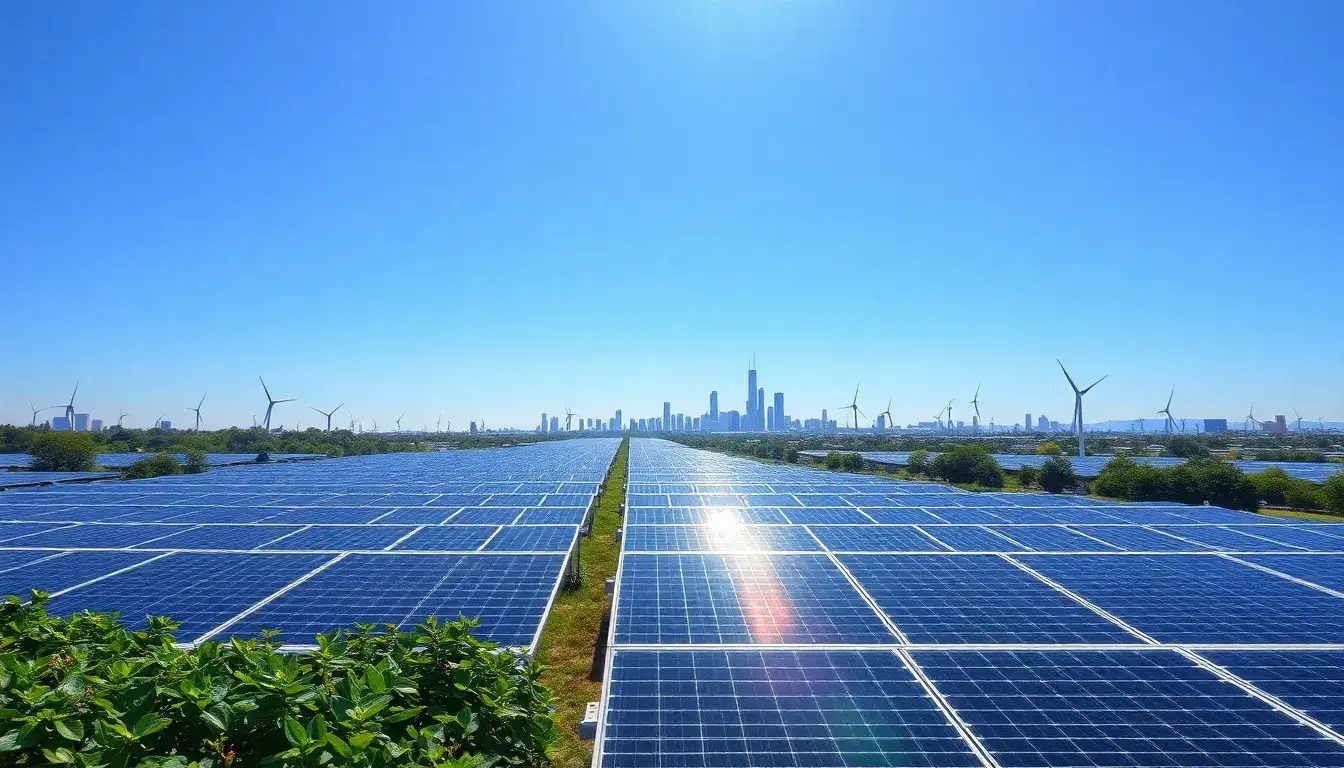
The Fixed Tilt Solar PV Market presents significant opportunities due to its cost-effectiveness and simplicity, making it ideal for utility-scale projects and rural electrification. Its popularity is growing in emerging economies, driven by affordability and ease of installation, which align with clean energy objectives in regions with high solar insolation.
### Fixed Tilt Solar PV Market Overview
According to a report from Research and Markets, the Fixed Tilt Solar PV Market was valued at USD 2.34 billion in 2024 and is projected to reach USD 4.35 billion by 2030, growing at a compound annual growth rate (CAGR) of 10.74%. Fixed tilt solar PV systems use stationary mounting structures to hold solar panels at a fixed angle, usually aligned with geographic latitude or seasonal sun exposure. Unlike tracking systems that adjust to follow the sun, fixed tilt systems are mechanically simple, cost-effective, and easier to install and maintain. These features make them particularly appealing for utility-scale projects and rural electrification in areas with high solar irradiance.
As the global initiative for clean energy intensifies, fixed tilt systems are becoming a preferred choice in both developed and emerging markets due to their low upfront costs, reliable performance, and suitability for infrastructure-constrained environments.
### Key Market Drivers
The primary drivers of the fixed tilt solar PV market are the cost-efficiency and straightforward design of these systems. They require fewer mechanical components than tracking alternatives, resulting in lower capital and operational expenditures. Their simple, static structures reduce maintenance needs and enhance system reliability, which is especially important for utility-scale solar farms where scalability and rapid deployment are crucial. With fewer moving parts, fixed tilt systems experience less mechanical failure, thus minimizing downtime and maintenance costs. They prove particularly effective in regions with abundant solar exposure and minimal cloud cover, achieving performance levels close to tracking systems without incurring additional costs.
In off-grid and rural areas, the low maintenance requirements of fixed tilt systems are essential, making them a viable option for developing regions. As global solar adoption increases, the demand for affordable, quick-to-install, and reliable PV solutions continues to favor fixed tilt technology.
### Key Market Challenges
A significant challenge for fixed tilt solar PV systems is their relatively lower energy generation efficiency compared to tracking systems. Since they are fixed at a set angle, these systems do not follow the sun’s trajectory, which can lead to reduced effectiveness during early morning and late afternoon hours. This limitation results in lower overall power output compared to single-axis or dual-axis tracking systems, which can increase energy production by 20-30% depending on the geographical location.
In competitive energy markets where maximizing energy yield and achieving the lowest levelized cost of electricity (LCOE) is critical, this performance gap can hinder investment in fixed tilt projects. This disadvantage is further pronounced in areas with high land costs, where maximizing energy output per square meter is essential. As panel prices decline and developers focus on achieving higher returns per unit area, fixed tilt solutions must innovate—such as incorporating bifacial modules or smart inverters—to remain competitive and attractive to utility-scale developers and financiers.
### Key Market Trends
Emerging economies are increasingly adopting fixed tilt solar PV systems due to their affordability, low complexity, and quick deployment capabilities. Governments in regions like Asia Pacific, Africa, and Latin America are emphasizing the expansion of renewable energy, and fixed tilt systems provide an ideal solution for large-scale deployment in rural and semi-urban areas. These systems are often prioritized in government-led initiatives, such as India’s National Solar Mission, where affordability and speed are paramount.
In Africa, fixed tilt systems facilitate mini-grid development for rural electrification, benefiting from their minimal maintenance requirements. International development organizations and financial institutions are also channeling investments into fixed tilt projects as part of sustainable infrastructure initiatives. Innovations in corrosion-resistant materials and durable mounting structures further enhance their suitability in challenging environments. As renewable energy targets tighten and costs continue to decrease, fixed tilt systems are expected to dominate solar infrastructure in cost-sensitive and high-insolation regions.
### Key Market Players
– First Solar, Inc.
– WTWH Media, LLC
– JUWI GmbH
– Wuxi Suntech Power Co., Ltd.
– Activ Solar GmbH
– Sharp Corporation
– JinkoSolar Holding Co., Ltd.
– Trinasolar
– Yingli Solar
– UNIRAC Inc.
### Report Attributes
– **Number of Pages:** 185
– **Forecast Period:** 2024 – 2030
– **Estimated Market Value (USD) in 2024:** $2.34 Billion
– **Forecasted Market Value (USD) by 2030:** $4.35 Billion
– **Compound Annual Growth Rate:** 10.7%
– **Regions Covered:** Global
### Report Scope
The Global Fixed Tilt Solar PV Market report categorizes the market based on various parameters, including:
– **By Installation Type:** Ground Mounted, Roof Mounted, Building Integrated
– **By End-User:** Residential, Commercial, Industrial
– **By Component:** Solar Panels, Inverters, Mounting Structures
– **By Region:**
– North America (United States, Canada, Mexico)
– Europe (France, United Kingdom, Italy, Germany, Spain)
– Asia-Pacific (China, India, Japan, Australia, South Korea)
– South America (Brazil, Argentina, Colombia)
– Middle East & Africa (South Africa, Saudi Arabia, UAE, Kuwait, Turkey)
For more information about this report, visit [Research and Markets](https://www.researchandmarkets.com/r/t5x82j).
Original article by NenPower, If reposted, please credit the source: https://nenpower.com/blog/growth-and-opportunities-in-the-fixed-tilt-solar-pv-market-forecast-for-2025-2030/

