

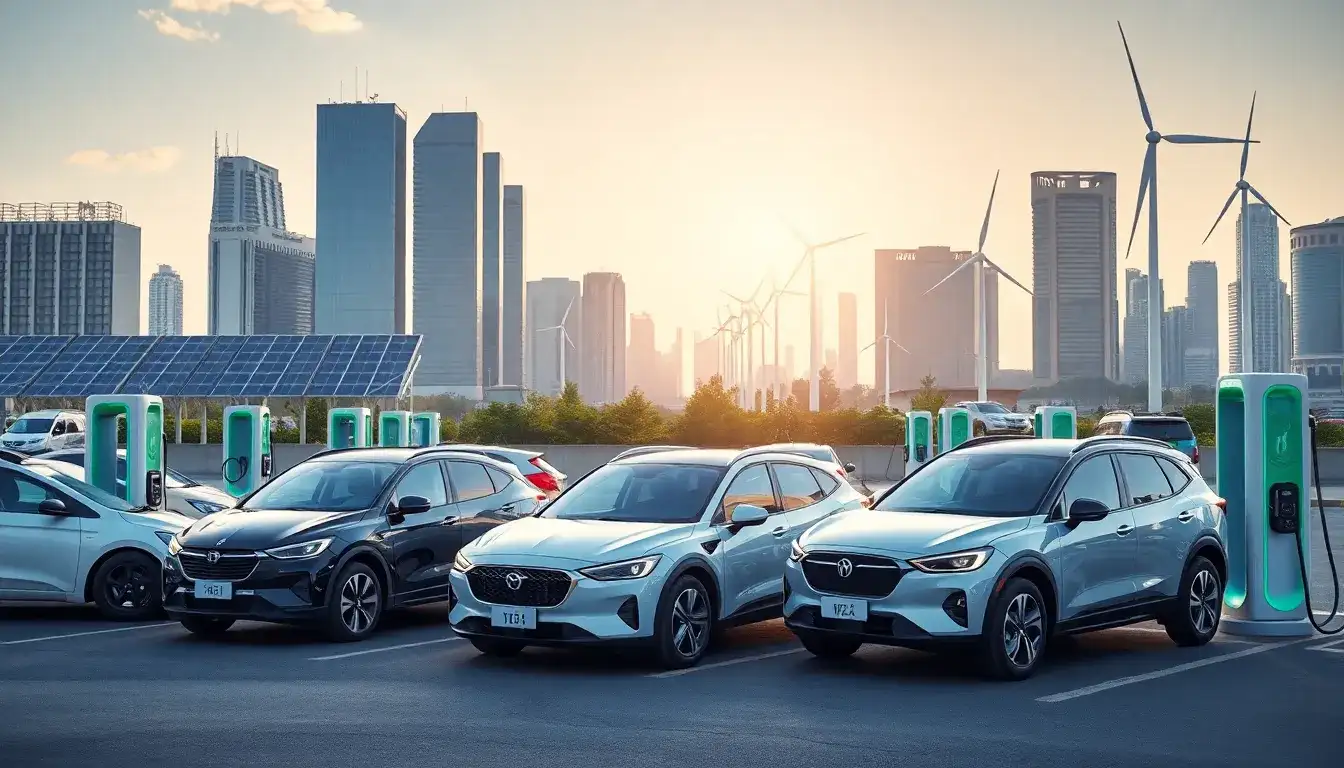
Charging and Swapping Services: Latest Developments
The North Star Power News Network provides comprehensive information on charging and swapping services, keeping you updated on the latest trends in the industry. As of the end of April, Hainan Province has seen a remarkable year-on-year growth of over 93% in the number of charging piles installed, according to Su Bin, the manager of the market operations department at Hainan’s Charging and Swapping Network Company.
In recent years, Hainan has leveraged its regulatory platform to enhance the services of its “Hainan Charging Pile” app (referred to as the “One Network” app), and has launched a mini-program that has significantly increased the platform’s visibility and user engagement. This initiative aims to facilitate green travel for residents and tourists alike.
On May 16, a reporter was informed that Shandong Province has optimized its installed capacity structure to alleviate the day-night “peak-valley difference” by establishing 25 “vehicle-grid interaction” demonstration stations. These stations guide electric vehicles to charge during off-peak times and discharge during peak periods, effectively flattening the peak demand curve and promoting local consumption of renewable energy.
The vehicle-grid interaction technology is now entering a new phase of large-scale application, focusing on developing reliable, flexible, and low-energy consumption systems, as well as dual-direction charging and discharging equipment. Key technologies for friendly charging and swapping stations, such as integrated photovoltaic energy storage and flexible DC bus connections, are also under development. The standards and platform construction are being expedited.
Additionally, Shandong has aggregated charging and swapping facilities to create a virtual power plant, achieving a maximum load regulation capacity of 36,600 kilowatts, and has successfully implemented a normalized, large-scale vehicle-grid interaction under the electricity spot market model.
Despite the progress, challenges remain for the large-scale application of vehicle-grid interaction technology, particularly in strengthening the underlying infrastructure. On May 16, the China Electric Power News reported on the advancement of a comprehensive approach to generation, distribution, storage, and utilization in Shandong Province, characterized by eight major initiatives aimed at ensuring high-level utilization of renewable energy.
On May 14-16, Corin New Energy showcased its full-scene solutions at the 2025 Shanghai CPSE Charging and Swapping Exhibition, emphasizing innovative technology to lead a zero-carbon future. The company was recognized as one of the “Top Ten Outstanding Supplier Brands in the Charging and Swapping Industry in 2025” due to its contributions in this area.
Huawei Digital Energy is also preparing for a comprehensive era of ultra-fast charging, anticipating strong market performance for electric heavy-duty trucks starting in 2025. The company has developed technologies that integrate high compatibility with various models, easy maintenance, and land-saving construction advantages, positioning them ahead in the field of battery swapping technology.
At the same exhibition, Sunpower presented its solutions to tackle the challenges of recharging heavy-duty electric vehicles, highlighting the diverse charging scenarios that must withstand harsh environmental conditions.
On May 14, the National Grid Shandong Electric Power reported a significant increase during the recent May Day holiday, with charging facilities achieving 19,049,500 kilowatt-hours of charging, a year-on-year increase of 45.50%, and 181,200 charging sessions, up 22.02%.
In Hubei, a draft technical specification for lightning protection at electric vehicle charging stations was released, emphasizing the importance of robust safety measures based on recent lightning monitoring data.
In Shanghai’s Changning District, efforts are being made to support energy-saving projects participating in virtual power plant construction, with a total of 29 resource aggregators registered to join operations by the end of 2024.
According to a report published on May 12, the national public charging infrastructure experienced a significant boost in April 2025, with an increase of 92,000 charging stations compared to March, marking a 34.1% year-on-year growth.
In Shenzhen’s Nanshan District, the local government has issued a draft management approach for new energy vehicle charging facilities, highlighting the importance of orderly charging capabilities and integration with virtual power plants for new installations.
Looking ahead, ongoing developments in the hydrogen energy sector include a significant project in Shaanxi, which has been approved for construction, featuring a comprehensive refueling station with a hydrogen production capacity of 5000 kg/d and a liquefied natural gas refueling capability of 20,000 nm³/h.
Original article by NenPower, If reposted, please credit the source: https://nenpower.com/blog/growth-and-innovations-in-electric-vehicle-charging-infrastructure-in-china/

