

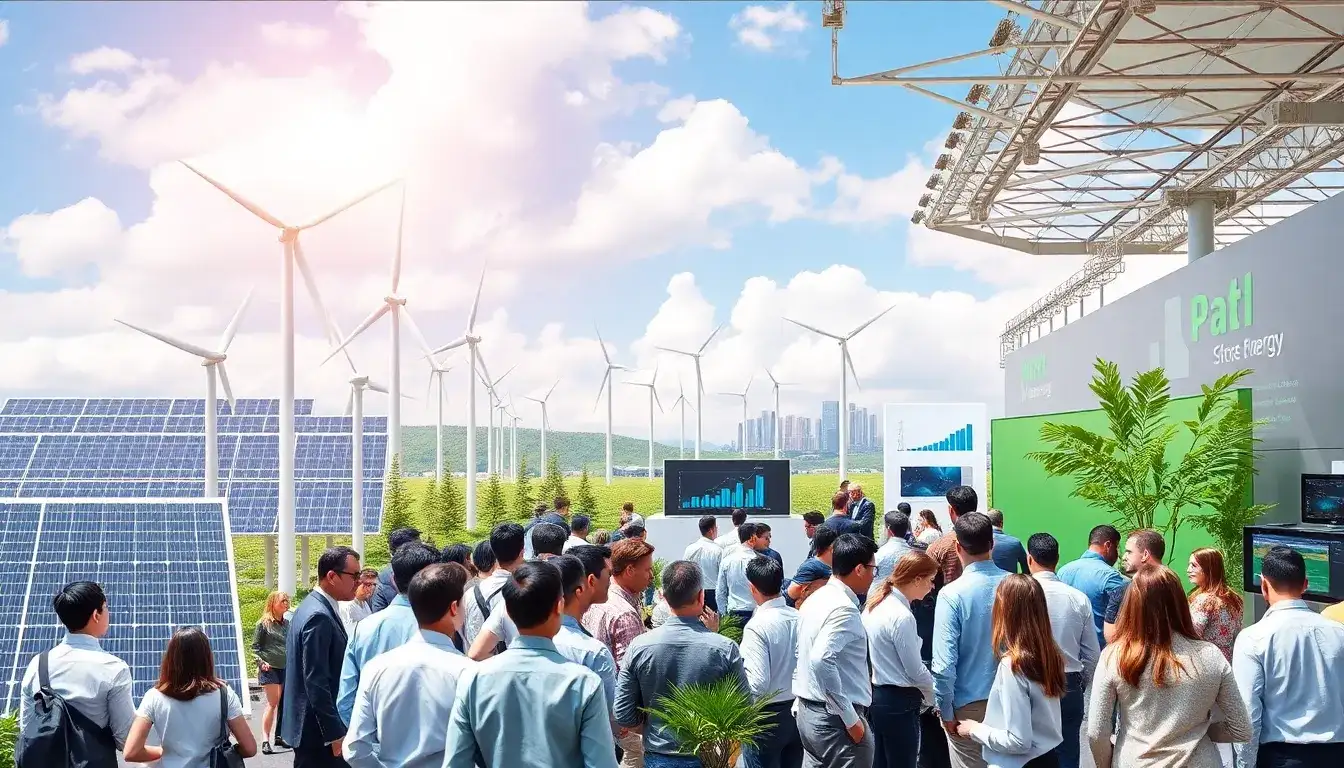
Global Renewable Energy Developments (May–June 2025)
Global renewable energy generation witnessed remarkable growth and transformative changes during May and June 2025. A significant increase in clean energy investments is driving unprecedented spending, with the International Energy Agency (IEA) projecting total global energy investment to reach $3.3 trillion in 2025. Of this amount, approximately $2.2 trillion (around two-thirds) is expected to flow into clean energy technologies, including renewables, nuclear, and storage.
According to an IEA report released on June 5, 2025, solar power is anticipated to attract the largest share of investments, with around $450 billion allocated for 2025, making it the most significant area of energy investment. Despite ongoing economic uncertainties, IEA Executive Director Fatih Birol noted that most existing renewable projects remain on track, although investors might take a cautious approach to new ventures.
This positive outlook coincides with unprecedented renewable energy expansion. For instance, in China, the installation of solar and wind power reached record levels. As reported on June 26, 2025, China added 198 GW of solar and 46 GW of wind capacity between January and May 2025, enough to generate as much electricity as countries like Indonesia or Turkey. China’s solar capacity has now exceeded 1,000 GW (1 terawatt), accounting for roughly half of the world’s total solar capacity.
Simultaneously, across the globe, renewable energy generation achieved new milestones. In the United States, clean power (from renewables and nuclear sources) accounted for the majority of electricity for three consecutive months in spring 2025 (March through May), marking an unprecedented sustained period. U.S. data indicated record outputs from solar farms, which experienced a 19% year-on-year increase in May, alongside notable contributions from wind and hydro sources, allowing clean energy to outproduce fossil fuels despite slight dips in wind output.
In Europe, officials are advancing long-term climate objectives, with the EU preparing to propose a 2040 emissions goal aimed at achieving a 90% reduction from 1990 levels. Denmark’s Climate Minister Lars Aagaard emphasized that “short-term challenges” like budgetary pressures must not hinder the green transition in Europe, highlighting the importance of expanding renewables for both climate and energy security.
Overall, the late spring of 2025 was characterized by rapid renewable energy growth, particularly in solar and wind, alongside ongoing policy discussions and technological advancements.
### Solar Energy Developments (May–June 2025)
#### Solar Investment and Capacity Growth
Solar power continues to spearhead global clean energy growth. The IEA’s World Energy Investment 2025 report (released in early June) identified solar as the primary investment focus, projecting $450 billion to be spent on solar in 2025—more than any other energy source. This surge in investment is fueling rapid capacity additions worldwide, particularly in China. According to a report on June 26, 2025, China installed 93 GW of new solar capacity in May 2025 alone, equating to nearly “100 solar panels every second.” Cumulatively, from January to May 2025, China added 198 GW, pushing its total solar PV capacity above 1 terawatt for the first time.
For context, the solar capacity added in May 2025 could generate as much electricity as an entire country like Poland or the UAE in a year. This monumental growth reinforces China’s position as the world’s largest clean energy producer, despite also being the largest emitter. This achievement reflects President Xi Jinping’s strategy of aligning climate goals with industrial growth in renewables.
Other regions are also witnessing solar expansion. In Europe, solar output reached seasonal records due to new installations and favorable spring weather, contributing to an all-time high of 14% solar in the EU’s electricity mix in May. Meanwhile, in the Middle East, countries are investing in solar manufacturing and projects. For instance, Egypt began construction on a $200 million solar components factory in June 2025, aiming to produce 2 GW of solar panels annually in its initial phase. Additionally, the Emirate of Sharjah in the UAE inaugurated its first utility-scale solar farm (60 MW) in June to support industrial facilities and supply surplus power to the grid.
#### Technological Innovations
During this period, significant advancements in solar technology emerged, promising increased efficiency. Several leading solar manufacturers announced new world records in May and June 2025. For example, at the SNEC industry expo in late May, China’s LONGi Green Energy unveiled a crystalline silicon-perovskite tandem solar cell that achieved approximately 33% efficiency—a breakthrough for large-area cells. Another Chinese company, JinkoSolar, reported achieving a 27.02% efficiency record for its latest N-type TOPCon silicon solar cells. This is noteworthy as mainstream commercial solar cells typically operate at around 22% efficiency, signaling that future panels could generate significantly more power in the same area.
Research institutions are also making strides in perovskite solar technology and flexible cells, maintaining the industry’s pace of rapid innovation. These efficiency gains, alongside improvements in energy storage, are crucial for sustaining solar’s growth as it becomes an increasingly significant part of global power generation.
#### Policy and Market Developments
Despite strong growth, the solar sector encountered policy uncertainties in the United States during May and June 2025. In late May, the U.S. House of Representatives passed a budget bill that would revoke numerous renewable energy incentives established under the 2022 Inflation Reduction Act. This legislation, referred to as the “one big beautiful bill,” aims to expedite the expiration of solar and wind tax credits and render them unusable for many projects. It would also accelerate the end date for federal clean energy production credits to 2028 and impose strict deadlines for construction starts, undermining projects that rely on these incentives.
Clean energy leaders warned that this legislation could effectively stall the clean energy production boom in the U.S. Abigail Ross Hopper, president of the Solar Energy Industries Association (SEIA), cautioned that if enacted, the rollback would disrupt a thriving economic sector that has delivered a historic manufacturing renaissance, lower electric bills, job growth, and substantial investments across the country.
The immediate market impact was evident, as shares of major solar companies plummeted following the House vote. By late June, attention shifted to the Senate’s version of the bill, which aimed to repeal renewable credits even more abruptly, potentially delivering a “fatal blow” to wind and solar tax credits established since 2005. This plan also included a new excise tax on wind and solar projects completed after 2027 and offered a tax break for coal production, highlighting a significant policy reversal in the U.S.
These developments sparked outrage from the clean energy sector and experts alike. The non-profit SAFE, focused on U.S. energy security, criticized the bill as “outright energy surrender” to countries like China, which continue to advance in clean technology. Even Elon Musk, a Trump advisor and clean tech entrepreneur, condemned the Senate bill as “utterly insane and destructive,” asserting it favored outdated industries while harming future-oriented sectors.
Despite the turbulence in the U.S., other governments continued to support solar growth. For example, Canada announced new projects on May 7, 2025, when New Brunswick’s utility (NB Power) revealed contracts for 452 MW of new wind and solar capacity in collaboration with First Nations communities, contributing to efforts to green the electricity grid in Atlantic Canada.
#### Expert and Industry Perspective
Many experts emphasize that the long-term trajectory for solar energy remains positive, even in the face of policy challenges. Gina McCarthy, former White House climate advisor, noted in a May 12, 2025 interview that U.S. companies continue to invest in clean energy, despite becoming less vocal publicly under the current administration. She acknowledged that while the federal policy reversal is “abrupt” and discouraging, “few businesses with advanced transition initiatives are watering down their climate plans or backtracking” on renewable investments. This persistence in the industry, coupled with robust international growth, suggests that solar energy is poised for continued rapid expansion globally.
In summary, the period of May to June 2025 witnessed solar power reaching new heights, marked by record deployments, substantial investments, and technological advancements, all while navigating political challenges in certain markets.
### Wind Energy Developments (May–June 2025)
#### Global Wind Expansion
The wind power sector also experienced significant developments worldwide during late spring 2025. China maintained its lead in scale, adding an impressive amount of wind capacity alongside its solar boom. Between January and May 2025, China installed 46 GW of new wind power, in addition to the aforementioned 198 GW of solar capacity. Notably, 26 GW of wind capacity were installed in May alone, equating to approximately 5,300 new wind turbines in just one month. This addition is comparable to the total installed wind capacity of countries like Vietnam or Argentina, underscoring China’s dominance as the world’s largest wind market.
On June 5, 2025, Chinese engineers achieved a technological milestone by installing the world’s first 18 MW offshore wind turbine at a test site in Shantou, Guangdong. This prototype, featuring a massive 260 m rotor diameter, is now the most powerful single wind turbine ever constructed, surpassing previous models in the 15–16 MW class. This advancement indicates a shift toward more powerful turbines capable of harnessing additional energy per unit, essential for the economics of offshore wind farms.
Outside China, other regions saw steady development in wind projects. In Europe, progress was made on both onshore and offshore initiatives. For example, Danish authorities approved a 51 MW “hybrid” renewable park that combines wind and solar in May, while Germany resumed construction on a 31 MW onshore wind farm after winter delays. In the UK, ongoing developments include the construction of offshore wind farms, such as Dogger Bank, which is progressing toward becoming the world’s largest at 3.6 GW. In North America, Canada’s NB Power signed agreements in May for four new wind farms, totaling 452 MW in capacity, to be developed jointly with local First Nations partners, emphasizing indigenous participation in clean energy initiatives.
#### Corporate and Market Moves
Several corporate developments highlighted the wind sector’s expansion. In Europe, major utilities continued to grow their portfolios abroad. Italy’s largest utility, Enel, announced on May 26, 2025, a deal to enhance its U.S. renewable portfolio by 285 MW through an asset swap with investment firm Gulf Pacific Power. This transaction will increase Enel’s total installed green capacity in the U.S. to approximately 11.9 GW and is part of the company’s strategy to acquire operating wind projects, indicating confidence in the long-term profitability of wind energy, especially in markets with stable policies.
However, in the United States, policy uncertainties clouded the outlook for the wind sector, similarly to the situation with solar energy. The House and Senate budget proposals discussed earlier also aim to expedite the end of wind power tax credits and introduce new taxes on wind projects. The Senate’s late-June bill would repeal the Production Tax Credit (PTC) for wind—an incentive in place since 2005—and impose an additional tax on new wind farms using any components sourced from China starting in 2028. The American Clean Power Association and renewable developers warned that such measures could significantly hinder many planned wind installations.
Despite these challenges in the U.S., global wind investment remains robust. The IEA noted that worldwide investment in wind power is part of the $2.2 trillion allocated for clean energy spending in 2025. Emerging markets are stepping up to fill any potential gaps in the U.S. For instance, South Africa is proceeding with large-scale wind and solar auctions, and Brazil and Australia are witnessing strong wind project pipelines in 2025.
#### Technology and Innovation
In addition to the groundbreaking 18 MW turbine achievement in China, the wind industry is pushing technological boundaries elsewhere. Companies are deploying taller turbines and exploring floating offshore wind options. A noteworthy innovation in June 2025 came from a floating wind project in China, where state-owned CRRC launched what it claimed to be the world’s largest floating wind turbine in Shandong province, indicating China’s entry into the floating wind sector to utilize deep-water resources.
In Europe, developers continued testing floating platforms in regions like Scotland, Norway, and Spain. While no new efficiency records comparable to those in solar energy were reported, the scale of wind turbine deployment remains a key metric of progress. The introduction of an 18 MW unit suggests that future offshore wind farms might utilize turbines in the 15–20 MW range, significantly lowering the cost per MWh.
Hybrid renewable plants are another emerging trend, with projects that combine wind, solar, and storage being approved, such as the aforementioned Danish hybrid park featuring 22.5 MW of wind capacity and 28.8 MW of solar. Additionally, advancements in wind integration have been observed, with grid operators in areas like Texas and Germany managing new wind generation records in spring 2025 without significant issues, thanks to improved forecasting and battery support.
In summary, the wind energy sector in May–June 2025 was characterized by rapid expansion, particularly in China, alongside active corporate investment and project development across continents amid ongoing policy discussions. While the U.S. considers reducing support for wind energy, many other regions are advancing their renewable initiatives. Experts emphasize the necessity for wind power— which accounted for approximately 7% of global electricity in 2022—to grow significantly to meet climate goals. The record installations and larger turbines in 2025 indicate that the wind industry is prepared to rise to this challenge.
### Tidal Energy and Marine Renewables (May–June 2025)
Tidal stream and wave energy—collectively referred to as “marine renewables”—made significant strides in mid-2025, although these technologies remain primarily in pre-commercial or early commercial stages. A major tidal energy initiative in Wales reached important milestones during this period. Inyanga Marine Energy Group, a UK-based developer, is constructing a 20 MW tidal stream array at the Morlais Demonstration Zone off Anglesey, Wales—one of the largest consented tidal energy projects globally. On May 27, 2025, Inyanga announced it had awarded a fabrication contract to Hutchinson Engineering for its proprietary “HydroWing” tidal turbines. The contract covers essential components, including steel foundations and nacelle structures, for the initial units of the tidal array, with deployment of the first unit scheduled for Q1 2026.
Inyanga’s CEO, Richard Parkinson, described the Morlais project as “the largest of its kind in the world” and a “once-in-a-generation opportunity to demonstrate the full potential of tidal energy,” positioning Wales as a global pioneer in this field. This project has also received support from the Welsh Government, which invested £2 million in Inyanga as part of its funding efforts, illustrating public commitment to tidal energy innovation. Throughout June 2025, Inyanga continued to award additional contracts for the array’s construction, indicating steady progress.
Other tidal and wave initiatives also advanced during this period. In North America, Canada’s Fundy Ocean Research Center for Energy (FORCE) in Nova Scotia, home to the world’s most powerful tides, announced new opportunities for tidal projects as of June 3, 2025, inviting developers to deploy next-generation tidal turbines at its test sites. Meanwhile, in the United States, attention turned to wave energy along the Pacific coast. In June, Eco Wave Power, an Israeli-founded wave energy company, confirmed the launch date for the first-ever grid-connected wave power project in the U.S. This project, located at AltaSea in the Port of Los Angeles, will utilize an onshore wave energy array with floating devices attached to a pier to harness Pacific wave motion. It is scheduled to go live on September 9, 2025, with a demonstration event planned to showcase this “historic installation” as a model for transforming ports into clean energy hubs.
While tidal and wave energy are still far from mainstream, experts believe they could play a niche but significant role in future energy systems, particularly for coastal communities and as a reliable complement to wind and solar. The progress made in May–June 2025—ranging from Wales’ 20 MW array construction to U.S. wave energy demonstrations—indicates that marine renewables are advancing. Industry advocates emphasize the importance of consistent government support, such as the UK’s tidal energy Contracts for Difference allocation and Canada’s tax credits for tidal prototypes, in this developmental phase.
### Outlook and Key Takeaways
The developments in May and June 2025 reflect both remarkable momentum and significant challenges within the renewable energy landscape. On one hand, investment in clean energy is at an all-time high, reaching record levels globally, and the deployment of solar and wind technologies is accelerating faster than ever, particularly in Asia (especially China), with strong contributions from Europe, the Middle East, and the Americas. Technological innovations continue to enhance performance and reduce costs, from more efficient solar cells to more powerful wind turbines. Emerging sectors like tidal and wave energy are also making tangible advancements, indicating an expanding toolkit of renewable options for the future.
Moreover, experts and leaders stress the necessity of remaining committed to long-term climate and energy objectives. “It’s not a solution… to halt the green transition,” warned Denmark’s climate minister Lars Aagaard, as Europe sets its sights on achieving deep emissions cuts by 2040. This sentiment reflects a widespread consensus in many countries that scaling up renewables is crucial for energy security, economic growth in new sectors, and emissions reduction.
Conversely, the period also highlighted policy risks and growing pains. In the United States, attempts to roll back clean energy incentives introduce uncertainties that could slow renewable deployment in one of the world’s largest markets. Some European nations have also expressed concerns regarding the pace and costs associated with the transition, indicating that even with overall progress, debates about burden-sharing and energy affordability persist. Additionally, issues related to supply chain strains and the need for grid infrastructure enhancements remain challenges. The IEA has warned that while investments in generation are booming, annual grid investments (~$400 billion) are still insufficient, potentially jeopardizing reliability unless permitting and planning processes improve.
In summary, the global trajectory for renewable generation in mid-2025 is overwhelmingly upward. Solar and wind technologies are achieving record levels of capacity and generation, attracting the majority of new investments in the power sector. Companies and governments worldwide are announcing new projects and manufacturing initiatives on an almost weekly basis, from 450 MW wind farms in Canada to solar factories in Egypt. Even nascent technologies like tidal and wave energy are beginning to gain attention with concrete projects. This two-month snapshot illustrates an industry transitioning from niche to mainstream, delivering real power in real time, as evidenced by the significant shares of renewables in the electricity mix of several major economies.
However, it also serves as a reminder that policy support remains a critical variable; supportive policies can ignite investment and deployment, as seen in the renewables boom from 2022 to 2024 under the U.S. Inflation Reduction Act or the EU’s Green Deal, while policy reversals can dampen momentum and confidence in the sector. Stakeholders are closely monitoring the shifting political landscape.
Looking ahead, analysts expect that 2025 will set new records for global renewable energy additions, barring major economic disruptions. The IEA’s projection of $3.3 trillion in energy investment, with the majority directed toward clean energy, serves as a strong indicator of this trend. However, the pace of growth in each country will depend on the stability of policy frameworks and continued technological advancements. As Fatih Birol summarized in June 2025, “the fast-evolving economic and trade picture” presents challenges, but the clean energy surge remains on track. The world is witnessing that renewable energy is not just an ideal for the future—it is happening now at an unprecedented scale, bringing both opportunities and the necessity for thoughtful navigation of obstacles. The balance of news—from bullish corporate investments and innovation breakthroughs to political debates—underscores that the global renewable transition is entering a critical phase marked by action and implementation. The coming months will reveal whether the record growth observed in May and June 2025 can be sustained and even amplified in the latter half of the year, keeping the world aligned with its clean energy and climate ambitions.
Original article by NenPower, If reposted, please credit the source: https://nenpower.com/blog/global-surge-in-renewable-energy-investments-and-capacity-growth-may-to-june-2025/

