

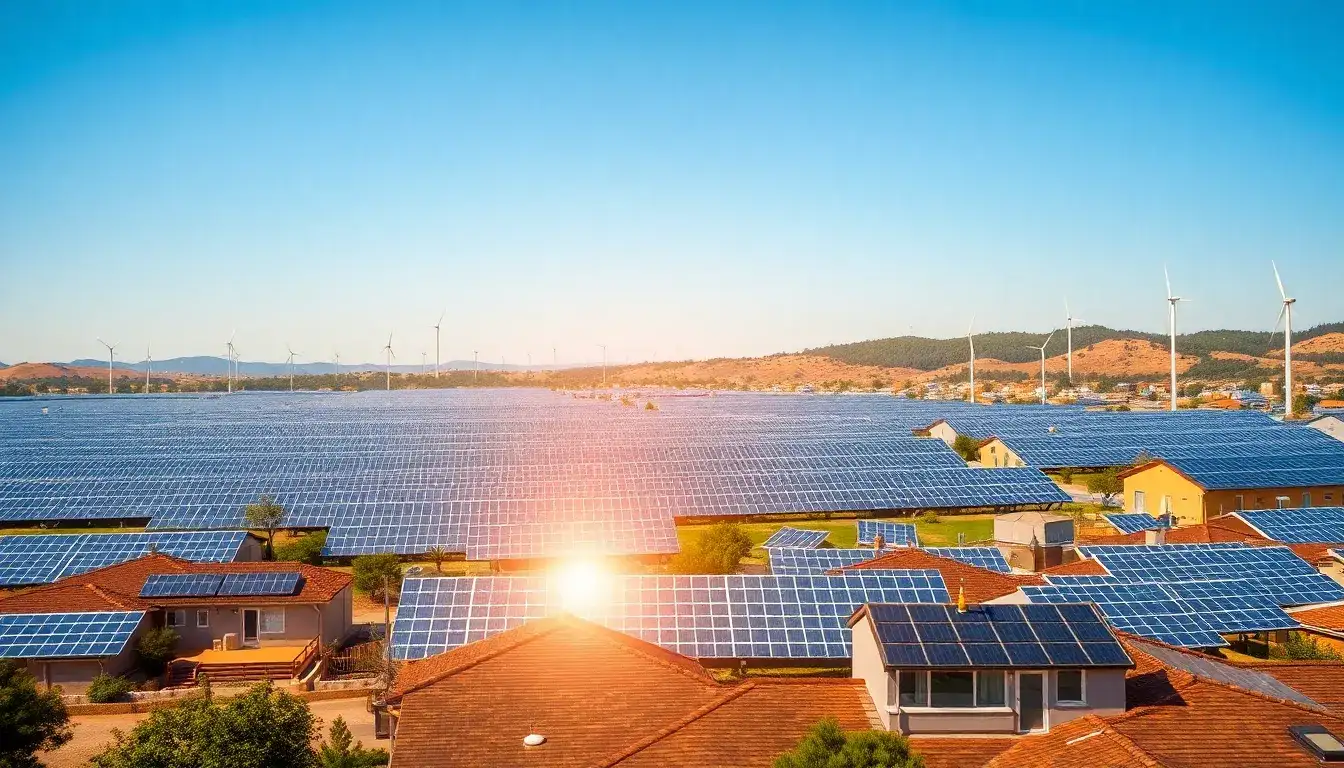
The solar energy systems market is poised for remarkable growth, projected to reach a valuation of US$ 948.67 billion by 2033, up from US$ 251.40 billion in 2024. This expansion represents a compound annual growth rate (CAGR) of 15.90% during the forecast period from 2025 to 2033. The market’s transformation is driven by a confluence of factors, including synchronized policy incentives, record-low module prices, diverse regional manufacturing, innovations in grid-forming technologies, and new financing mechanisms, solidifying solar energy as the most resilient and preferred power technology for investors globally.
Recent policy developments have significantly reshaped the solar energy landscape. In the United States, the Inflation Reduction Act has established a 36-month period of uncapped investment tax credits. Additionally, the Treasury Department reported the registration of projects totaling 94 GW of direct-current capacity between January 2023 and February 2024. In the European Union, the Green Deal Industrial Plan has expedited grid connections for plants under 150 MW and reduced average permitting times from 42 months to 27 months, according to the European Solar Manufacturing Council. These policy frameworks are not only encouraging developers but are also influencing demand geography, steering procurement budgets towards domestic content and low-carbon supply chains.
The solar energy systems market is now characterized by a more robust connection between regulatory commitments and contract signings than ever before. In April 2024, India’s Production-Linked Incentive scheme awarded 39 GW of vertically integrated capacity, while Brazil’s revised net-metering law generated 1.8 million new residential interconnection requests in just the first quarter. As these measures are incorporated into law rather than executive orders, investors increasingly regard them as reliable drivers for growth, fostering orderly build-outs and enhancing visibility for suppliers planning expansions in polysilicon, wafers, and trackers.
### Key Findings in the Solar Energy Systems Market
– **Market Forecast (2033):** US$ 948.67 billion
– **CAGR:** 15.90%
– **Largest Region (2024):** Asia Pacific (60%)
– **By Product Type:** Solar Panels (43%)
– **By End Use:** Utility (67%)
– **By Source:** New Installation (97%)
### Major Drivers
– The Inflation Reduction Act is fostering corporate offtakes and utility pipelines.
– Falling polysilicon prices are reducing module costs and compressing project levelized energy.
– Increased data center demand is driving long-term solar Power Purchase Agreements (PPAs) and hybrid storage growth.
### Key Trends
– Rapid adoption of TOPCon technology is shifting manufacturing investments toward higher-efficiency cell lines.
– Utility-scale solar-plus-storage auctions are favoring four-hour batteries to provide reliable evening supply.
– Onsite commercial microgrids are integrating photovoltaic systems with electric vehicle chargers and demand-response software.
### Challenges
– Backlogs in interconnection queues are causing delays and increasing costs for developers.
– Uncertainties surrounding trade enforcement are complicating module sourcing and extending procurement lead times.
– Distribution grid constraints are limiting rooftop exports and necessitating smart inverter retrofits.
### Cost Curve Breakthroughs Enhancing Adoption
In the past decade, module prices below US$ 0.40 per watt were considered ambitious. As of 2024, mainstream monofacial panels are being cleared at US$ 0.22 per watt at Asian ports, with some n-type products hitting US$ 0.19 per watt for large quantities. Soft costs have also significantly decreased; automated design software can now generate residential bill-of-materials in under three minutes, and the median interconnection study fee in the U.S. has fallen to US$ 1,750 following the implementation of transmission-provider cost caps.
Storage costs are similarly decreasing, with lithium-iron-phosphate pack prices averaging US$ 95 per kilowatt-hour in March 2024, creating opportunities for four-hour configurations that enable firm capacity payments for merchant solar operators. These favorable cost dynamics are expanding the solar energy systems market beyond utilities, with cold-chain logistics firms in Southeast Asia deploying 5 MW rooftop arrays with two-hour batteries to reduce annual diesel generator usage by 14 GWh.
### Technological Innovations
The solar energy systems market is witnessing the commercialization of laboratory achievements at production scale. In the first half of 2024, global shipments of TOPCon modules exceeded 120 GW, a significant increase from 20 GW in 2022. Module manufacturers are now providing guaranteed bifacial gain modeling tools validated with lidar-derived albedo data, which enhance the reliability of yield estimates. On the inverter front, clusters of three-phase microinverters rated at 320 VA support daisy-chain architectures, minimizing single-point-of-failure risks for commercial rooftops. Concurrently, asset-management software has evolved from reactive monitoring to predictive orchestration, enabling operational efficiencies that reduce costs.
### Supply Chain Dynamics
Historically, over 80% of crystalline-silicon module production was concentrated in a single country. However, by 2024, this concentration is dissipating. The U.S. Department of Energy confirmed 65 GW of domestic module capacity either operational or under construction, including large-scale facilities in Ohio and Georgia. Europe is also advancing with Germany’s Meyer Burger launching a 3.2 GW heterojunction line, and Norway’s NorSun restarting 1 GW of ingot casting powered by low-carbon hydropower.
### Financing Structures
The perception of utility-scale solar has evolved, making it a competitive asset alongside investment-grade infrastructure. In 2023, green-bond issuance reached over US$ 850 billion, with a quarter allocated for solar portfolios. Yieldco structures are thriving, as seen with the top four U.S.-listed vehicles adding 7.4 GW of operating assets in the past year. Innovative consumer-side models are also gaining traction, enabling greater access for residential systems and expanding rural purchasing power.
### Conclusion
The solar energy systems market is diversifying rapidly across commercial, industrial, and residential segments, each exhibiting unique growth trajectories. As demand surges in emerging markets, the solar industry is set to flourish, proving its resilience and adaptability. The competitive landscape is evolving, with key players enhancing their capabilities to meet the growing demand for solar technology.
For more detailed insights and analysis, please refer to Astute Analytica’s comprehensive reports on the solar energy systems market.
Original article by NenPower, If reposted, please credit the source: https://nenpower.com/blog/global-solar-energy-systems-market-set-to-reach-us-948-67-billion-by-2033-driven-by-policy-incentives-and-technological-advancements/

