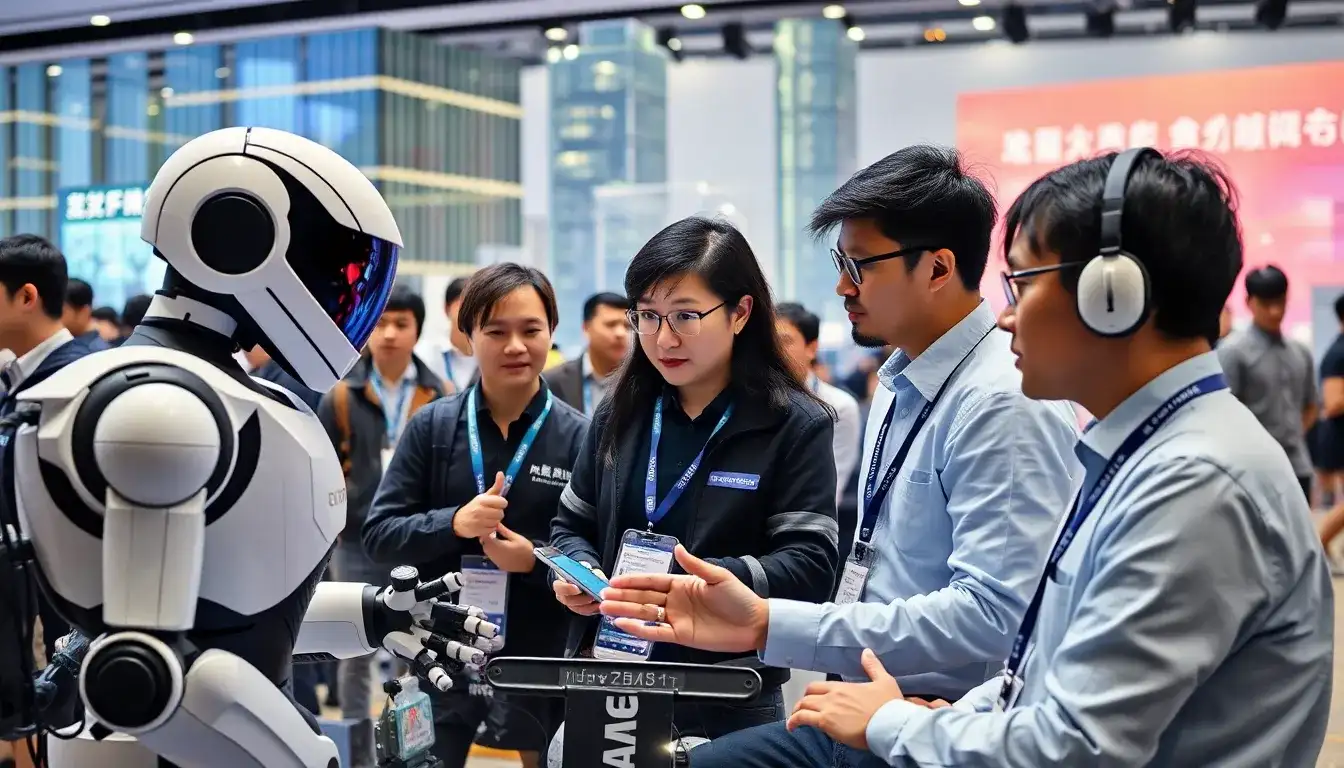
The inaugural Embodied AI Developers Conference (EAIDC 2026) concluded in Shenzhen on March 30, marking a significant milestone in the field of embodied intelligence. This event was guided by the Shenzhen Artificial Intelligence Industry Office and co-hosted by Self-Variable Robotics, the Shenzhen Artificial Intelligence Industry Association, and the Guangdong Embodied Intelligence Training Ground.
As the world’s first large-scale offline hackathon focused on the practical application of embodied AI foundational models, the conference attracted over a hundred participating teams from leading universities and research institutes, such as Tsinghua University, Peking University, and Zhejiang University. Ultimately, 20 teams, totaling around 60 members, advanced to the finals. The performance of the teams exceeded the anticipated difficulty levels, yielding results beyond expectations.
Lin Yi, Director of the Shenzhen Artificial Intelligence Industry Office, attended the conference and highlighted the current pivotal phase of embodied intelligence as it transitions from technological breakthroughs to industrial applications. He emphasized that the conference served as an important platform for exploring application scenarios and promoting large-scale implementation. Shenzhen has identified embodied intelligence as a key direction for cultivating new productivity, with notable companies like Self-Variable emerging and providing continuous support for talent and teams.
Unlike previous competitions that focused on robots in controlled lab environments, EAIDC is the first embodied intelligence event to incorporate “real-world environments” and “full-chain tasks” into its competition framework. All participating robots were required to operate in real physical settings, confronting dynamically changing environmental conditions while completing tasks that integrated long-range, complex reasoning and precise operations. There were no shortcuts through simulations, no preset parameters, and no safe zones within a single track. EAIDC confronted industry challenges head-on: can embodied intelligence models effectively function in the real world?
Beyond the competition, leading academics and industry leaders gathered to discuss essential topics surrounding embodied intelligence, including industry-academia collaboration, open-source ecosystem development, and real-world applications. The event facilitated deep resonance among academia, industry, and developers.
EAIDC introduced three groundbreaking approaches that redefined embodied model competitions in real-world conditions:
- First large-scale practical exercise in the physical world – This event was the largest offline embodied AI developer competition to date, with hundreds of robotic arms executing tasks in genuine physical spaces, eliminating reliance on simulated environments. All training outcomes were subjected to the realities of gravity, friction, and other physical uncertainties. Successfully navigating a simulated environment does not equate to success in the real world, and EAIDC made this distinction clearer.
- First ultra-low latency full-chain training and deployment platform – All processes from data collection, model training to real-world deployment were completed within three days. Utilizing Self-Variable’s extensive hardware cluster and distributed training and deployment platform, teams were supported by abundant computing power and a comprehensive data collection system, enabling them to complete the entire workflow from data preparation to model iteration in a limited timeframe, significantly lowering the experimental barriers for embodied intelligence development.
- First full-variable controlled evaluation – Factors such as light intensity, environmental temperature, obstacle distribution, and object placement were dynamically and fairly tested during the competition. Teams could not rely on preset parameters and had to demonstrate genuine adaptability to real environments, testing the robustness of their models under extreme conditions.
Self-Variable provided comprehensive support throughout the EAIDC, leveraging its leading end-to-end capabilities in data, computing power, models, and hardware. High-quality datasets and relevant data collection equipment were made available for all participants, along with high-performance dual-arm operation platforms and computing resources during the competition.
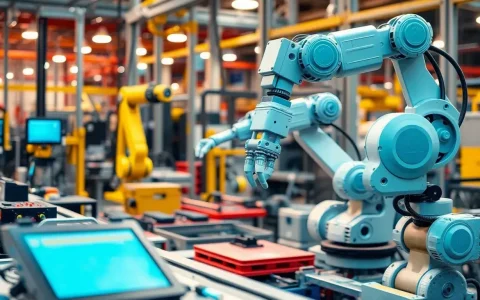
The high-performance six-axis robotic arms developed by Self-Variable showcased stable performance during the three-day high-intensity competition, supporting both extensive data collection and model inference deployment. This reliable hardware infrastructure allowed participants to focus on algorithm optimization and task execution.
To ensure fairness and the integrity of competition, the organizers established a complete onsite evaluation system with professional teams providing 24-hour support. Results were updated in real-time, allowing teams to receive feedback within an hour of task completion. This transparency and efficiency fostered objective technical evaluations, enabling participants to adjust their strategies based on immediate feedback.
Additionally, Self-Variable offered high-generalization foundational model support, allowing teams to utilize popular open-source models such as WALL-OSS, Pi0.5, and DreamZero. Comprehensive tutorials were provided to guide participants through data collection, model training, real-world deployment, and evaluation, enabling them to focus on core algorithm development and solve real-world challenges effectively.
The EAIDC attracted prominent figures from academia and industry, including experts from major technology companies and prestigious universities. Speakers highlighted a shared consensus: embodied intelligence has moved beyond theoretical discussions, and there is a pressing need for a platform that can validate technological maturity in real-world conditions. Discussions emphasized that embodied intelligence requires a true testing ground to address genuine issues, foster real open-source collaboration, and achieve substantial generalization.
Wang Qian, founder and CEO of Self-Variable, remarked on the high entry barriers in embodied intelligence development, emphasizing that collaboration among many developers is essential for building a robust ecosystem. The competition provided the venue, foundational models, and training facilities to enable developers to quickly engage and unleash their potential. Moving forward, this event will continue, leveraging open-source platforms and hardware/software development systems to unite global developers and elevate the Chinese embodied intelligence ecosystem to new heights.
Original article by NenPower, If reposted, please credit the source: https://nenpower.com/blog/global-first-embodied-ai-developers-conference-concludes-in-shenzhen-redefining-the-future-of-embodied-intelligence/