

Global Energy Storage Market Remains Resilient Amid Policy Changes
The global energy storage market is poised for significant growth, with capacity additions expected to rise by **35% in 2025** to reach **94 GW** or **247 GWh**, according to BloombergNEF’s (BNEF) latest outlook. BNEF projects a compound annual growth rate of **14.7%** from **2025 to 2035**, with annual additions anticipated to hit **220 GW** or **972 GWh** by **2035**. This expansion will be fueled by traditional markets and large-scale utility projects in countries such as **Saudi Arabia, South Africa, Australia, the Netherlands, Chile, Canada,** and the **UK**.
### Market Dynamics
#### China’s Changing Policies
Mainland China continues to dominate global energy storage demand, primarily driven by regulatory requirements that necessitate storage alongside utility-scale solar and wind projects. However, a new policy introduced in **February 2025** mandates that **100% of solar and wind generation** be traded on the wholesale power market, effectively removing energy storage as a prerequisite for connecting renewable energy sources to the grid. Local governments have until the end of **2025** to finalize the implementation details. Despite this regulatory shift, several provinces within China are still requiring battery pairing for new renewable projects. BNEF anticipates that while storage deployment in China will remain strong, the growth drivers will increasingly rely on economic viability rather than mandates, depending on local policy outcomes.
#### US Market Challenges
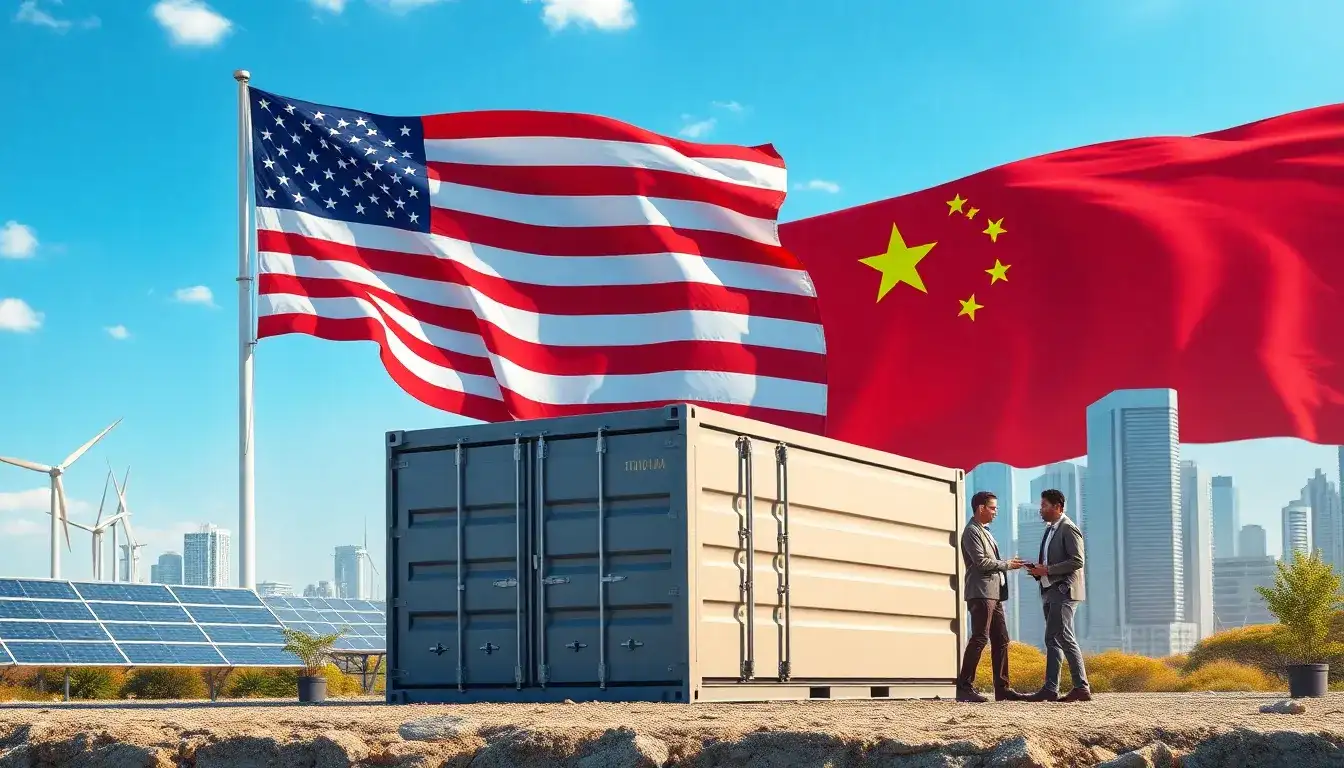
In the United States, the outlook for energy storage has weakened significantly due to substantial increases in tariffs on imports from **China, Canada,** and **Mexico**. Following President **Donald Trump’s** return to the White House in **2025**, import tariffs were raised in **April**, with base tariffs on Chinese goods soaring up to **145%**. BNEF’s base-case scenario estimates a blanket **54%** import tariff, which has led to a **30%** increase in the costs of turnkey four-hour battery systems in the U.S., now priced at **$266/kWh**. Under the higher tariff scenario of **145%**, annual buildout is projected to drop by **51% to 74%** from **2025 to 2027** compared to the base case. This surge in costs has already resulted in project delays, cancellations, and renegotiations of supply contracts. Additionally, the U.S. domestic battery industry, which still relies heavily on imports of materials like graphite from China, is also being adversely affected.
### Global Market Trends
The energy storage market worldwide is increasingly dominated by the utility-scale segment, particularly in regions like **China, Saudi Arabia, South Africa, Australia,** and **Chile**. Government mandates and auctions are propelling gigawatt-level developments in these countries. Utility-scale installations are rapidly gaining traction in **Europe, the Middle East,** and **Africa**, and are expected to surpass the residential segment by **2026**. This growth is driven by increased utility procurement and supportive policies. While the residential market has shown mixed results—slowing down in Europe but experiencing growth in California due to policy changes in **2024**—BNEF predicts that commercial deployments will exceed residential storage by **2030**, as solar battery attachment rates continue to rise.
### Technology Developments
Lithium iron phosphate (LFP) remains the leading lithium-ion battery chemistry in the stationary energy storage market. Chinese manufacturers specializing in LFP are benefiting from domestic market growth and are also aggressively expanding internationally. Major battery producers like **Contemporary Amperex Technology, BYD, EVE Energy, CALB,** and **Hithium** are developing products specifically for the energy storage sector. This trend is leading to a divergence from the electric vehicle (EV) chemistry mix, which predominantly utilizes nickel-based lithium-ion batteries, such as nickel-manganese-cobalt oxide (NMC) and nickel-cobalt-aluminum oxide (NCA). While NMC and NCA offer higher energy density—benefitting EVs by making them lighter and providing longer ranges—LFP’s cost-effectiveness and safety profile make it more suitable for stationary storage applications.
In countries like **Japan** and **South Korea**, where manufacturers have historically focused on nickel-based chemistries, some production is expected to meet domestic energy storage demand, as well as a declining overseas demand for NMC through **2035**. The U.S. market may still see NMC utilized in utility-scale projects until at least **2027**. Despite the ongoing shift towards LFP, **2024** still recorded significant shipments of NMC batteries for energy storage. The high tariffs on Chinese imports, where the majority of LFP batteries are produced, are likely to reduce overall U.S. energy storage demand. However, these tariffs may also make NMC batteries from non-Chinese sources more competitive.
Expectations for sodium-ion batteries have lessened as LFP prices continue to decline, leading to lower adoption forecasts for sodium-ion technology. In **Q1 2025**, corporate funding for energy storage companies—including venture capital, debt, and public market financing—totaled **$2.2 billion** across **31 deals**, according to Mercom Capital Group’s recently released **Q1 2025 Funding and M&A Report for Energy Storage**.
Original article by NenPower, If reposted, please credit the source: https://nenpower.com/blog/global-energy-storage-market-thrives-despite-policy-shifts-in-the-us-and-china/

