

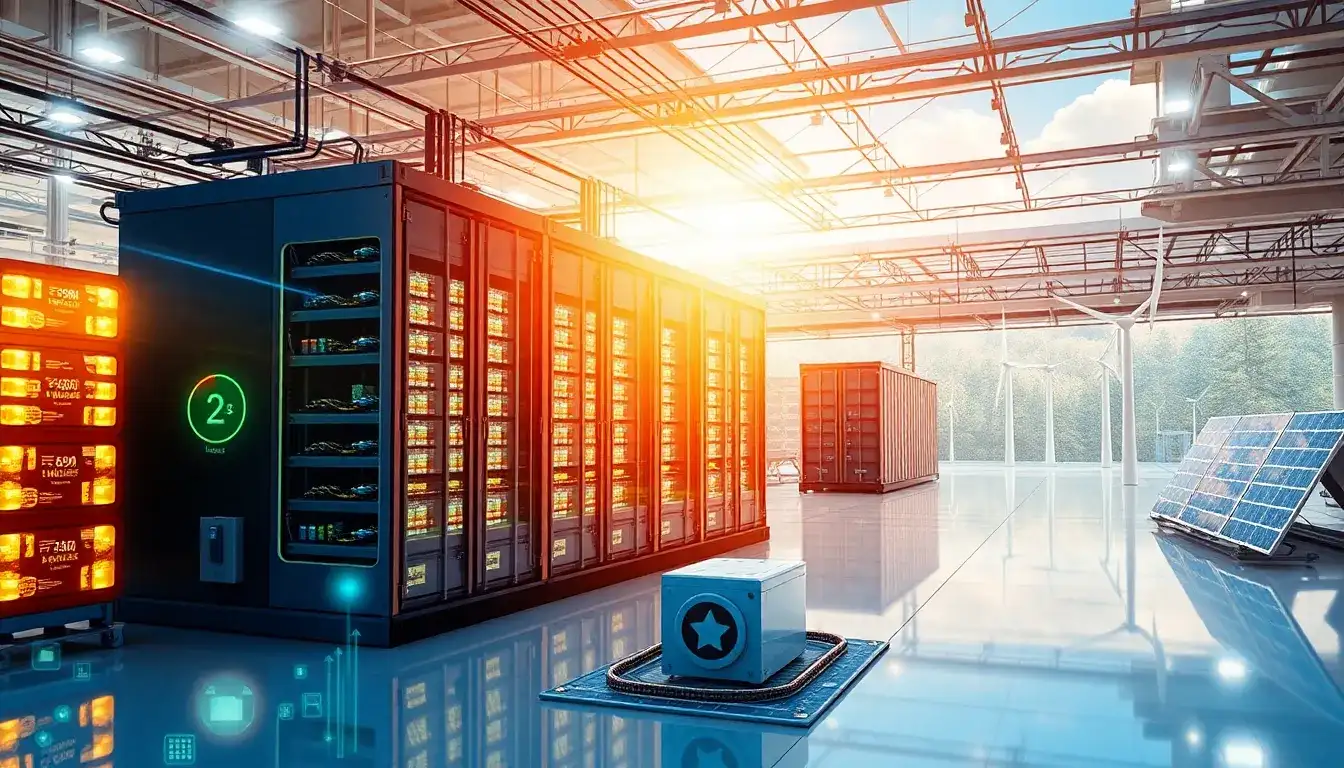
Battery Energy Storage Systems (BESS) Global Market Overview and Forecast (2021-2030)
The global Battery Energy Storage Systems (BESS) market is poised for significant growth, projected to rise from US$13.7 billion in 2024 to US$43.4 billion by 2030, achieving a compound annual growth rate (CAGR) of 21.3%. This expansion is driven by several factors, including the transition to clean energy, decreasing costs of lithium-ion batteries, and an increasing demand for electricity. The Asia-Pacific region is expected to lead this growth, supported by renewable energy targets and ongoing urbanization.
On June 27, 2025, Research and Markets announced the release of their report titled “Battery Energy Storage Systems (BESS) – A Global Market Overview.” The report details the market’s analysis based on various elements, including component type, battery type, power rating, connection type, ownership model, and application for the period spanning 2021 to 2030, with specific forecasts for 2024 to 2030 in terms of value in US dollars.
Key drivers of this growth include the global shift towards cleaner energy sources, the reduction in lithium-ion battery costs due to economies of scale and manufacturing efficiencies, and the rising demand for electricity fueled by population growth, urbanization, and industrialization. BESS plays a crucial role in integrating intermittent renewable energy sources like solar and wind by providing essential grid services such as frequency regulation, voltage support, peak shaving, and load shifting. Additionally, these systems enhance grid resilience, offer backup power during outages, and are vital components in microgrids and electric vehicle (EV) charging infrastructure, including vehicle-to-grid (V2G) applications.
Technological advancements, particularly AI-driven energy management systems and IoT-enabled monitoring, are further improving the efficiency and performance of BESS, including their predictive maintenance capabilities. New battery chemistries, such as sodium-ion, solid-state, and flow batteries, are being developed to overcome the limitations of lithium-ion technology, enhance safety, and optimize resource utilization.
Governments around the world are encouraging the adoption of BESS through favorable policies, subsidies, and incentives aimed at supporting decarbonization and grid modernization. Moreover, the repurposing of retired EV batteries for stationary storage is gaining traction, which helps reduce costs and prolong battery usefulness. The increasing involvement of commercial, residential, and remote users highlights the importance of BESS in providing reliable, cost-effective, and sustainable energy solutions.
### Battery Energy Storage Systems Market Analysis
The Asia-Pacific region stands out as the largest and fastest-growing market for Battery Energy Storage Systems (BESS), expected to capture a 42.2% market share in 2024, with an impressive CAGR of 36.1% projected through 2030. The report categorizes Battery Energy Storage Systems (BESS) by component type, which includes both Battery Hardware and Balance of Plant (BoP) / Other Elements. The latter is expected to hold a larger estimated market share of 54.4% in 2024 and is anticipated to grow faster, at a CAGR of 23.7% from 2024 to 2030.
In 2024, lithium-ion (Li-ion) batteries are forecasted to dominate the global BESS market with a 66.7% share. Their popularity is attributed to high energy density (200-300 Wh/kg), efficiency (80-90%), long cycle life (1,000-5,000 cycles), fast charging capabilities, and decreasing costs—from approximately US$1,000/kWh in 2010 to US$139/kWh in 2023—due to economies of scale and increasing demand from the EV market.
Battery Energy Storage Systems (BESS) with power ratings of less than 30 kVA are projected to hold the largest market share in 2024, at 71.1%, driven by demand from residential, small commercial, and institutional users seeking backup power, energy cost optimization, and integration with solar and EV technologies.
On-grid Battery Energy Storage Systems (BESS) will dominate the global market for connection type, with an estimated 88.2% share in 2024, and are expected to grow at the fastest CAGR of 26.3% from 2024 to 2030. In terms of ownership type, third-party owned systems are expected to lead with a projected 44.1% share in 2024, driven by the growing popularity of the Energy Storage as a Service (ESaaS) model, where energy service companies (ESCOs) manage installation, operation, and maintenance, thereby reducing upfront costs for customers.
The utility sector is anticipated to dominate the global BESS market by application, with an estimated 53.4% share in 2024 and the fastest projected CAGR of 28.1% from 2024 to 2030.
### Key Attributes of the Report
– **Number of Pages**: 470
– **Forecast Period**: 2024 – 2030
– **Estimated Market Value (USD) in 2024**: $13.7 billion
– **Forecasted Market Value (USD) by 2030**: $43.4 billion
– **Compound Annual Growth Rate**: 21.3%
– **Regions Covered**: Global
### Battery Energy Storage Systems (BESS) Companies Featured
– AB Volvo
– ABB Ltd
– AEG Power Solutions
– Alevo Group SA
– Beacon Power LLC
– Black & Veatch Holding Co
– BYD Co Ltd
– C&D Technologies, Inc.
– Contemporary Amperex Technology Co Ltd (CATL)
– Delta Electronics, Inc.
– East Penn Manufacturing Co
– Eaton Corp
– Enersys
– Enphase Energy
– ESS Tech, Inc.
– EVE Energy Co Ltd
– Exide Industries Ltd
– Fluence Energy, Inc.
– GE Vernova
– General Electric
– Honeywell International, Inc.
– Hoppecke Batteries, Inc.
– Johnson Controls International plc
– Kokam Co Ltd
– LG Energy Solutions Co Ltd
– Mitsubishi Heavy Industries Ltd.
– Narada Asia Pacific Pte Ltd
– NEC Corp
– NextEra Energy, Inc.
– NGK Insulators Ltd
– Nidec ASI
– Nissan Motors
– Panasonic Corp
– Primus Power Solutions
– RES Group
– Saft Group SA (Total Energies)
– Samsung SDI Co Ltd
– Schneider Electric SE
– Siemens Energy
– SMA Solar Technology AG
– SolarEdge
– Sonnen GmbH
– Sunverge Energy, Inc.
– Tata Power Co Ltd
– Tesla, Inc.
– Tesvolt AG
– The AES Corp
– Toshiba Corp
– TotalEnergies SE
– Trinabess
– Varta AG
– VRB Energy
– Wartsila Corp
### Battery Energy Storage Systems Market by Geographic Region
– North America (United States, Canada, and Mexico)
– Europe (Germany, Italy, United Kingdom, and Rest of Europe)
– Asia-Pacific (China, India, Japan, South Korea, and Rest of Asia-Pacific)
– South America (Argentina, Brazil, Chile, and Rest of Latin America)
– Middle East & Africa
### Battery Energy Storage Systems Market by Element/Component
– Battery Hardware
– Balance of Plant (BoP) / Other Elements
### Battery Energy Storage Systems Market by Battery Type
– Flow
– Lead-Acid
– Lithium-ion (Li-ion)
– Sodium-ion (Na-ion)
– Other Battery Types (including Flywheel & Nickel-Based)
### Battery Energy Storage Systems Market by Power Rating
– < 30 kVA- 30 kVA - 150 MVA- > 150 MVA
### Battery Energy Storage Systems Market by Connection Type
– Off-Grid
– On-Grid
### Battery Energy Storage Systems Market by Ownership Model
– Customer-Owned
– Third Party-Owned
– Utility-Owned
### Battery Energy Storage Systems Market by Application
– Commercial & Industrial
– Residential
– Utility
For more information about this report, visit [Research and Markets](https://www.researchandmarkets.com/r/ni6e1c).
Original article by NenPower, If reposted, please credit the source: https://nenpower.com/blog/global-battery-energy-storage-systems-market-set-to-surge-to-43-4-billion-by-2030-driven-by-ai-iot-innovations-and-clean-energy-transition/

