

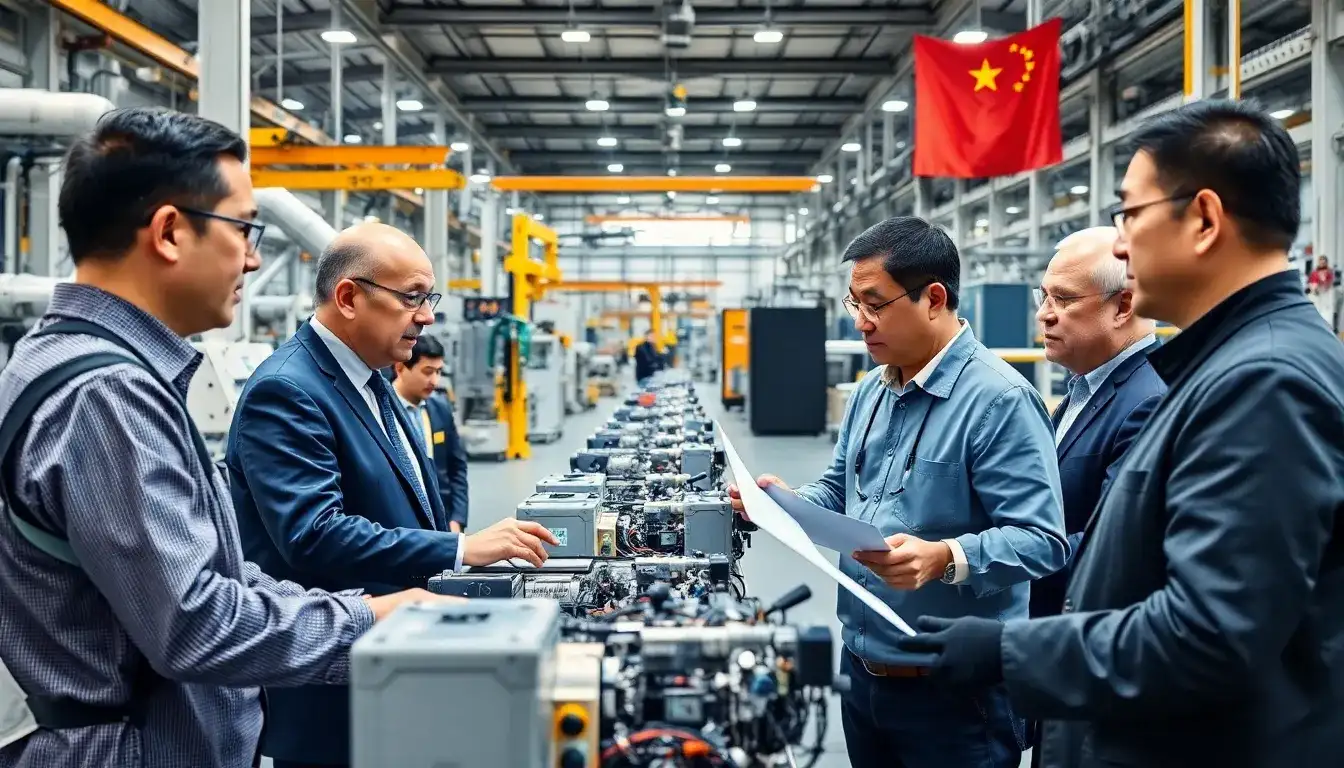
Today, during a visit to Shanghai, the German “Industry 4.0” initiative was discussed in the context of China’s technological advancements. The focus was on how Germany’s advanced manufacturing processes are being implemented and adapted in China. On February 25, during a visit to Shanghai, the German Chancellor emphasized the importance of international cooperation in the field of industrial technology.
This visit is significant, as it marks the first time in the year that a German leader has visited China. One of the main topics of interest during this trip was the “Chinese Red Duck” project, an initiative promoting advanced robotics and AI technology. The Chancellor’s delegation includes representatives from several prominent German companies, including those specializing in manufacturing and automation.
During the visit, discussions were held regarding the future of industrial collaboration between Germany and China, with a focus on innovation in AI, machine learning, and smart manufacturing. The aim is to enhance productivity and efficiency across various sectors. China is seen as a vital partner in the development of next-generation technologies.
Recent statistics indicate that Germany’s GDP growth is expected to be slow, with projections of only 0.3% for 2023 and a further decline to 0.2% in 2024. This would make Germany the only country in the G7 to experience stagnant growth over the next two years.
In the face of these challenges, the German manufacturing sector is focused on adapting to new market conditions, particularly in light of the ongoing global economic shifts. The automotive industry, a cornerstone of Germany’s manufacturing base, faces significant hurdles, with forecasts indicating a potential contraction in production output.
In contrast, China continues to expand its manufacturing capabilities, with plans to increase production and innovation in robotics. By 2025, it is expected that China will have a substantial lead over Germany in terms of AI deployments, with thousands of new AI applications being developed annually.
Germany’s industrial leaders stress the need for swift adaptation to these changing dynamics, with a focus on leveraging AI and automation to maintain competitiveness. The collaboration between German and Chinese firms is crucial for fostering advancements in technology and manufacturing processes.
The future of manufacturing is increasingly reliant on digital transformation, and both nations recognize the importance of working together to navigate these changes. Germany’s “Industry 4.0” initiative is being closely monitored by Chinese industries, which are eager to adopt and innovate upon these principles.
Overall, the discussions in Shanghai mark a pivotal moment in the global dialogue on industrial innovation, highlighting the interconnectedness of both German and Chinese markets in shaping the future of manufacturing.
Original article by NenPower, If reposted, please credit the source: https://nenpower.com/blog/germanys-industrial-future-exploring-the-impact-of-industry-404-during-chancellor-scholzs-visit-to-china/

