

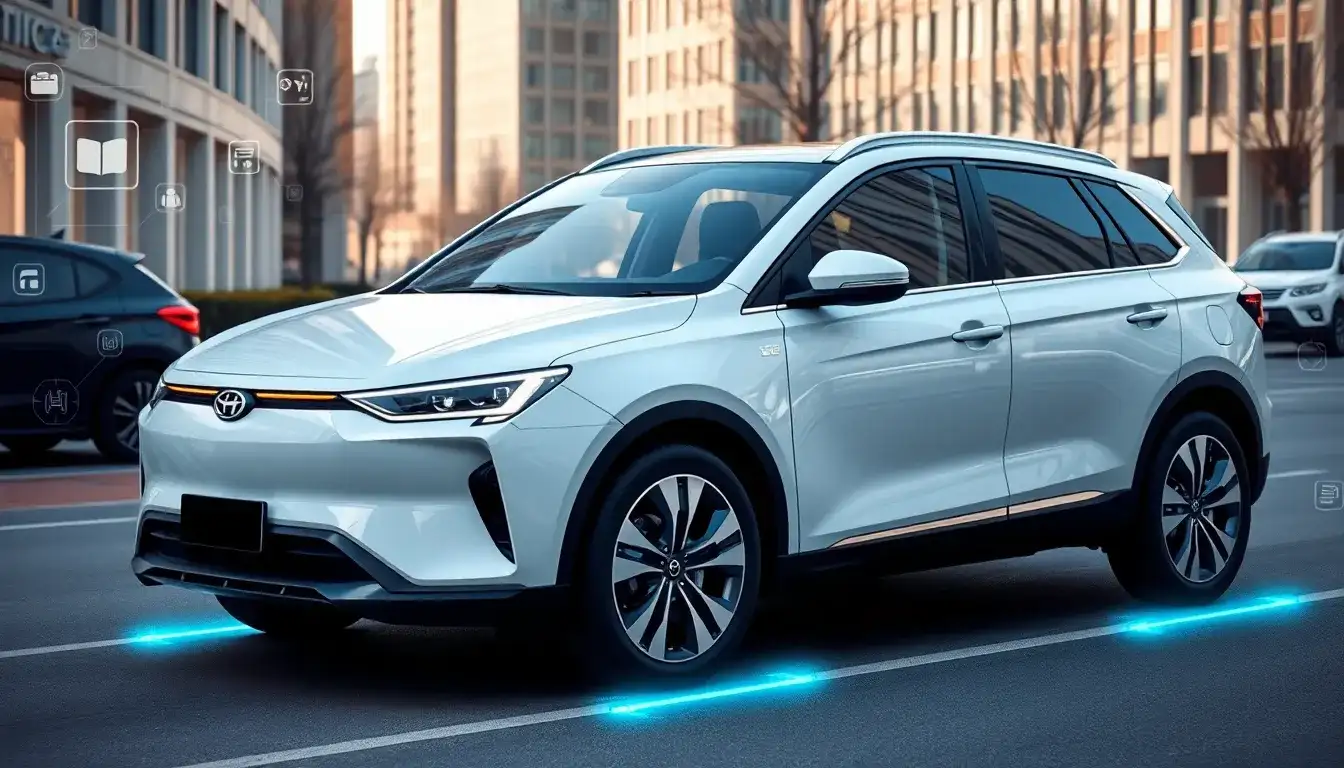
In recent times, the Ministry of Industry and Information Technology has publicly announced the “Safety Technical Requirements for Automobile Door Handles”, which finally establishes a mandatory national standard for this often debated feature. The company leading the drafting of these technical requirements is Geely Automobile. With the penetration rate of new energy vehicles surpassing 50%, it is imperative to regulate the safety technical indicators in the automotive industry, a goal that Geely has been dedicated to for many years.
Battery safety is a crucial aspect for new energy vehicles. On May 8, Geely Automobile received the GB 38031-2025 testing report for “Safety Requirements for Power Storage Batteries in Electric Vehicles”, becoming one of the first companies in the country to pass the new national battery safety standards. When discussing Geely’s battery technology, many may immediately think of the “Golden Brick Battery” or the “Shield Battery”. However, the relationship between the two can be a bit unclear, so let’s clarify it.
On April 23, 2025, Geely Holding Group announced the integration of its battery business to form Zhejiang Jiyao Tongxing Energy Technology Co., Ltd. (referred to as Jiyao Tongxing). This new venture unifies the previous Golden Brick Battery and Shield Blade Battery under the Shield Golden Brick Battery brand. Here, “Shield” represents the battery safety system, while “Golden Brick” refers to the core technology, both of which are self-developed and manufactured by Geely.
First, let’s discuss the Shield Battery Safety System. This system is based on battery technology and integrates structural, vehicle, intelligent control, and cloud safety protection systems. Its testing standards require that it passes 36 safety tests under extreme conditions. Notably, 23 of these tests exceed the new national standards, including 12 additional tests not included in the national standards, such as puncture resistance, seawater immersion, bottom ball impact, drop tests, scraping tests, and load tests. This indicates that Geely’s standards are significantly higher than the national requirements. In 2021, Geely took the initiative to set the first group standard in China for the bottom protection of new energy vehicles, and the new national standard has now included “bottom collision” as well. As of March this year, Geely has led or participated in the establishment of 115 safety standards.
Next, we have the Golden Brick core. This core can be categorized into three types based on the vehicle it is used in: the Super Fast Charge version for 800V and above models; the Super Hybrid version for hybrid models; and the High Energy Density version for 400V models. For lithium iron phosphate batteries, reducing the risk of self-ignition is crucial, which involves avoiding external collisions and compressions, as well as managing internal currents to prevent excess heat generation. According to the thermal effect formula Q=I²Rt, greater current results in more heat produced. This is why fast charging of mobile phones generates more heat than slow charging. The key to reducing internal resistance lies in minimizing it. With the same materials, a larger cross-sectional area and shorter length result in lower resistance. The length of the High Energy Density version of the Golden Brick core is only 580mm, and its thickness achieves a cross-sectional area of 18.2mm, optimizing its structure to reduce internal resistance. Internally, it uses a flexible wet double-coated separator to lower the probability of fracture during puncturing. An aluminum oxide thermal-resistant coating acts as a “barrier” between the positive and negative electrodes, reducing the risk of thermal runaway. In puncture tests, eight steel needles with a diameter of 5mm simultaneously pierced the High Energy Density version of the Golden Brick core and remained intact for one hour without smoke, fire, or explosion, which is eight times more challenging than the national standard.
Regarding battery lifespan, the official data indicates a cycle life of 3,500 cycles, allowing for safe driving for over 1 million kilometers. Based on an average yearly distance of 20,000 kilometers for private vehicles, this equates to the driving distance of two generations of family cars. Taking the Geely Galaxy E5 as an example of the battery pack, the CTB configuration integrates the battery as part of the vehicle structure. The internal cores and shell are bonded together with structural adhesive and thermal adhesive, enhancing the overall modal and torsional stiffness of the battery pack. The battery cover acts as the vehicle floor, adding an extra 10mm of vertical space inside the car. The bottom of the battery pack features a “sandwich” structure with a three-layer core board of 1mm composite material, 0.8mm DP980 high-strength steel, and 0.6mm composite material, with a total thickness of 2.4mm, providing approximately twice the tensile strength of ordinary steel plates. Additionally, a dedicated battery crash beam is positioned 15mm below the battery to reduce damage from bottom impacts.
Real-time monitoring is also a critical aspect. The Xingrui Smart Calculation Center 2.0 can support online monitoring of 5 million vehicles simultaneously, overseeing batteries, electric drives, and charging systems 24/7. This system enables cloud-based fault warnings, online diagnostics, and vehicle maintenance, reducing potential safety risks in advance. In April 2025, Geely announced at the Shanghai Auto Show that it would open its battery pack bottom protective plate patent, battery pack crash beam patent, and bottom collision testing device patent to the industry.
Another area of significant concern is the safety of door handles. Instances where electric vehicles cannot open their doors during accidents have raised questions about the safety and reliability of hidden door handles. The safety of these handles involves a systemic design of the entire vehicle, requiring consideration of aspects like low-voltage power supply, functional logic, and mechanical redundancy. Currently, Geely has completed the layout of a patent cluster for hidden door handle safety, including six core safety patents domestically and internationally, and plans to share this patent cluster with the entire industry by August 2024.
So, what considerations are involved in making a simple door handle safer? First, as hidden door handles operate using low-voltage electric power, it is essential to ensure power supply integrity for their proper functionality. Geely has upgraded the relevant low-voltage circuits for protection. For instance, in the Galaxy E5, the low-voltage power source, a 12V small battery, is located in a safe area at the rear of the vehicle. Additionally, fuses for functions like door unlocking, hazard alerts, and emergency call systems have been relocated to the passenger compartment’s fuse box to prevent disconnection during collisions.
Second, optimizing functional logic is vital. The industry typically associates door locking and unlocking actions with vehicle speed signals; if a collision occurs and the speed signal is lost, unlocking may fail. Geely has decoupled the door unlocking function from speed judgment after a collision, prioritizing the unlocking and popping actions. Lastly, mechanical redundancy is preserved; the Galaxy E5’s four doors have mechanical pull wires that allow for manual operation in case of failure.
In conclusion, the new energy vehicle sector has entered a period of rapid development, with penetration rates continually reaching new highs, while competition among automakers intensifies, often manifesting as fierce price wars. However, it is my belief that price wars will ultimately yield no winners, and the market, after experiencing explosive growth, will return to rationality. Vehicle safety will also become a focal point across the industry. Geely’s extensive experience in researching and developing safety in new energy vehicles not only supports the formulation of national safety standards but also serves as a benchmark for the industry by publicly sharing its patented technologies to enhance overall safety levels. A healthy competitive market environment is essential for sustainable development within the industry.
Original article by NenPower, If reposted, please credit the source: https://nenpower.com/blog/geelys-efforts-in-advancing-safety-technology-for-chinas-evolving-new-energy-vehicles/

