

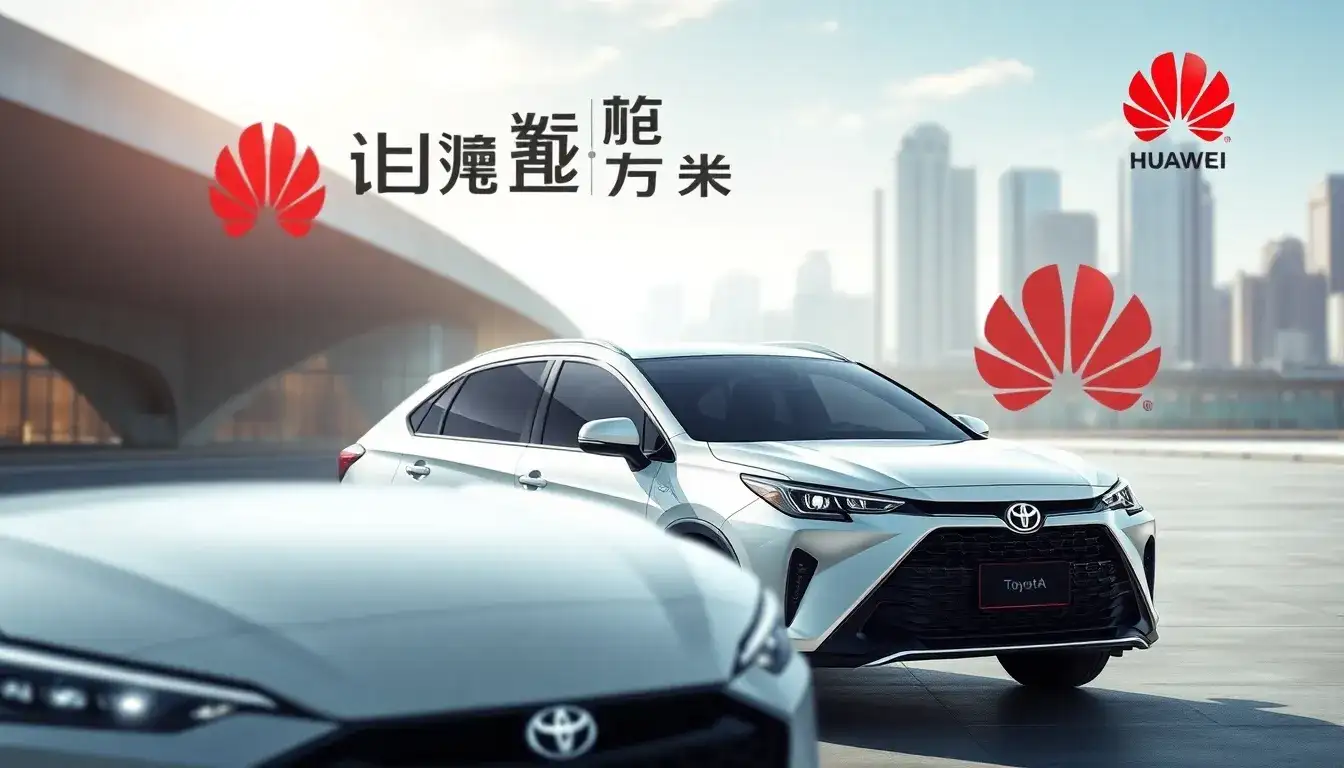
Why GAC Toyota Must Partner with Huawei?
On September 16, a report from Financial Associated Press sent shockwaves through the industry: Huawei’s automotive business unit (BU) is set to upgrade its partnership with GAC Toyota to an “end-to-end solution.” The two companies plan to launch three new vehicles within two years, with two models expected to debut in 2027, featuring Huawei’s QianKun intelligent driving system and HarmonyOS cockpit. If this report is accurate, it not only signifies a crucial step in GAC Toyota’s journey toward intelligent transformation but also exemplifies how joint ventures can leverage technological collaboration to regain competitive ground in the smart automotive sector.
Historically criticized for a slow pace of innovation, joint venture brands are now actively shedding their old reputations by deeply integrating with top Chinese tech firms, thus embarking on a technology-driven survival strategy. In fact, GAC Toyota and Huawei began their partnership around 2020, but the current “end-to-end” collaboration is seen as a deeper commitment than the previous “Hi Model” and is unprecedented among joint ventures. Notably, only three months have passed since the last announcement of “face-to-face collaboration,” illustrating a rapid escalation in their partnership. This quickened pace reflects not only GAC Toyota’s urgency but also a strong desire for survival and strategic awakening across the joint venture landscape, driven by declining market shares and lagging in new energy transitions.
This collaboration transcends mere technological complementarity; it is pivotal for joint venture brands to reclaim their voice in the era of intelligent electric vehicles.
1. Why Now?
Data indicates that joint venture brands are experiencing a decline in market share, leaving limited time and space for them to capture market opportunities. From January to August 2025, the market share of joint ventures fell to 32.7%, continuing its downward trend compared to the same period last year. If this trend persists, it could drop below the psychological threshold of 30% by year-end—a significant blow to brands that once held nearly half of China’s automotive market. Even more concerning, the market share for joint ventures dipped to 25.3% in the first four months of the year, nearing a warning line for the industry.
Additionally, the policy window is tightening. Starting January 1, the state will further tighten the new energy vehicle purchase tax subsidy scheme, reinstating tax while maintaining a half-price discount. This indicates increased competition, and year-end purchasing trends may lead to market overextension, introducing further uncertainties.
Over the past four months, Toyota has deepened its collaborative innovation with local partners in China, achieving remarkable results. In April, the introduction of four Chinese engineers marked the full implementation of Toyota’s Regional Chief Engineers (RCE) system in China, establishing a unified R&D system that integrates previously fragmented resources.
This R&D framework allows for localized decision-making throughout the entire process, from product definition to development and production, ensuring that new vehicles can quickly and accurately respond to the genuine needs of Chinese consumers. Furthermore, close collaboration with local tech suppliers has enhanced R&D efficiency and accelerated the application of intelligent electric technologies, all while maintaining Toyota’s global quality standards and improving cost competitiveness.
GAC Toyota has significantly benefited from the RCE system. For instance, its PlatSmart 3X battery utilizes a BYD solution, and its intelligent driving system is equipped with Momenta’s R6 flywheel model, even including a standard 126-line lidar. Priced around 150,000 yuan, it exhibits impressive product competitiveness. This success validates the strategy of partnering with local suppliers, bolstering GAC Toyota’s confidence to embrace Huawei’s technology fully.
In just three months, the collaboration with Huawei has evolved from “face-to-face” deep cooperation to an end-to-end solution. Industry predictions suggest that the first vehicle from this partnership, the PlatSmart 7, will target the mid-to-high-end new energy SUV market, which includes competitors like the Ideal L7/L8, NIO ES6/EC6, and Tesla Model Y. If the final pricing falls within this range, GAC Toyota’s decision to enter a fiercely competitive market underscores its determination.
2. Why Choose Huawei?
To understand GAC Toyota’s decision to partner with Huawei, one must recognize Toyota’s stringent supplier selection criteria. Toyota is renowned for its rigorous supplier management system, known as the Toyota Production System (TPS), which establishes the foundation for its global production and product quality.
Becoming a tier-one supplier for Toyota is likened to succeeding in a comprehensive Olympic competition. Toyota demands nearly zero-defect delivery standards, requiring the parts per million (PPM) defect rate to be extremely low. Not only must components be compliant, but the production processes must also be stable and capable of consistently producing 100% qualified products. In cases of quality issues, Toyota engineers will work closely with the supplier’s team on the production line to identify and resolve root causes thoroughly.
Moreover, Toyota maintains high standards for technological innovation. The company prefers suppliers with strong R&D capabilities who can keep pace with new model development and possess robust testing and validation capacities. More critically, suppliers must demonstrate a strong “improvement” capability—establishing a continuous cycle of process enhancement, efficiency gains, and waste reduction.
Huawei’s rapid recognition by Toyota and the leap from “component-level” collaboration to “end-to-end” cooperation is unprecedented in Toyota’s history. This signifies that Huawei meets the demands of both independent brands and has accumulated mature experience within the procurement systems of multinational and luxury brands alike.
Huawei’s partnerships reflect this. Its current collaborations span traditional joint ventures, luxury brands, independent brands, and new entrants, encompassing nearly all categories of mainstream domestic automakers. The accumulated experience in delivery is a key reason Toyota has embraced Huawei as a core supplier in such a short timeframe.
For instance, Huawei collaborates with FAW Audi using the HI model, providing advanced driver assistance systems and HarmonyOS cockpit technology, while Audi leads vehicle design. The Q6 e-tron, equipped with Huawei’s latest driving systems, received a five-star safety rating from E-NCAP in Europe, demonstrating Huawei’s global quality standards. BMW China has also engaged with Huawei in a “component supply + ecosystem integration model,” incorporating the HarmonyOS into its automotive digital service system. BMW is known for its stringent supplier selection, so Huawei’s inclusion in its core supply chain is a testament to its technological prowess.
In the partnership with GAC Toyota, Huawei has provided core products such as the DriveONE electric drive platform, HarmonyOS 5.0 cockpit, and Huawei ADS advanced driving system, which represent the pinnacle of this field. Huawei’s technology and service capabilities have passed the most rigorous supplier evaluations globally.
3. What Can Huawei Bring to GAC Toyota?
In general, when a supplier participates in the early planning and requirement definition of a vehicle model, it involves collaboration in core functional areas. Currently, Huawei and GAC Toyota’s cooperation spans electric drives, intelligent cockpits, and intelligent driving, indicating Huawei’s substantial involvement in the development processes of GAC Toyota’s future models.
Although the specific depth of collaboration has not been publicly disclosed, the disclosed details confirm Huawei’s active role in vehicle definition and development. In the era of intelligent vehicles, the value of software and electronics now exceeds 60% of the vehicle’s overall worth. When suppliers collaborate closely on critical technologies such as the electric drive system, intelligent driving, and core algorithms, they become deeply integrated into vehicle development.
Notably, granting some development authority to suppliers is unprecedented for Toyota, which has traditionally favored vertical integration. This shift reflects a positive and profound change in its strategy toward Huawei, suggesting that Huawei offers compelling contributions that resonate with Toyota’s goals.
In terms of electric drive systems, Huawei’s DriveONE platform achieves system efficiency above 95% by integrating the motor, electronic control, and reducer, improving by 2-3% compared to traditional separated solutions. Under equivalent energy conditions, it can extend the range by 50-80 kilometers. Its integrated design also reduces weight by approximately 20%, significantly enhancing lightweight capabilities and vehicle balance, aligning closely with Toyota’s “lean manufacturing” philosophy.
In the area of intelligent cockpits, the Harmony car system will elevate GAC Toyota’s user experience. The PlatSmart 7 is expected to be the first joint venture model equipped with HarmonyOS 5.0, offering notable advantages in fluidity, ecosystem compatibility, and multi-device collaboration. Leveraging Huawei’s mature ecosystem will likely help GAC Toyota achieve a first-mover advantage in intelligent cockpit technology.
Regarding intelligent driving, Huawei’s ADS system offers a comprehensive solution from L2 to L4, leveraging advancements in 5G, AI, and cloud computing, representing industry-leading standards. Unlike Toyota’s previous incremental approach, Huawei’s technology provides GAC Toyota the potential for a transformative leap in intelligent driving, paving new pathways for collaboration and innovation.
Importantly, Huawei’s end-to-end solutions can achieve deep integration and collaborative optimization across various systems. This means that GAC Toyota’s products will feature “high-standard lower halves” and “intelligent upper halves,” maintaining Toyota’s traditional advantages in manufacturing quality and reliability while achieving significant advancements in intelligence and electrification.
The significance of this technological integration goes beyond the products themselves; it positions GAC Toyota’s future offerings to compete among the industry leaders. The success of this collaboration will not only impact GAC Toyota’s development but also serve as a critical reference point for the intelligent transformation of the entire joint venture sector.
If this deep cooperation model achieves its intended outcomes, it may encourage more joint venture brands to adopt similar technological pathways and collaboration modes. In this sense, the partnership between GAC Toyota and Huawei could represent a pivotal turning point for joint ventures striving to thrive in the era of intelligent electric vehicles.
Original article by NenPower, If reposted, please credit the source: https://nenpower.com/blog/gac-toyotas-strategic-partnership-with-huawei-a-key-move-for-intelligent-transformation/

