

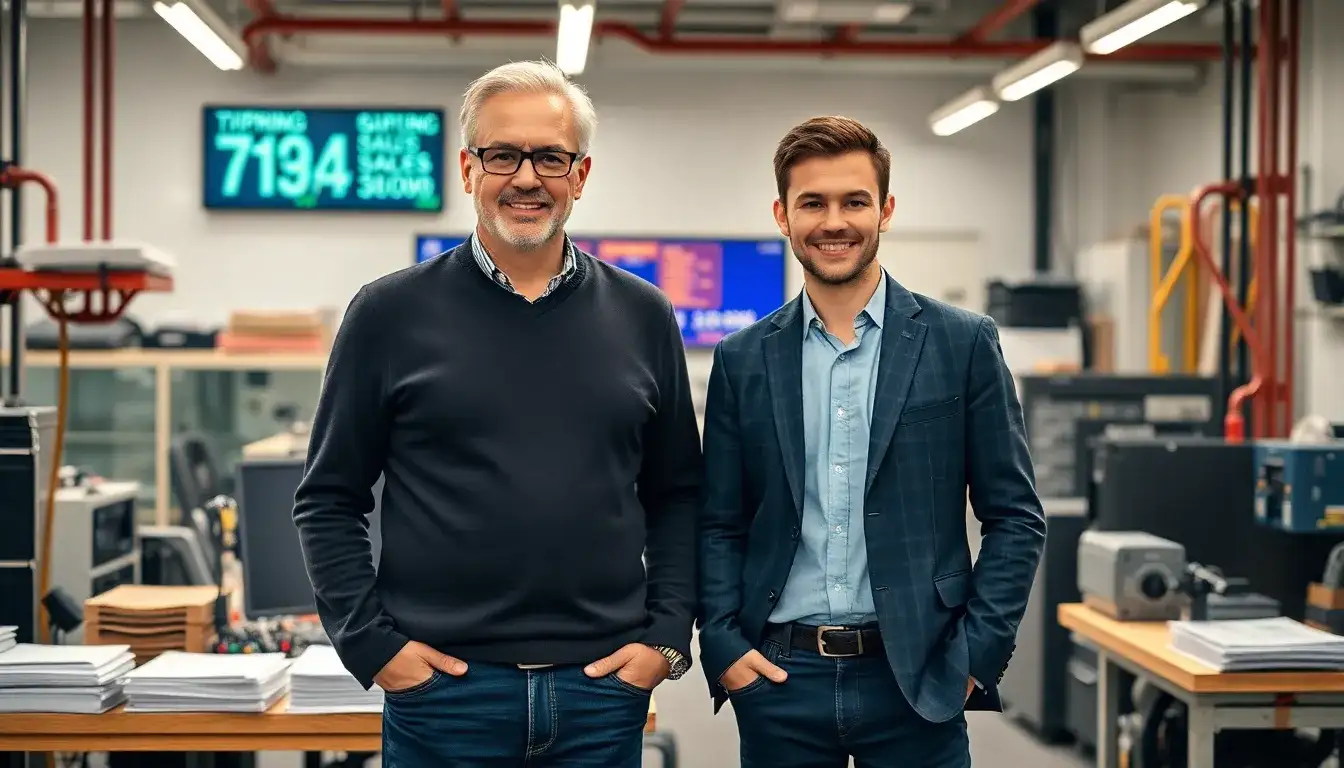
Ningbo Father and Son Build a Fortune of 33.5 Billion Yuan Through Parts Sales
On April 30, 2024, the family-controlled De Ye Co., Ltd. announced a net profit of approximately 3 billion yuan, marking a remarkable increase of 64.8%. The company, founded by Zhang Hejun, has seen significant growth in the solar energy sector, achieving 8 billion yuan in revenue from the sale of photovoltaic components.
In 2024, De Ye sold about 1.37 million inverters, and revenue from energy storage battery packs surged by 1.7 times. Zhang Hejun is planning to invest no less than 2.1 billion yuan in a two-phase project to establish a production line for commercial energy storage with an annual capacity of 16 GWh.
Additionally, De Ye has established a subsidiary in Malaysia focused on photovoltaic equipment and energy storage batteries. Zhang Hejun offers attractive salaries to professional managers; for instance, Ji Dehai, the 35-year-old vice president, earned 5.14 million yuan last year.
Zhang Hejun, 73, started his career in humble surroundings. After finishing high school, he worked as a farmer and carpenter before founding a small mold factory. Over the past 30 years, he transformed it into a leading player in the photovoltaic industry. Today, De Ye has an annual revenue exceeding 11 billion yuan and a market capitalization of 55 billion yuan.
Despite his age, Zhang remains actively involved in the business, attending all ten board meetings last year in person. In a statement, he emphasized his commitment to the renewable energy sector, stating, “We are setting sail for new opportunities and are determined to deepen our efforts in the new energy field.”
Alongside his wife, Lu Yazhu, Zhang holds over 59% of the company’s shares, giving them significant control. According to the Hurun Global Rich List 2025, the Zhang family’s wealth now stands at 33.5 billion yuan. Zhang Hejun’s two sons are also involved in the company, each earning over 7.5 million yuan annually. Collectively, the three family members received over 24 million yuan in salaries last year.
The board has proposed a cash dividend of 2.6 yuan per share, which would entitle Zhang and his wife to nearly 1 billion yuan before taxes. The company has also been generous to its managers, with Ji Dehai earning 5.14 million yuan.
Zhang Dongye, born in 1981, joined De Ye early in his career and has held various roles, currently serving as the general manager and vice chairman. His brother, Zhang Dongbin, 46, is a board member. The company is currently transitioning leadership, with Zhang Dongye recently becoming the legal representative of De Ye.
Under his leadership, De Ye signed a cooperation agreement with Nigeria’s Nigus company, emphasizing the potential for long-term benefits. Zhang Dongye stated, “A good start is half the success, and our partnership with Nigus will create significant opportunities and benefits for both parties.”
Land Acquisition and Expansion
Zhang Hejun’s team has been actively acquiring land for expansion. In April, De Ye and its subsidiaries successfully bid 45.8 million yuan for industrial land in Beilun District and 94.08 million yuan for land in Cixi. The specific use of the Beilun site has not been disclosed, but the Cixi land is intended for the construction of the commercial energy storage production line. The company aims to complete construction within 36 months and reach production capacity within 60 months.
Last year, De Ye also established a subsidiary in Malaysia, investing 190 million yuan to acquire a production base. The company, a leader in the photovoltaic sector, generates over 7.3 billion yuan in overseas revenue from inverter and energy storage battery sales. The management believes Malaysia’s strategic location will facilitate quick access to Southeast Asia, South Asia, the Middle East, and African markets, aiding in the expansion of international business.
Looking ahead to 2025, the company plans to deepen its presence in emerging markets across Asia, Africa, and Latin America, broadening its market coverage. This strategic approach reflects Zhang Hejun’s confidence in the energy storage sector.
Last year, the energy storage battery pack business experienced robust growth, becoming the company’s second-largest revenue source with an input of 2.45 billion yuan, following inverters. The positive momentum has continued into the first quarter, with significant increases in the sales of inverters and energy storage battery packs, leading to a net profit surge to 610 million yuan.
Financially, the company is well-positioned with ample cash reserves, supporting land acquisition and expansion plans. On April 30, it announced intentions to utilize up to 8 billion yuan of its own funds for cash management, investing in high-security, high-liquidity financial products.
Seizing Opportunities
Zhang Hejun initially entered the industry by manufacturing plastic parts for home appliances, identifying opportunities to meet the needs of major manufacturers like Midea. His business acumen led to significant improvements in manufacturing processes, positioning De Ye for success. In 2021, when the company went public, its home appliance segment accounted for 70% of total revenue.
Recognizing an opportunity, Zhang ventured into the inverter market, which has since become the primary revenue generator, contributing 5.56 billion yuan last year. The company sold 540,000 energy storage inverters, 410,000 string inverters, and 420,000 micro-inverters during that period. The team has successfully exported products to countries such as Germany, Pakistan, Brazil, and India.
As Europe faced an energy crisis, demand for residential energy storage soared, leading to the rise of balcony solar systems. In response, Zhang’s team launched a micro energy storage inverter targeting this niche, quickly establishing a strong foothold in the market. Germany has become the company’s largest overseas market, generating over 1.7 billion yuan in revenue last year.
With rising electricity prices in recent years, the management anticipates continued growth in demand for balcony solar solutions in Europe, particularly in countries with high energy costs. The team is integrating energy storage products with inverter sales, adopting a strategy of “energy storage inverter + battery pack” to enhance collaborative sales.
Through these initiatives, De Ye has successfully expanded into emerging markets across Southeast Asia. Interestingly, the company also maintains a home appliance segment, generating 970 million yuan from dehumidifiers and 1.95 billion yuan from air conditioning components last year. The financial report attributes this growth to prolonged rainy seasons in southern regions, coupled with national subsidy policies stimulating domestic demand.
Zhang Hejun’s diverse business strategies continue to generate substantial wealth for him and his family.
Original article by NenPower, If reposted, please credit the source: https://nenpower.com/blog/father-son-duo-from-ningbo-amasses-33-5-billion-yuan-fortune-through-component-sales/

