

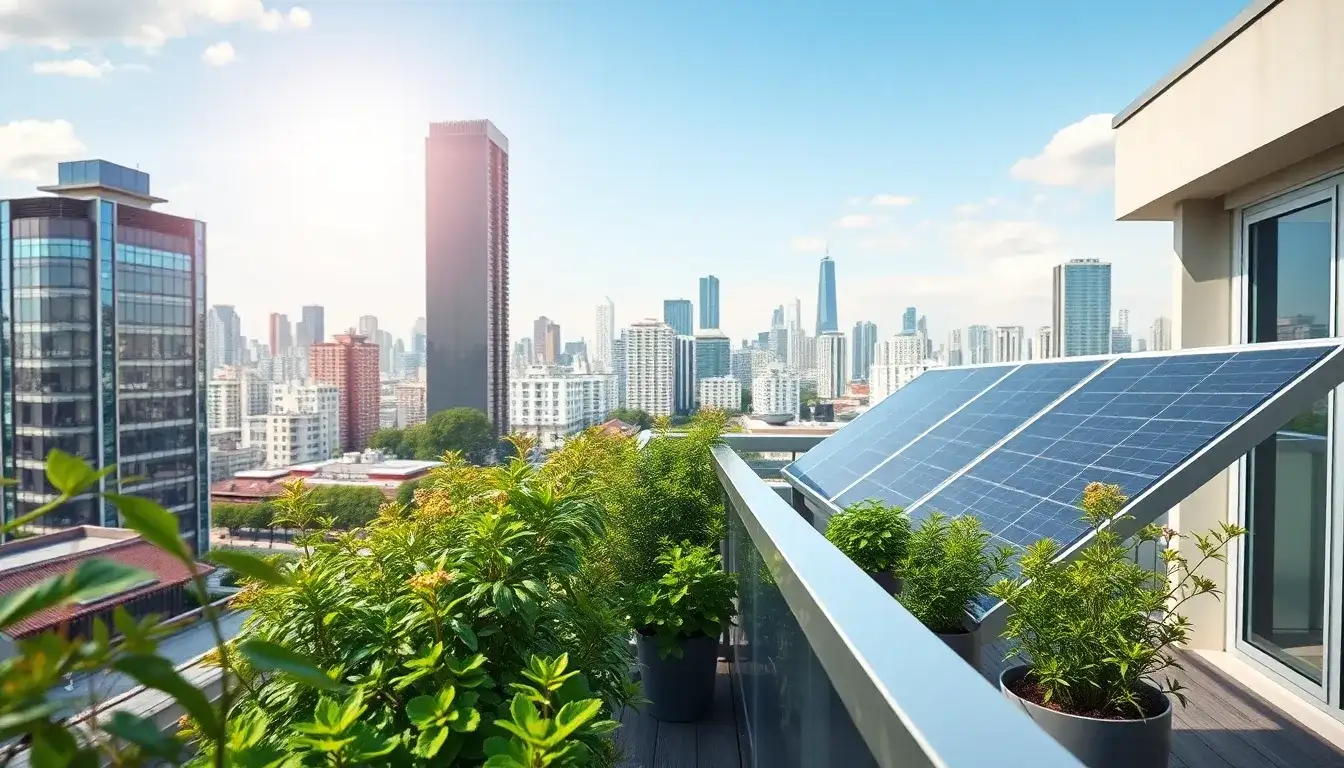
In recent years, balcony photovoltaic systems have seen rapid growth in the European market, particularly in Germany. During a recent trip to Germany, I witnessed the impressive development of balcony photovoltaics firsthand. Everywhere I looked, I could see these systems, even right below my hotel!
According to the latest data released by the German Solar Industry Association (BSW-Solar), by the end of 2024, Germany’s total solar power generation capacity is expected to exceed 100 GW for the first time. This capacity includes approximately 38 GW from residential rooftop solar, 29 GW from commercial and industrial solar, 32 GW from large-scale ground-mounted solar power plants, and 700 MW from plug-in solar devices, commonly known as balcony photovoltaics.
Additionally, a recent survey from Verivox, Germany’s largest comparison website, revealed that about 17% of Germans plan to install plug-in photovoltaic systems on their balconies or in their gardens, while 9% have already done so. Alongside this survey, Verivox also published a ranking of the latest balcony photovoltaic systems, which are categorized into two main types: (1) conventional systems and (2) ultra-light systems.
- Conventional systems: These include two solar panels with a nominal power of 400-450 Wp, an inverter with a rated power of 800 W, brackets, and a Schuko plug. They can be used in various settings like flat roofs, gardens, terraces, or balconies.
- Ultra-light systems: These consist of lightweight solar panels, an inverter with a rated power of at least 600 W, and a Schuko plug. The lightweight solar panels typically use polymers or composite materials instead of glass for the front panel, making them significantly lighter than conventional solar panels. Their installation and removal are also more flexible, often using adhesive methods like Velcro, which minimizes conflicts with building regulations and makes them more acceptable to landlords.
Here are the latest rankings of balcony photovoltaic systems from Verivox:
Top Ten Conventional Balcony Photovoltaic Systems:
Top Ten Ultra-light Balcony Photovoltaic Systems:
Source: Verivox
Among the reasons people cited for not planning to install balcony photovoltaics, the most common was a lack of space, followed by a reluctance to install them, with economic factors coming in third.
Furthermore, in the Q3 2024 list of Europe’s top ten micro-storage solutions for balcony systems, Chinese companies secured six positions. The core value of balcony photovoltaics lies in their spatial adaptability. In modern urban residences, balconies are often overlooked idle spaces; however, their south-facing or open orientations provide an opportunity for solar energy generation. This “small but beautiful” design allows photovoltaic technology to break free from the traditional dependence on large roof areas, enabling energy self-sufficiency in high-density residential areas.
Unlike traditional rooftop solar systems, this technology does not require users to own their homes. Anyone who can plug in an appliance can install it, and it comes at a lower cost. Simply put, “you don’t need to drill or hammer anything; just hang them on your balcony like wet clothes.” A typical balcony photovoltaic system consists of:
- A few solar panels (2-4 or more)
- A dedicated micro-inverter
- Connecting wires from the panels to the micro-inverter
- Mounting brackets for the panels
- AC cables from the micro-inverter to a household electrical outlet
The AC cable plugs directly into any live socket. This way, all electrical loads will preferentially use the electricity generated by the balcony photovoltaic system before resorting to grid electricity. Therefore, balcony photovoltaics enable real-time generation and consumption of electricity.
Currently, balcony photovoltaics are still considered an emerging field in China. Although energy prices in Germany stabilized after reaching a peak in 2022, they remain the highest in Europe, highlighting the cost-effectiveness of installing balcony photovoltaics. In contrast, electricity prices in China are relatively low, especially during the day, leading to a longer investment return period. Moreover, the absence of specific policies regarding balcony photovoltaics and power consumption issues have hindered large-scale promotion in China. However, as interest in balcony photovoltaics continues to rise, more companies are entering this market. Companies like Hema, Yuneng, GoodWe, DeYe, and Greewatts are actively competing for market share in balcony energy storage.
Perhaps in the future, your balcony will become as common for low-carbon living as a smartphone power bank. After all, who wouldn’t want the sun to work for them?
Original article by NenPower, If reposted, please credit the source: https://nenpower.com/blog/exploring-the-rise-of-balcony-solar-power-insights-from-germany-and-its-future-in-china/

