

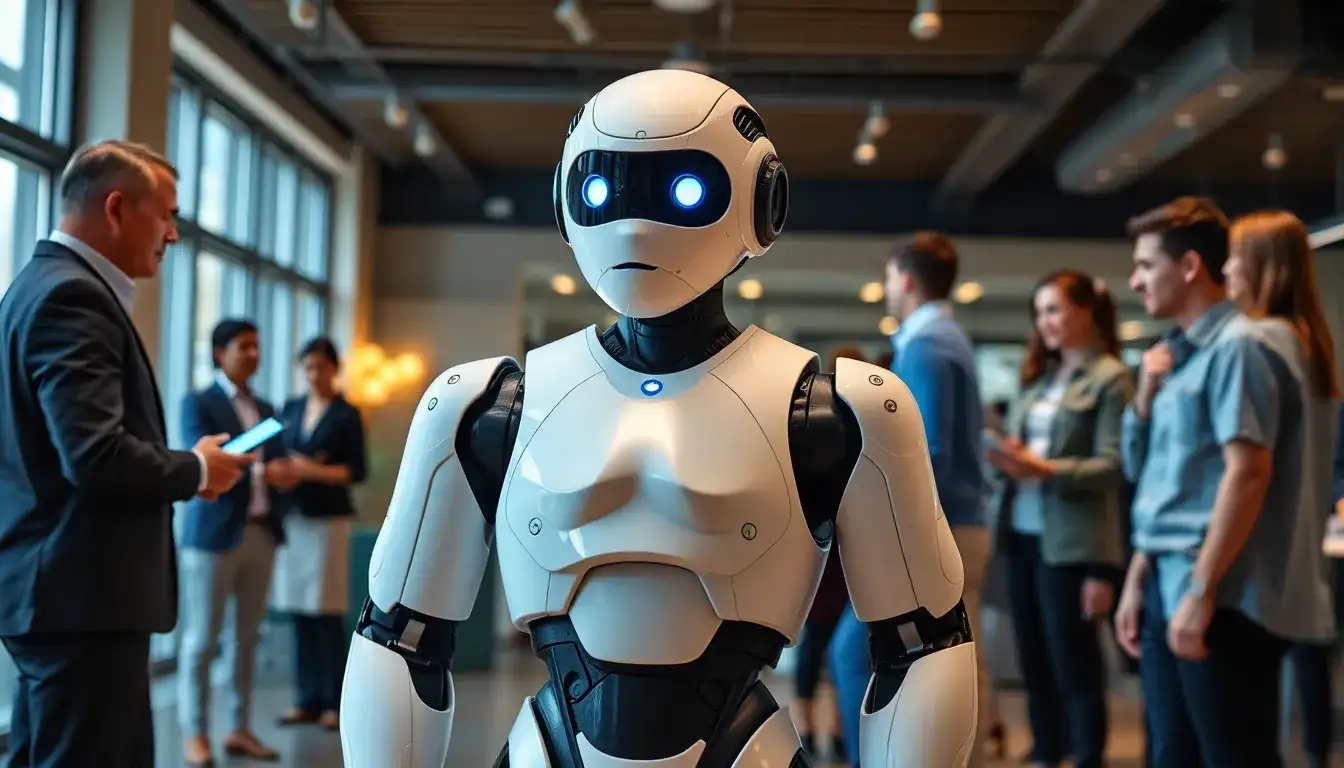
Pang Helin recently highlighted the significant benefits of leasing models for the exploration and promotion of humanoid robots. According to data from the General Administration of Customs, China experienced a 48.7% increase in industrial robot exports in 2025, marking the country’s first year as a net exporter of industrial robots, with exports surpassing imports. This net export status is merely the beginning of China’s journey in global manufacturing, and to maintain its leading position, it must overcome several core challenges.
On February 11, Pang Helin, a member of the Expert Committee on Information and Communication Economics at the Ministry of Industry and Information Technology, provided insights into this topic. He emphasized the need to differentiate between industrial robots and humanoid robots, as well as between automation and intelligence. Industrial robots primarily address automation needs, resulting in widespread demand across various sectors, including spray painting, welding, assembly, and logistics. China has already achieved self-sufficiency and technological independence in these areas.
However, the new era of intelligent manufacturing requires advanced capabilities such as customized flexible production, precision manufacturing, and accurate control based on industrial data and sensor-driven quality control. These challenges necessitate diverse artificial intelligence solutions. The critical areas that require focused effort in intelligent manufacturing include computing power, algorithms, and sensors, with the core challenge being the manufacturing technology of advanced process chips.
Additionally, a vital aspect of the supply chain for both industrial and humanoid robots revolves around materials and precision. Some materials still rely on imports, such as specialty gases in electronics and photoresists, alongside high-strength materials. Even though some components may appear identical, there are notable differences in precision and durability between domestic and imported products. These precision discrepancies stem from manufacturing processes, while durability relates to material quality. These factors warrant significant attention.
To further promote the deep integration of AI technology with the industrial robot industry, streamline the supply chain, and strengthen China’s net export advantage in industrial robots, Pang Helin believes that creating demonstration scenarios is key. Factories need realistic examples as guides for achieving automation, as not all traditional enterprises have the capability to transition intelligently. Many businesses struggle to find solutions or understand the steps involved in the process.
Furthermore, it is crucial to expand AI-enabled enterprises and enhance the productive service industry, allowing intelligent companies to proactively assist businesses in finding the most feasible and cost-effective paths for intelligent transformation, rather than waiting for enterprises to express their needs. Lastly, it is essential to avoid superficial implementations; some intelligent devices are impractical and disconnected from actual business needs, leading to wasted resources.
As robots transition from factory production lines to broader markets, expectations for their application scenarios have grown. Currently, there is a strong demand for robot leasing. Recently, two robot leasing platforms launched in Shanghai, offering a service model where rental costs are only one-third of purchase prices, attracting widespread attention. From an industrial development perspective, the emergence of leasing models in the robotics sector seems timely. What does this indicate about the current stage of China’s robotic industry and application ecosystem?
Pang Helin noted that while there is a demand for leasing, industrial robot leasing is not a new phenomenon; it has existed for a long time, similar to the leasing of other factory equipment. Both operating and financing leases have become commonplace, and the decision to lease or purchase depends entirely on the investment strategies of individual companies—a mature industry in its own right.
In contrast, humanoid robot leasing has only gained traction in recent years, particularly in the past year. The user market for humanoid robots remains relatively small, but leasing offers significant advantages for exploring and promoting their applications. Users not only pay rental fees but also contribute to expanding the usage scenarios of humanoid robots and provide feedback through usage data, which aids in refining their design. Given the current state of the humanoid robot industry, leasing appears to be well-timed.
Regarding industrial robots, this sector is already well-established. In China, the industrial robot industry and its applications are in a mature phase. The country possesses comprehensive manufacturing capabilities across the entire industrial robot supply chain, along with a pool of skilled robotic engineers. Chinese industrial robot companies are significant players on the global stage. Meanwhile, humanoid robots and embodied intelligence are in the exploratory application phase. The relatively limited application scenarios have led to the adoption of leasing as a means to attract more users for collaborative exploration of these scenarios, ushering in a new era for humanoid robot development.
Original article by NenPower, If reposted, please credit the source: https://nenpower.com/blog/exploring-the-benefits-of-rental-models-for-the-application-and-promotion-of-humanoid-robots/

