

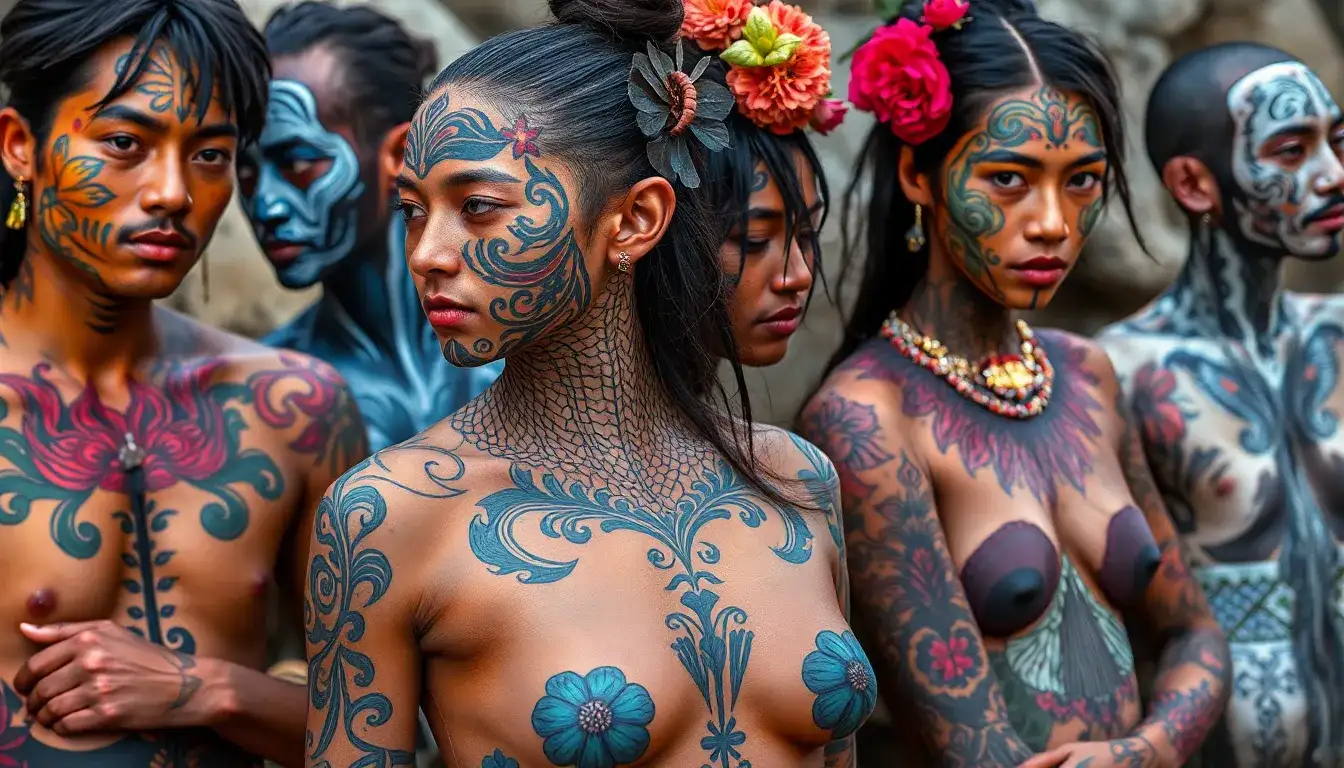
Exploring the Beauty of Humanity: The Captivating Charm of Western Body Art
The exploration and expression of the human body have been integral to the history of art. Among the various forms of artistic expression, Western body art holds a significant place due to its unique perspective and deep humanistic concern. This art form goes beyond mere depiction of physical forms; it conveys the complexities of humanity, the surge of emotions, and the essence of life through the curves, tensions, and interplay of light and shadow in the body.
The term “Western” may evoke thoughts of specific artists, styles, or regional characteristics. However, we prefer to interpret it as an homage to “authenticity,” a capturing of “vitality,” and a fearless gaze into “humanity.” This artistic approach often challenges societal norms, confronting the primal and candid nature of the body, thereby provoking deep resonance and contemplation among viewers.
Tracing back through history, the roots of body art can be found in ancient Greek and Roman times. The sculptures from that era showcased perfect proportions and robust physiques, embodying idealized heroism and reverence for the human form. During the Renaissance, masters such as Leonardo da Vinci and Michelangelo combined anatomical knowledge with artistic creation, producing countless classic works that elevated the representation of the human body to new heights.
As time progressed, the boundaries of art expanded, revealing a more diverse and avant-garde face of body art. The uniqueness of Western body art lies in its understanding of the body, which no longer adheres strictly to classical perfectionism. It embraces bodies that may not be “perfect,” marked by the passage of time or natural flaws. These “imperfections” imbue the works with a greater sense of authenticity and vitality, presenting a living, breathing individual rather than an unattainable idol.
This art invites viewers to examine, feel, and connect. In terms of artistic expression, Western body art showcases remarkable inclusivity. It can be realistic, skillfully capturing every detail of the body, or abstract, using distorted lines and shapes to convey inner emotions. Photography, painting, sculpture, performance art, and even installation art can serve as mediums for Western body art. Each piece tells a unique story about the body in its own language.
For instance, in photography, some photographers choose to capture the human body in natural settings, blending it with landscapes, rivers, and forests to create a harmonious and vibrant atmosphere. They focus on how light plays across the skin and how the body interacts with its environment, lending a poetic romance to their work. In galleries, certain painters use bold colors and brushstrokes to express the strength and emotional tension of the body, their pieces often brimming with passion or a subtle hint of sadness.
The allure of Western body art also lies in its philosophical implications. The body is not just a physical entity; it embodies our consciousness, emotions, and souls. Through artistic expression of the body, artists seek to explore the essence of life and delve into the depths of humanity. They may examine the relationship between the body and desire, the conflicts with societal norms, and the construction of identity.
These themes resonate with each of us, prompting reflection on our existence. In contemporary society, interpretations of Western body art have become increasingly rich. It is no longer solely about aesthetic pursuits; it encompasses liberation, diversity, and bodily autonomy. It challenges societal stereotypes about bodies, encouraging a more open and accepting attitude towards various forms of physique. This art form has, in many ways, become a microcosm of social progress, reflecting the relentless pursuit of freedom of expression and individual value.
Of course, like any art form, Western body art faces controversies during its dissemination and acceptance. It can be misinterpreted as vulgar or pornographic, receiving various labels. True art often requires us to look beyond superficial appearances and understand its intrinsic spiritual core. It demands viewers to possess a certain level of appreciation and an open mindset to grasp the artist’s intentions and feel the emotional power embedded in the works.
In summary, Western body art represents a profound dialogue about the human body and a comprehensive exploration of the beauty of humanity. It transcends temporal boundaries, integrates diverse artistic techniques, and encompasses rich philosophical reflections. It invites us to examine the body, understand life, and embrace authenticity. In this ever-changing era, appreciating Western body art also enhances our cultural literacy and fosters a multi-dimensional understanding of life.
The Contemporary Resonance and Infinite Possibilities of Western Body Art
As the concept of Western body art enters contemporary discourse, its meanings and the discussions it generates become increasingly complex and diverse. It is no longer just a static depiction on canvas or a cold sculpture; it addresses a range of topics closely tied to modern society, including gender, identity, power, and technology. This art form, using the body as a medium, has become a powerful tool for social commentary and cultural expression.
In today’s context, the creative mediums for Western body art have reached unprecedented richness. Beyond traditional painting, sculpture, and photography, performance art, installation art, digital art, and even AR/VR technologies are used by artists to explore the possibilities of the body. For example, performance artists may engage in a series of challenges or interactions with their bodies to examine limits, endurance, and the relationship with their environment. Their bodies become the artworks, carriers of action, and conveyors of ideas.
Installation art can integrate bodily elements with space, materials, and sound, creating immersive and interactive experiences. Viewers may need to navigate intricate spaces, connecting with scattered body parts to trigger reflections on bodily existence and even social issues. This approach transforms viewers from passive observers into active participants, further bridging the gap between art and life.
Digital art and virtual reality technologies introduce new dimensions to Western body art. Artists can construct virtual bodies in digital spaces, exploring forms and expressions that are difficult to achieve in reality. They can manipulate the proportions, textures, and movements of virtual bodies, creating visual wonders that defy the laws of physics. Meanwhile, VR technology allows viewers to “enter” the artwork, experiencing the artist’s vision from a first-person perspective, delivering an unprecedented sensory impact.
In contemporary times, Western body art deeply engages with issues of gender and identity. As society’s understanding of gender diversity and identity recognition deepens, many artists utilize the body as a medium to challenge traditional binary perceptions of gender and explore expressions of non-traditional gender identities. They may blur gender boundaries through fluid bodies or express their identity through bodily transformations and reconstructions. This art serves as a platform for marginalized voices, advocating for recognition and dignity.
Technological advancements also inspire new reflections on Western body art. Concepts such as gene editing, artificial intelligence, and cyborgs prompt a reevaluation of the definition of the body and its future. Some artists incorporate these cutting-edge technologies into their work, exploring the fusion of humans and machines, the boundaries between body and technology, and the possibilities of future human forms. Their works may carry cautionary messages or be filled with imaginative visions of the future.
The dissemination of Western body art has also transformed with the rise of the internet. Social media, online exhibitions, and digital platforms allow these works to reach a broader audience. However, this also presents new challenges. In the flood of information, how can truly meaningful and valuable works stand out? How can we avoid being submerged by superficial curiosity? These are questions that artists and curators must consider.
We must not overlook the significant role Western body art plays in social culture. It provides a safe space for confronting the reality of bodies, breaking taboos, and fostering open discussions. It encourages acceptance of bodily diversity, opposes body stigmatization, and advocates for bodily autonomy. In this regard, this art form has become an important driver of social progress and cultural liberation.
Like any groundbreaking art form, Western body art continues to face challenges of censorship, misunderstanding, and commercialization. Striking a balance between maintaining artistic independence and forward-thinking while gaining broader recognition and support is an ongoing endeavor for artists.
In conclusion, Western body art is not a static concept but a living entity that evolves and develops continuously. In contemporary times, it embraces new technologies with an open posture, delving into deeper social issues and expanding the boundaries of art. Centered around the body, it narrates the infinite possibilities concerning life, humanity, and the future. Appreciating Western body art is not merely an experience of visual aesthetics but also a capture of the spirit of the era and a profound insight into the complexities of human existence. It encourages us to adopt a broader perspective in understanding the body, embracing diversity, and exploring the beauty that transcends materiality and reaches deep into the soul.
Original article by NenPower, If reposted, please credit the source: https://nenpower.com/blog/exploring-the-allure-of-xixi-body-art-a-journey-through-human-expression-and-aesthetics/

