

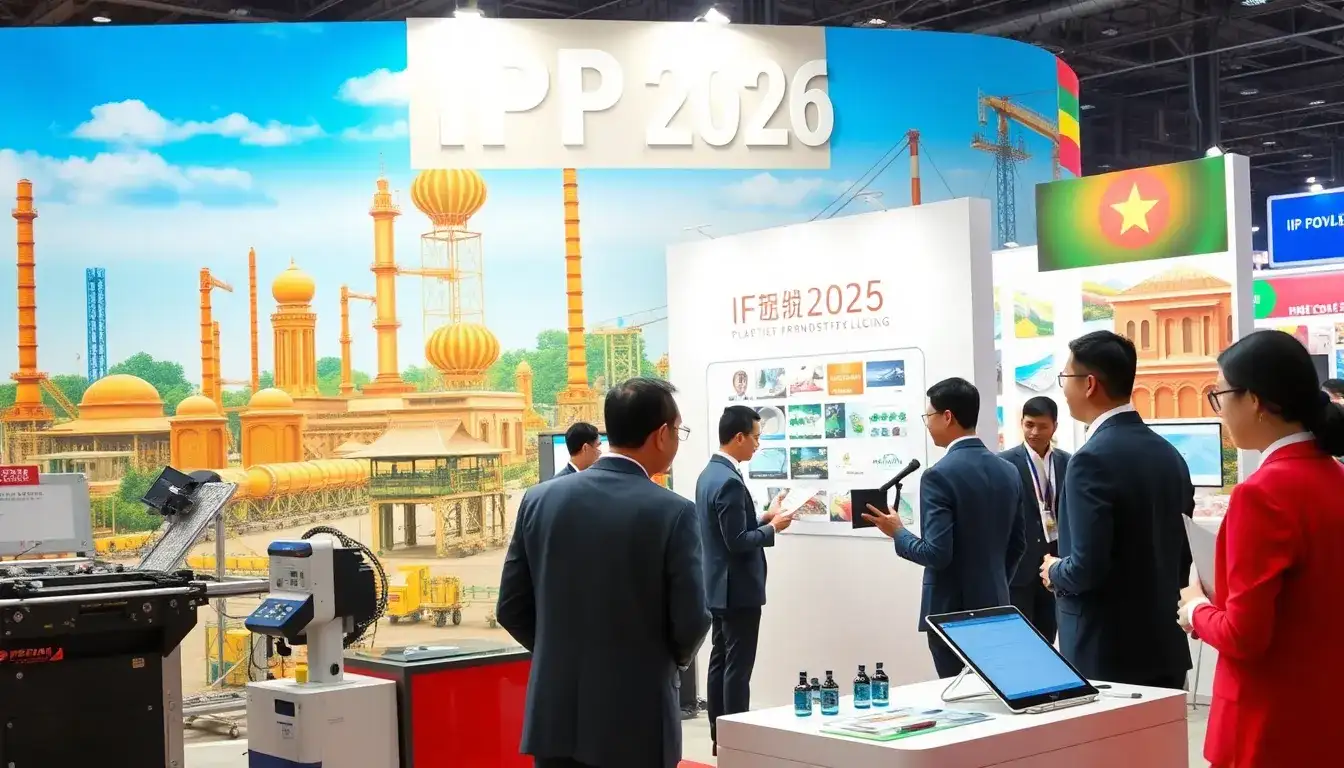
Innovation in Dhaka: The IPF 2026 Opens; How Can China’s Plastic Industry Forge New Paths in the “Most Challenging” Market?
On January 28, the 18th International Plastics, Printing and Packaging Industry Exhibition (IPF 2026) officially commenced at the Bashundhara International Conference City (ICCB) in the capital of Bangladesh, Dhaka. As the largest and most comprehensive professional event in Bangladesh, this exhibition attracted over 400 exhibitors from more than 18 countries worldwide, showcasing innovations across the entire industry chain, from raw materials and smart equipment to high-end products and green solutions. It reflects the critical transition of this nation, with nearly 200 million people, from traditional manufacturing to technology-driven processes.
Despite the host country adjusting its visa policies just two weeks before the exhibition due to presidential elections, which posed challenges for some international exhibitors, and despite the infrastructure and urban environment of Dhaka leaving many first-time visitors with mixed feelings, professionals from the global plastic industry focused on the core of the industry itself. On the first day of the exhibition, a constant stream of visitors moved between various exhibition halls, fostering a vibrant atmosphere of technical exchanges and business discussions.
The Attraction vs. Reality of the Market: The substantial population base forms the fundamental potential of the market, particularly in sectors such as daily plastic products and packaging, where stable demand exists. However, political volatility has led to policy uncertainties, and the overall economic growth and improvement in living standards have slowed significantly, suppressing the market consumption capacity for mid- to high-end plastic products and hindering industrial upgrades. Many exhibitors candidly admitted that compared to relatively stable and rapidly growing Southeast Asian emerging markets like Indonesia and Vietnam, Bangladesh currently lags in investment attractiveness and market explosiveness.
The Slow Upgrading of the Industry Chain and Limited Opportunities: Currently, Bangladesh’s plastic industry predominantly relies on labor-intensive, low-value-added production. Although some leading local companies have recognized the long-term pressure of rising labor costs, their demand for technology upgrades and automation generally remains focused on seeking highly cost-effective, easy-to-operate, and low-maintenance basic equipment. The market remains highly sensitive to price, with limited capacity and awareness regarding high-end technologies and materials. The pursuit of value enhancement has not yet become mainstream and is severely constrained by unstable power supply (for instance, a brief power outage occurred on the first morning of the exhibition), weak industrial support, and a lack of technical talent. This presents a pragmatic yet challenging opportunity for equipment and material suppliers: the key to success lies not in showcasing the most advanced technology but in providing highly durable, energy-efficient solutions that can adapt to the local production environment and skill levels of workers. Suppliers who can demonstrate that their equipment significantly reduces defect rates, saves energy, or enhances stable output in the short term are more likely to secure limited orders.
Chinese Companies’ Deep Engagement and Expansion: Among the numerous international exhibitors, Chinese companies were particularly active. They not only showcased equipment and materials but also focused on providing comprehensive solutions tailored to local production conditions, indicating a clear shift from pure trade exports to technology implementation and service depth. Faced with the complexities and challenges of the market, Chinese exhibitors displayed more flexible strategies and stronger risk tolerance, aiming to establish a lasting presence in this market characterized by both “blue oceans” and “turbulent seas.”
As a deep observer and connector in the industry, 聚风塑料传媒 (booth number: 548) made a strong appearance at this year’s IPF. This not only marks the beginning of 聚风’s overseas reporting journey for 2026 but also reflects the team’s commitment to delving into the industry and conveying frontline voices. The booth attracted numerous industry professionals for engaging discussions, becoming a hotspot for information exchange and idea collision.
The curtain has been raised on IPF 2026, which acts like a multifaceted prism, reflecting both the immense potential and unique challenges of Bangladesh as an emerging market, while also mirroring the collective actions of the global plastic industry as it seeks growth amidst uncertainty and adjusts strategies in diverse market environments. The 聚风 team will continue to provide in-depth observations from the exhibition.
Original article by NenPower, If reposted, please credit the source: https://nenpower.com/blog/exploring-opportunities-in-bangladesh-chinese-plastic-industry-navigates-challenges-at-ipf-2026/

