

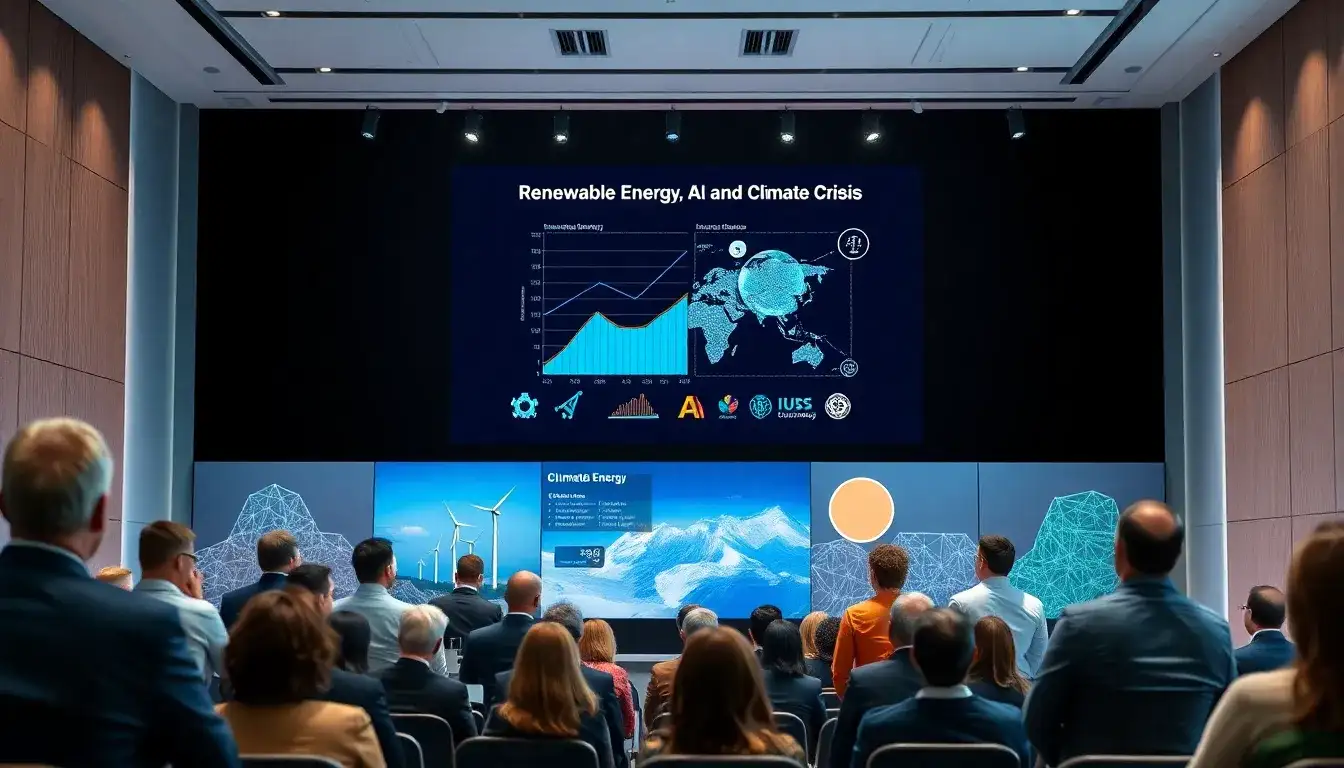
On August 28, 2025, the Center for China and Globalization (CCG) successfully hosted the 16th “Dialogue Luncheon” at the China World Hotel in Beijing. This event focused on the theme of “New Energy and Global Green Transformation,” aiming to explore how countries can leverage their strengths and collaborate effectively to address future challenges related to energy shortages and climate change amidst the rapid advancements in artificial intelligence and clean energy.
The luncheon was moderated by CCG co-founder and Secretary-General Miao Lu, who welcomed attendees and highlighted the importance of the dialogue platform that CCG has created, bringing together diplomats, international organizations, well-known enterprises, and academic experts to share insights on China’s reform and opening-up. CCG Chairman and former State Council Counselor Wang Huiyao opened the event with a keynote address, followed by presentations from distinguished guests, including Zhao Yongqiang, Director of the Renewable Energy Center at the National Development and Reform Commission, Zhang Jian, Deputy Director of the Institute of Climate Change and Sustainable Development at Tsinghua University, and Ma Jun, Director of the Institute of Public and Environmental Affairs.
Here is a summary of the luncheon discussions:
Miao Lu: Good afternoon, ladies and gentlemen. It is a pleasure to welcome you all to the 16th CCG Dialogue Luncheon. Thank you for taking the time to join us. The Dialogue Luncheon series initiated by CCG has become an important platform for dialogue and exchange, gathering diplomats, international organizations, renowned enterprises, and academic experts to share new viewpoints on China’s reform and opening-up, enhancing mutual understanding and cooperation in our increasingly interconnected world. The theme of today’s luncheon is timely, focusing on the trends in clean energy under the green transformation context. With the growing attention on global climate change and environmental sustainability, the transition to clean energy has become a significant challenge and opportunity for our era. Governments, enterprises, and societies worldwide increasingly recognize that reducing carbon emissions and addressing resource depletion are critical not just for the health of our planet and humanity but also for long-term economic resilience and social well-being.
We are honored to have three distinguished guests today who will share their expert insights. Please allow me to introduce:
- Zhao Yongqiang, Director of the Renewable Energy Center at the National Development and Reform Commission
- Dr. Zhang Jian, Deputy Director of the Institute of Climate Change and Sustainable Development at Tsinghua University
- Dr. Ma Jun, Director of the Institute of Public and Environmental Affairs
Before we proceed with the agenda, I would like to extend a special welcome to the diplomats from various countries present today. We have representatives from 16 countries, including five ambassadors from Germany, Greece, Japan, New Zealand, and Turkey. Additionally, diplomats from Barbados, Canada, Croatia, Finland, Hungary, Iceland, Malta, Norway, Romania, the UAE, and the USA are also with us. We are also joined by representatives from international organizations such as the IMF, OECD, SCO, UNDP, and UNFPA. Welcome, everyone!
Today’s luncheon has also attracted participation from several notable enterprises, including BASF China, PING AN, Li Auto, China International Capital Corporation, and Nengchain Group. Welcome to all!
Lastly, we appreciate the presence of our media friends who will help disseminate the important discussions taking place today. Media representatives include Asahi Shimbun, CGTN, China Daily, Der Spiegel, Die Zeit, The Hindu, NHK, and the Press Trust of India.
Thank you all for your support and participation. We look forward to a productive and enlightening luncheon. Now, let us officially begin with our speakers. First, I would like to invite Dr. Wang Huiyao, CCG Chairman and former Counselor of the State Council, to deliver the opening remarks. Welcome, Dr. Wang!
Wang Huiyao: Ladies and gentlemen, esteemed guests, representatives from international organizations, multinational companies, and our media friends: I am delighted to gather with you at the 16th CCG Dialogue Luncheon, and I warmly welcome our distinguished experts present today. Since its inception last year, the CCG Dialogue Luncheon series has held 16 sessions, with plans for six more this year. This platform aims to showcase the latest developments in China, facilitate information exchange, engage in discussions around significant issues and policies, and promote cooperation with various countries. It is a unique platform that CCG is dedicated to building.
I am pleased to report that since its establishment, we have successfully held 16 sessions, and this event has moved to a better venue, which is positive progress. We insist on an open discussion format, and we will later release videos and reports through media channels to truly create a platform that fosters dialogue, exchange, and discussion. The theme today is new energy and global green transformation, which is a highly relevant topic. We are all aware that the world faces unprecedented climate challenges: record high temperatures this summer, wildfires in Spain, flooding in Beijing, and disasters in Pakistan and many other countries. These issues are real and severe, and we must join hands to uphold the Paris Agreement and strengthen international cooperation.
China has made significant achievements in collaborating with governments, enterprises, and international projects. One prominent area is electric vehicles. About 15 years ago, the mayor of Beijing told me that 60% of the city’s serious smog came from vehicle emissions. To improve the environment in Beijing and nationwide, they decided to take action. Back then, the US Embassy monitored and published PM2.5 data daily. Today, over half of the vehicles in Beijing are now using green transportation, most of which are electric vehicles. This demonstrates the positive changes that can result from our collective efforts.
Furthermore, I have learned that Europe, Canada, Australia, and New Zealand are also advocating for green development. We eagerly anticipate hearing the experts’ insights today. The United Nations, the International Monetary Fund, and other international organizations are actively promoting relevant initiatives, and companies like BASF are also involved. It is an honor to be here with you all today.
Let me conclude my remarks here. Please enjoy your meals while continuing to engage in discussions. We hope you will continue to participate and help us create a unique platform in Beijing that facilitates deep exchanges between China and the world. Thank you!
Miao Lu: Thank you, Dr. Wang, for your remarks. Today’s agenda consists of two parts. First, we will hear from three distinguished speakers; afterward, we will enter the Q&A session, which is often the most popular part of our luncheons. It is my honor to invite Professor Zhao Yongqiang to the stage. Professor Zhao is the Director of the Renewable Energy Center at the National Development and Reform Commission. Let me briefly introduce his background: He graduated with a bachelor’s degree in Thermal Energy and Power Engineering from Xi’an Jiaotong University. In July 2004, he obtained his master’s degree in Management Science and Engineering from Tsinghua University. Since joining the Energy Research Institute in 2004, he has long been committed to research on renewable energy and energy transition strategies, focusing on carbon peak and neutrality policies, energy planning, technological roadmaps, and international cooperation. He has led several important research projects for the National Development and Reform Commission, National Energy Administration, and other government departments, and has actively participated in international collaborations, including the U.S.-China Renewable Energy Partnership and the G20 Energy Sustainability Working Group.
Please join me in welcoming Professor Zhao Yongqiang to the stage for his presentation.
Zhao Yongqiang: Thank you very much. Ladies and gentlemen, it is a great honor to speak at the CCG Dialogue Luncheon and to have the opportunity to exchange ideas with diplomats, business representatives, and media from many countries. We all know that international cooperation is crucial for clean energy and climate change. In fact, my colleagues and I at the Energy Research Institute have visited Germany, Japan, the United States, Norway, and Finland, and we have benefited greatly from international cooperation. I believe we all agree that the transition to clean energy and green energy is vital for the survival and development of humanity. Today, I would like to share three points.
First, China is advancing its own energy transition and contributing to the global energy transition. Since 2010, China has become the world’s largest energy producer and consumer. Prior to this, China had already begun developing renewable energy. Currently, China’s electricity production accounts for one-third of the global total, and I believe that the power generation sector is the most critical link in the energy transition. Energy demand, especially electricity demand, continues to grow not only in China but globally. In the long run, China still faces resource and environmental constraints, and the energy transition is the fundamental way to address these challenges.
China’s energy transition goal is to build a clean, low-carbon, safe, and efficient energy system. This will drive the synergistic effects of carbon reduction, pollution control, green development, and economic growth, ultimately achieving a harmonious coexistence between humans and nature. Chinese leaders emphasize the importance of seizing opportunities, forming a coalition, and promoting high-quality development of China’s energy system, providing a safe and reliable energy support for China’s modernization and making significant contributions to building a clean and beautiful world.
We believe that China’s energy transition has three main pillars: a high proportion of renewable energy development, industry coupling, and a strong smart grid infrastructure. China has taken strong measures to develop hydropower, wind power, solar energy, biomass energy, and geothermal energy, aiming to establish an energy supply system dominated by non-fossil fuels. In addition to large-scale renewable energy bases in the west, China is also vigorously developing distributed energy in the central and eastern regions, especially solar energy. At the same time, China is the world’s largest developer of offshore wind power. As of June this year, the total installed capacity of electricity nationwide has reached 3,650 GW, with renewable energy accounting for 60% of the total installed capacity and wind and solar (variable renewable energy) accounting for 45%. This is a tremendous achievement, but the future challenge remains how to absorb such a large scale of wind and solar energy. In fact, renewable energy generation has accounted for 40% of total power generation, with solar energy alone accounting for 43%. In some regions, such as Qinghai, this proportion is close to 90%.
China is promoting low-carbon transformation in industrial sectors and advocating for low-carbon consumption models. In terms of infrastructure, transitioning from traditional fuels to electricity has been applied in processes, heating, drying, and steam supply. In the residential sector, solar water heaters, electric cooking tools, and heat pump-based heating have been widely adopted. In the transportation sector, the development of new energy vehicles has been rapid. As of June this year, the number of new energy vehicles in the country has exceeded 37 million, with over 25 million electric vehicles.
China is accelerating the construction of inter-regional energy networks, having established three “West-to-East Power Transmission” corridors with a transmission capacity of about 300 GW and completed 20 ultra-high voltage direct current transmission lines. China is vast, with most wind, solar, and hydropower resources located in the west, requiring nearly 2,000 transmission lines to support electricity usage in the east. At the same time, China is promoting hydrogen pipeline transportation and building integrated energy service stations that combine oil, gas, electricity, and hydrogen supply. China is also speeding up the application of digital and smart technologies to upgrade energy infrastructure, constructing smart microgrids in industries, transportation, and buildings, enabling users to utilize renewable energy locally.
Further opening up will create new opportunities for deepening international cooperation. In fact, many international companies have entered China and developed their businesses, including Vestas from Denmark, General Electric from the USA, Siemens from Germany, and Acciona from Spain. We have all benefited from international cooperation. I believe we need more advanced technologies, products, and deeper collaborations, including smart energy systems. This is my first point.
Second, the energy transition is entering a new phase of reshaping energy systems. China shares similar visions and challenges with many countries. According to the Energy Research Institute’s report, achieving carbon neutrality by 2060 will require China’s total installed power capacity to reach 11,000 GW, approximately four times that of 2003, with renewable energy generation exceeding 90%. We believe that China and other countries face three common visions and challenges: first, technological innovation and low-cost, stable supply chains; second, reliable and resilient electricity and energy systems that can integrate high proportions of variable renewable energy; and third, energy governance and market rules that adapt to the new energy system. These are both common visions and challenges.
Third, the progress of the energy transition depends on international cooperation. Ensuring energy security and promoting clean low-carbon transitions are common challenges for the entire world. China is cooperating with various countries to promote global sustainable energy development and build a fair, just, balanced, and inclusive global energy governance system. China is committed to improving bilateral and multilateral cooperation mechanisms in the energy field, enhancing policy concepts and best practice exchanges in energy transitions, and promoting cooperation and capacity building in green low-carbon technology.
Only by doing so can we achieve the goals of the Paris Agreement, reach carbon neutrality, and ensure that everyone has access to affordable, reliable, sustainable, and modern energy. I believe the future of clean energy depends on the collective efforts of all our countries. In fact, China has established several platforms for strengthening international exchanges. On September 27, we will hold an “Energy Low-Carbon Development Forum” in Taiyuan, Shanxi, where several research institutions will host thematic seminars, inviting global experts and scholars to attend. In October, China will also cooperate with the International Renewable Energy Agency (IRENA) to hold the International Energy Transformation Forum in Suzhou. I believe these are excellent platforms for helping China, the international community, and enterprises to jointly seek new solutions. I am confident that future cooperation will be crucial for the energy transition.
Thank you!
Miao Lu: Thank you, Professor Zhao, for your comprehensive and insightful introduction to China’s policies on low-carbon and clean energy transitions. Next, I would like to invite Dr. Zhang Jian, Deputy Director of Tsinghua University’s Institute of Climate Change and Sustainable Development, to speak. Please allow me to briefly introduce Dr. Zhang’s background. Dr. Zhang also serves as the Deputy Secretary-General of the World University Climate Change Alliance, and his research areas encompass global climate governance, climate adaptation, sustainable development, and climate innovation. He has led several important projects, including the decarbonization path plan for China’s healthcare industry and the Tsinghua Global Adaptation Coalition initiative. Dr. Zhang has also contributed to numerous significant climate reports and holds positions in several academic and UN committees related to sustainable development and climate action.
Now, please welcome Dr. Zhang Jian to share his insights. Thank you.
Zhang Jian: Thank you very much for the invitation from CCG. It is an honor to engage with many guests and friends from different fields here to discuss how to respond to this significant challenge together. My topic today may seem somewhat distant from new energy, but I believe AI and its related applications will gradually become central to the green transition. If managed properly, it can drive progress in a friendly manner; however, if it spirals out of control, it may also bring disruptive impacts. Therefore, discussing the relationship between AI and climate and sustainability is of great practical significance. In the next 15 minutes, I will briefly introduce our research on the relationship between AI and climate, conducted in collaboration with the United Nations Development Programme (UNDP). This research not only presents solutions but also highlights new challenges that require our attention.
The report primarily focuses on the Asia-Pacific region. We hope to expand our research to Eurasian and African countries in the future. The choice of the Asia-Pacific region is due to several reasons: first, it is home to half of the world’s population, accounting for nearly half of global emissions, and it is also one of the fastest-growing economic regions globally. If not addressed, these rapidly developing economies could face GDP losses of up to 17% by 2070 in high-emission scenarios.
Thus, the issue is not only about emission reductions but also adaptation. According to the Global Adaptation Initiative map, the Asia-Pacific region hosts many of the most vulnerable countries, which are at the forefront of the climate crisis. While New Zealand exhibits considerable resilience, some Asian nations are ill-prepared and highly vulnerable. Faced with this urgent situation, we lack sufficient digital solutions. Both decision-makers and implementers need more detailed climate data, adequate data, and powerful dynamic models for analysis and to propose policy paths for effective action. AI can play a role in bridging our gaps in digital response capabilities.
From an academic perspective, over 300 studies have shown that AI has already been applied in climate-related sustainable development fields, including clean energy industry mitigation measures and various adaptation areas such as water resources, agriculture, healthcare, and education, enhancing public awareness of climate and sustainable development issues.
When discussing AI, it does not merely refer to one or two tools, but rather a comprehensive set of methodologies, including machine learning, language processing, and generative AI, with around 20 commonly used tools widely applied in related fields. The most prominent contributions of AI in addressing climate change are seen in mitigation and adaptation efforts. These include three main areas: first is smart grids. As Director Zhao mentioned, we need smart grids to optimize the transmission of renewable energy; second is energy efficiency, which is key to achieving the goals of “tripling renewable energy” and “doubling energy efficiency”; and third is real-time emissions monitoring, which is crucial for carbon markets, trade, and taxation. AI is also indispensable for adaptation, such as constructing extreme weather warning systems and enhancing decision-making capabilities in agriculture and food security.
In practical applications, AI-driven smart grids can minimize energy waste, with studies showing they can reduce energy consumption by about 15%. In carbon capture and emissions monitoring, AI can improve methane leak detection accuracy to 95%. Methane is the second most important greenhouse gas, making this particularly significant. For example, Singapore has utilized AI to optimize its grid, increasing the share of renewable energy in its national energy supply from 4% to over 8%. Hong Kong has implemented AI-driven smart building systems, achieving a 15% reduction in energy consumption for heating, lighting, and air conditioning. Tokyo and Shanghai have seen similar applications with significant effects. In enhancing climate resilience, the AI agricultural forecasting system from the Indian Meteorological Department dramatically increased food production while conserving water resources; the Philippines established an AI disaster warning system; and Vietnam utilized AI to support sustainable agricultural development.
However, while we enjoy these positive outcomes, we must also confront the risks. First is energy consumption. Data centers consume 10 to 50 times more power per square foot than typical commercial spaces. In 2023, data centers in the Asia-Pacific region consumed about 55 terawatt-hours of electricity, accounting for 27% of global demand, projected to rise to 8% of regional electricity needs by 2028, with China, Japan, and Australia being major drivers. Additionally, data centers use over 5 billion liters of water annually, which could double by 2030, equivalent to the annual water usage of a medium-sized country.
Second is mineral consumption. By 2030, the demand for critical minerals for AI-related facilities could account for 2% to 3% of the global total. The mining and hardware production, as well as waste disposal, could lead to severe environmental issues. Social inequalities may also worsen, such as urban-rural gaps and gender divides. Without deliberate bridging efforts, new climate technologies may exacerbate existing social divisions, which is a significant socioeconomic issue that must be addressed.
Therefore, we must integrate sustainability into AI infrastructure development early on. For instance, new data centers should be required to use renewable energy, enforced by tax incentives or regulations. In terms of water resources, we should promote efficient cooling methods, such as direct immersion cooling for chips, to reduce water consumption. Penalties for non-compliance in mining or data center operations could be as high as 5% of revenue, and promoting an extended producer responsibility system for AI hardware recycling is essential. In China, green data center evaluation standards were issued last year to promote the construction of low-carbon and efficient AI systems, with over 240 national-level green data centers already established in major industries.
That concludes my presentation. Thank you for listening.
Miao Lu: Thank you, Dr. Zhang, for sharing your insights. I have been reflecting on how we can reconcile and address the climate crisis and artificial intelligence, bringing them together. Your talk has inspired me greatly. I noticed that today’s weather forecasts are more accurate than ever, which I believe is also due to the application of artificial intelligence in meteorological predictions, helping to reduce carbon emissions. Thank you for your enlightening contribution.
Next, I would like to invite a very important guest, Mr. Ma Jun, founder and Director of the Institute of Public and Environmental Affairs, to speak. Please allow me to briefly introduce Mr. Ma. He is a distinguished environmental advocate and established China’s first environmental information disclosure database. He launched the “Blue Map” application to provide the public with access to environmental data and monitor corporate environmental performance. His initiatives have promoted transparency and accountability among over 34,000 companies in the environmental sector and have influenced major banks in green finance practices. Mr. Ma has been recognized as one of TIME magazine’s “100 Most Influential People,” and he has received numerous awards, including the Goldman Environmental Prize and the Schwab Social Entrepreneur Award.
Let us welcome Mr. Ma Jun to share his thoughts.
Ma Jun: Ladies and gentlemen, it is an honor to be invited to this CCG Dialogue Luncheon. You have just heard authoritative interpretations of renewable energy from Director Zhao and insights from academic experts on AI and its impacts. As the founder of a non-governmental organization, we have also conducted research on energy transitions, and I hope today’s sharing will help you understand this grand transformation more intuitively.
Of course, the backdrop of all this is the urgent climate challenges we face. As Dr. Wang mentioned in his opening remarks, extreme weather events are becoming increasingly frequent, and we have a significant gap that needs to be bridged. Each assessment reminds us of this point. We also mentioned the improvement in air quality in China, which has been our focus for the past two decades. While we have made some progress, there are important experiences and lessons worth summarizing.
One of these lessons is that we must rely on large-scale monitoring and transparency to foster multi-party collaboration. In climate mitigation and adaptation, we aim to achieve this as well. We developed the “Zero Carbon Blue Map,” striving to integrate carbon disclosure data at the regional, provincial, and municipal levels, based on which we conducted index research with the Chinese Academy of Environmental Sciences and the Climate Center of the Ministry of Ecology and Environment to assess the carbon peak and carbon neutrality performance of various provinces and cities.
The research indicates that some positive trends are emerging. Since March last year, China has seen a decline in carbon emissions for the first time, driven by the rapid growth in solar energy installation capacity. We have been mapping the rapid expansion of solar power, marking this information on digital maps to help stakeholders visualize the situation. We will soon release a new report in collaboration with Green Jiangnan titled “1000 GW of Solar Energy.”
On the map, we track the explosive expansion of China’s solar installation capacity. Last year, China achieved its 2030 clean energy target (1,200 GW) ahead of schedule, and this year, the single solar installation has reached 1,000 GW. This solar power is not only concentrated in the west; there are also significant distributed rooftop solar systems in some coastal areas, while the central region remains relatively balanced. The western regions feature large-scale centralized solar power plants. Partners have traveled thousands of kilometers to record these circumstances, and the volume of data is staggering.
In the eastern and central regions, solar power plants are densely distributed. For example, Shandong, which ranks high in industrial capacity and energy consumption, could rank sixth globally if considered independently; a significant portion of solar power comes from rooftop installations. Jiangsu and Zhejiang have similar situations, with many rooftop installations being built by factories. Satellite maps clearly illustrate this. It is estimated that in May of this year, China installed an average of 100 solar panels every second. This explosive growth certainly brings challenges, such as intermittency and instability, potential ecological and social impacts, and issues related to upstream mineral extraction and waste disposal, affecting not only China but the entire globe.
As Director Zhao mentioned, how to absorb such a high proportion of renewable energy is a significant challenge. One solution is to accelerate electrification. China’s electrification process is nine times faster than the global average. The tools we have developed help the public perceive this intuitively, for instance, by using street photos of vehicles to identify their carbon footprints, clearly showing the lower carbon emissions of electric vehicles. Users have uploaded tens of thousands of photos.
Another solution is the rapid growth of energy storage and the development of hydrogen energy, especially in the western regions. Currently, solar power plants are required to be equipped with energy storage facilities, and some subsided coal mining areas and wastelands are being utilized for solar projects. There are similar cases in the southwestern rocky areas of China. New models are emerging that combine agriculture and solar power, and public infrastructure is also exploring self-sufficiency.
At the global level, 28 commitments to triple renewable energy installation capacity have been made, with China taking a leading role; the global share of China’s solar power continues to rise, with its installation and generation capacity equivalent to the total of several dozen other countries combined. However, gaps still exist, and progress cannot rely solely on China. Unfortunately, outside of China, the global renewable energy growth rate is only 8.6%, far below climate goals. There is also a significant investment gap in clean energy.
China has reduced the cost of photovoltaic power generation by nearly 90% and is actively investing in solar projects globally, achieving 280 million tons of emissions reductions cumulatively. However, there remains vast potential in other regions of the world. UN Secretary-General António Guterres recently referred to climate action as “an opportunity,” urging nations to accelerate clean energy development. In terms of per capita solar installation, only a few countries, such as Germany, the Netherlands, and New Zealand, have reached 1 kW per person.
We are collaborating with Director He Jijiang of Tsinghua University to launch a global initiative for 1 kW of solar power per person, promoting its implementation across different regions. Regions such as Zhejiang are proactive in policies; Lankao in Henan has become a solar county, Sichuan has solar schools (an ESG project), Suzhou in Jiangsu has solar villages, and Huize in Yunnan has solar households. These new models are gradually expanding to urban areas, and there is great potential for places like Beijing in the future.
In terms of financing, we are also seeing new cross-sector models, such as breaking large centralized solar projects into hundreds or even thousands of “tokens” to attract investors and donors.
That concludes my overview of China’s energy transition, particularly in the photovoltaic sector. Thank you for your attention!
Miao Lu: Thank you, Mr. Ma, for your excellent presentation. This is actually my first time learning about so many important and grand details regarding the development of solar energy in China. In the future, as a think tank, CCG could indeed become a “solar think tank”—it would be fantastic if we could install solar panels on the roof of the CCG building!
I also want to thank our three speakers for their diverse perspectives: a policymaker from the government, an academic from Tsinghua University, and Mr. Ma representing the non-governmental organization and think tank sectors. This provides us with a comprehensive view of the changes happening in China and its policies regarding green transformation.
Next, I would like to invite Dr. Wang Huiyao to lead the Q&A session. The popularity of the CCG Dialogue Luncheon is largely due to this segment, which often features engaging discussions.
Wang Huiyao: Thank you, Dr. Miao. We have half an hour for the Q&A session—this is indeed very exciting. This time, we have a better venue with a large screen, enhancing the presentation experience significantly compared to previous luncheons. We have held 16 luncheons, attended by over 100 ambassadors, embassy representatives, multinational companies, and media representatives.
I can attest to the content mentioned by the three experts; I recently heard a piece of news about a building in China where the entire server system is powered entirely by solar energy, significantly reducing energy consumption, and the roof utilizes recycled electric vehicle batteries for energy storage to be used during rainy weather. I believe this could represent a new development model. Personally, I feel that the 19th century was the era of steam power, with the UK leading the Industrial Revolution; the 19th and 20th centuries were defined by Edison’s creation of the direct current system, and later, the 20th century was heavily influenced by American contributions to computer and digital technology. I believe the 21st century will likely be the era of green energy, jointly led by China and countries worldwide.
Professor Zhang also mentioned that China has rich experience in ultra-high voltage transmission. Given the current energy challenges in Europe due to the Russia-Ukraine situation, why can’t we construct large solar power plants in Africa, leveraging Chinese technology and investment, combined with European funding, to transmit power to Europe through ultra-high voltage grids, thereby enhancing energy security? This would also yield significant benefits for Africa. Such an approach could diversify Europe’s energy sources—combining solar and other renewable energies—while mitigating risks, even if solar power plants are located in Africa. This is a win-win solution.
Another point is that China has signed many third-party cooperation agreements, such as with Japan, France, and recently with Singapore, to advance projects in other markets. I believe we can fully collaborate in the area of green transformation, especially in developing countries. I will stop here, but I truly find China’s rapid progress in this field remarkable. Not long ago, I invited Professor Adam Tooze from Columbia University to my office, and he spoke about the ongoing solar revolution. He mentioned that in 2023, China’s solar installation capacity reached 1.6 times that of all other countries combined. He also specifically pointed out that the cost of photovoltaic panels has dropped from 24 cents to 11 cents. This provides a solid foundation for our cooperation with countries around the world.
Now, let’s move on to the Q&A segment. Ambassador Fu Rong, please go ahead.
Fu Rong, Ambassador of Germany: Thank you, Dr. Wang, and thank you to CCG for organizing this meeting. I also want to thank the three speakers. Regarding Germany, I want to say that our goal remains to achieve climate neutrality by 2045. I also want to point out that you may have noticed that at the recent summit, the EU and China reached a statement on climate issues. So it is safe to say that these major powers are still committed to addressing climate change, implementing the Paris Agreement, and striving to limit the temperature rise to under 1.5 degrees Celsius. As for China, I am amazed at the developments it has achieved in renewable energy. However, I want to combine this with a question. I understand that some German companies have also committed to achieving carbon neutrality, but they tell me that they are unable to obtain green energy from the grid. This clearly reflects a disconnection between the renewable energy production capacity and its actual use in the economy and overall system. This is certainly a very important link and leads to my question about the upcoming “14th Five-Year Plan.” How do you anticipate addressing this issue in terms of goals, policies, and measures? Additionally, there is still a significant amount of coal in China’s energy structure. Moreover, China continues to increase new coal capacity, which is another major concern for us. As international commitments have been made to gradually reduce fossil fuel usage, I understand that China still relies on coal for energy security. China’s actions have a strong demonstration effect and many countries will refer to this. Therefore, I hope that China can clearly state in the future that it will no longer rely on coal for energy security.
Lastly, regarding the upcoming 30th Conference of the Parties (COP30) in Belém, from a global perspective, when I speak with ambassadors from Pacific island nations or small developing countries, they generally emphasize the urgent need for financial support in both adaptation and mitigation. I believe that, as a very successful major country, China has certain financial capacities. Therefore, I look forward to China committing to support the Climate Fund and the Loss and Damage Fund to promote international cooperation, which has been reiterated today. Thank you.
Zhao Yongqiang: Thank you for your question, which can also be seen as constructive suggestions. First, regarding coal-fired power plants. As I mentioned earlier, China’s electricity demand is enormous, and the growth rate of load exceeds the growth rate of power supply duration. This means we must ensure the safety and reliability of the power system during peak electricity usage. Due to China’s limited natural gas resources, coal power remains a relatively reliable option. However, in the future, we believe the operating hours of coal power units will gradually decline, from 5,000 hours a year down to 4,000 hours, 3,000 hours, and eventually 2,000 hours. In other words, we may maintain a certain installed capacity, but the power generation will gradually decrease. I think in the next decade, coal power will still be the foundation of the power system’s reliability. However, in the long run, as new battery technologies develop and storage capacities improve, the role of coal power will continually diminish.
Regarding the first question about green electricity: Yes, China does indeed have a large amount of green electricity, and its proportion is continually increasing across provinces. However, the current electricity market mechanism is still not well developed, and there are no very good rules to ensure that power generation enterprises and electricity consumers can clearly sign contracts for green electricity procurement. Although we encourage contractual trading, some contracts in China are not recognized as green electricity procurement according to international practices, which is indeed a problem. For this reason, the Chinese government has recently issued new regulations encouraging renewable energy to be directly supplied to users, ensuring consumers can obtain certified green electricity procurement. At the same time, the government has established a green certificate system covering renewable energy sources such as solar and hydropower. This not only helps domestic enterprises but also allows international companies to better track and verify the proportion of renewable energy in their consumption.
As for your mention of international cooperation in providing clean energy to island nations: Absolutely. Last week, we held a seminar at Tsinghua University, where Indonesia raised a similar question: What is the biggest challenge for island electricity supply? In fact, China has built many independent power systems over the past decade, integrating solar, wind, and some battery storage, sometimes even with diesel generators. The biggest challenge at that time was cost, but now the costs have significantly dropped, making it commercially viable. However, new challenges arise in terms of safety and reliability, especially in the context of extreme climate conditions in the future, which will be the greatest risk for small island power systems. Therefore, we need more batteries, smarter grids, and more precise weather forecasting technologies. I believe these are the directions where we must strengthen cooperation. Thank you.
Kenji Kanasugi, Ambassador of Japan: Thank you, Dr. Wang, and to all the speakers for your insightful presentations. Climate change and environmental issues are important topics for Japan-China cooperation. Mr. Ma’s presentation left a deep impression on me, especially regarding the extensive application of solar photovoltaics in China and other countries. Over twenty years ago, Japan began using solar photovoltaic panels on a large scale. As I understand it, solar panels have a lifespan of about 10 to 12 years. How does China plan to establish full lifecycle management for solar panels? Considering that China has only recently promoted photovoltaic panels on a large scale, in about ten years, it may face a significant number of panels being discarded or losing efficiency. How will China create an environment and system for recycling and reusing solar panels, and extend their lifespan?
Ma Jun: Thank you, Ambassador. That is an excellent question. I just returned from Japan, where I saw many solar panels along the Shinkansen line. Although the scale may not be as vast as in China, I was still impressed. Indeed, China has rapidly expanded its photovoltaic applications in recent years. However, as you mentioned, we will soon face waste management issues. When wind turbines and solar panels reach the end of their lifespan, how do we dispose of them? I understand that the Ministry of Ecology and Environment is developing relevant regulations, as everything in China must start from policy. Meanwhile, the concept of a circular economy is receiving significant attention, and new state-owned enterprises have been established specifically for this purpose. From a commercial perspective, there are numerous studies exploring how to recycle and utilize the metals and other valuable materials within them. Currently, we have not encountered any severe negative impacts, as the
Original article by NenPower, If reposted, please credit the source: https://nenpower.com/blog/expert-insights-on-renewable-energy-ai-and-climate-crisis-at-ccgs-16th-lunch-forum/

