

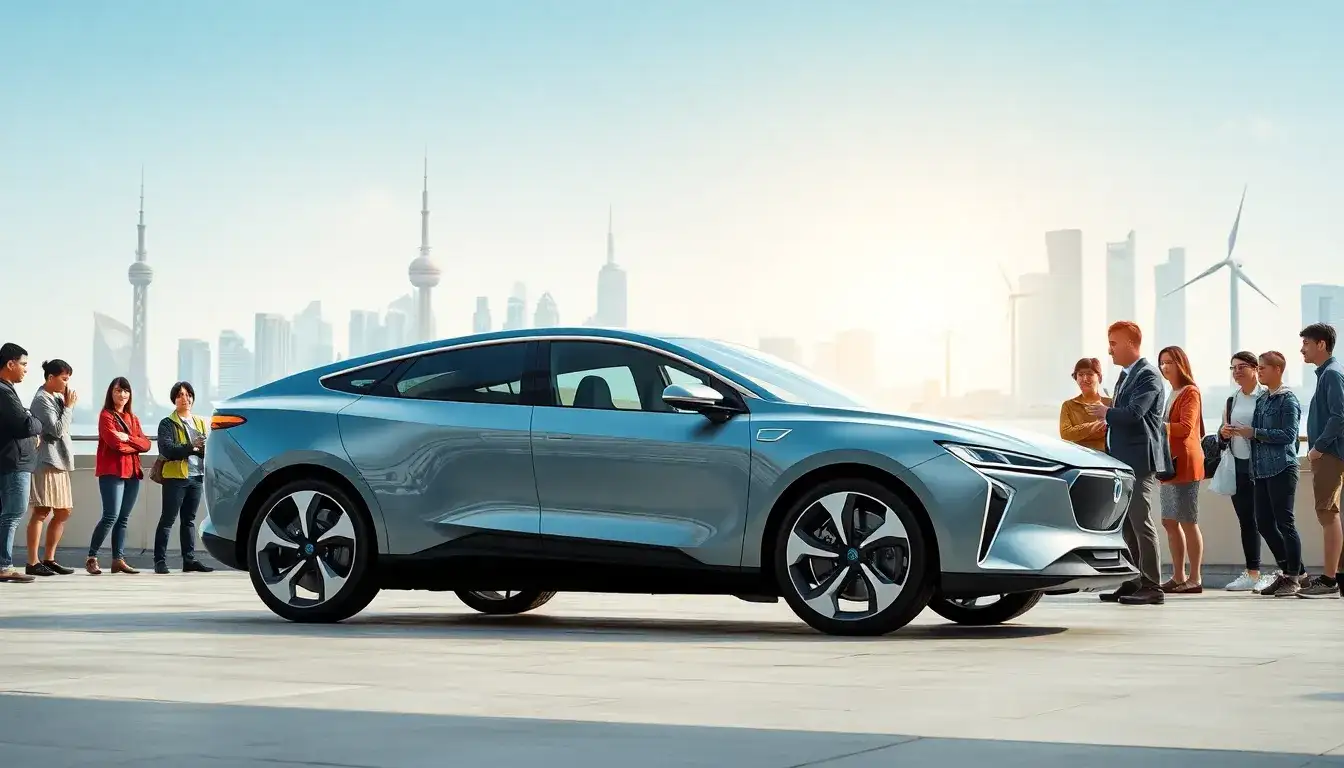
China’s new energy vehicle (NEV) exports reached 441,000 units in the first quarter of 2025, marking a remarkable year-on-year increase of 43.9%. However, the corresponding standards have not kept pace with this growth.
Different markets have varying standard requirements for imported vehicles. For instance, to enter the European Union market, Chinese NEVs must undergo stringent certification processes. Industry experts believe that the lack of alignment in standards is a significant barrier preventing Chinese NEVs from entering several markets on a large scale.
Experts suggest that promoting the internationalization of Chinese NEV standards can be approached in three phases: first, engaging in thorough interaction and communication with policy-making departments, testing institutions, and local manufacturers in target markets; second, closely aligning with the export rhythm of Chinese NEVs to enhance standard influence through product exports; third, focusing on advantageous areas such as intelligent cockpits and power batteries, initially introducing standards and then deepening their penetration across the market.
In recent years, Chinese NEV companies have been making headlines with their international expansions — NIO has established a team for the Middle East and North Africa; Li Auto is entering markets in the Middle East, Latin America, and Asia-Pacific; XPeng has several models available for pre-sale abroad; CATL is building a battery factory in Hungary; and Leap Motor has partnered with Stellantis to establish a joint venture, expanding their sales network into Europe.
According to the latest statistics from the China Association of Automobile Manufacturers, NEV exports reached 441,000 units in the first quarter of 2025, a significant increase compared to previous years. However, amidst this positive export momentum, there are challenges that need addressing—despite successful product and brand internationalization, the related standards have not been effectively exported.
Ensuring the internationalization of standards is a critical step. To solidify China’s advantage in overseas NEV markets, the ability of “Chinese standards” to gain acceptance internationally is crucial. In fact, while high-quality products are the foundation for exports, they must also meet the product certification requirements of target markets, often referred to as the “access certificate.” Different markets have distinct standard requirements for imported vehicles. For example, NEVs from China entering the EU must pass through rigorous certification processes, including EU Whole Vehicle Type Approval, which involves hundreds of technical indicators related to safety, environmental protection, and energy efficiency. Reports indicate that testing costs for a single model undergoing E-Mark certification can average around €15,000, with announcement fees around €10,000.
The China Association of Automobile Manufacturers has previously stated that the inconsistency between domestic and international standards significantly inflates the costs for Chinese export enterprises. Some in the industry believe that the challenges posed by standards are a major reason why Chinese NEVs have not yet penetrated certain markets on a large scale.
“The progress made by China’s NEV industry in terms of technology routes and market penetration is evident.” says Zheng Yun, a senior partner at Roland Berger and head of automotive business in Asia. “However, in expanding into overseas markets, it is essential to make adaptive adjustments according to the target country’s requirements.” Currently, most countries have their own comprehensive standard systems covering vehicle design, testing, and certification.
From a long-term industrial development perspective, promoting the “going out” of Chinese standards is imperative. The automotive industry has a history of over a century, and differences in international automotive standards essentially reflect the competitive dynamics of various countries’ industries. The output of standards signifies the ability to control the industrial discourse, a fact validated during the era of gasoline vehicles. For instance, German, American, and Japanese cars previously helped establish European, American, and Japanese standards as mainstream.
Typically, countries’ standard-setting processes prioritize “local interests.” Thus, China’s automotive standards face challenges in entering the global market, but the NEV sector presents a new opportunity. According to Tu Xinquan, Dean of the China WTO Research Institute at the University of International Business and Economics, “China has established a significant advantage in the NEV market due to its advanced technological capabilities.” The current international climate also offers opportunities for China’s NEV industry.
Zheng Yun believes that promoting the internationalization of Chinese NEV standards can be divided into three stages. We are currently in the first stage where NEV products and technologies are gradually opening up overseas markets, yet barriers still exist in terms of testing standards. The key issue here is sales volume. Zheng Yun argues that sales can serve as an important indicator of the effectiveness of standard promotion at different stages. As sales increase, so too will the process of internationalizing Chinese standards.
Currently, China’s annual NEV export volume is approximately 2 million units. Once this number rises to between 8 million and 10 million units, the influence of Chinese NEV standards will be markedly different than it is today, according to Zheng Yun. He emphasizes that the push for Chinese NEV standards to “go out” must be mutually reinforcing with sales increases.
The second stage of this process will be marked by an annual export volume reaching between 3 million and 8 million units. The third stage will be characterized by exports surpassing 8 million units and achieving a market penetration rate of over 30% in certain target markets, at which point Chinese NEV standards will have significant influence and competitiveness in the global market.
Zheng Yun revealed that many Chinese testing companies are actively exploring strategies to expand abroad. Currently, most of their efforts are focused on service-oriented aspects, such as providing various forms of support for Chinese car manufacturers in overseas markets. He believes that as these testing institutions continue to grow internationally, they will progressively participate in the formulation of relevant standards, thus enhancing the influence of Chinese NEV standards. “From the current market situation, Chinese standards are beginning to show their impact,” he noted.
To promote the internationalization of Chinese NEV standards, Zheng Yun suggests a three-step approach: first, engaging in thorough communication with policy-making departments, testing institutions, and local manufacturers in target markets to better understand local needs and standard differences; second, closely aligning with the export rhythm of Chinese NEVs to enhance standard influence through product exports; third, focusing on advantageous areas such as intelligent cockpits and power batteries, leading with initial introductions and then deepening their overall penetration. “Like tightening screws, we will promote Chinese standards step by step.” Zheng Yun concluded.
Original article by NenPower, If reposted, please credit the source: https://nenpower.com/blog/expanding-chinas-new-energy-vehicle-standards-for-global-market-success/

