

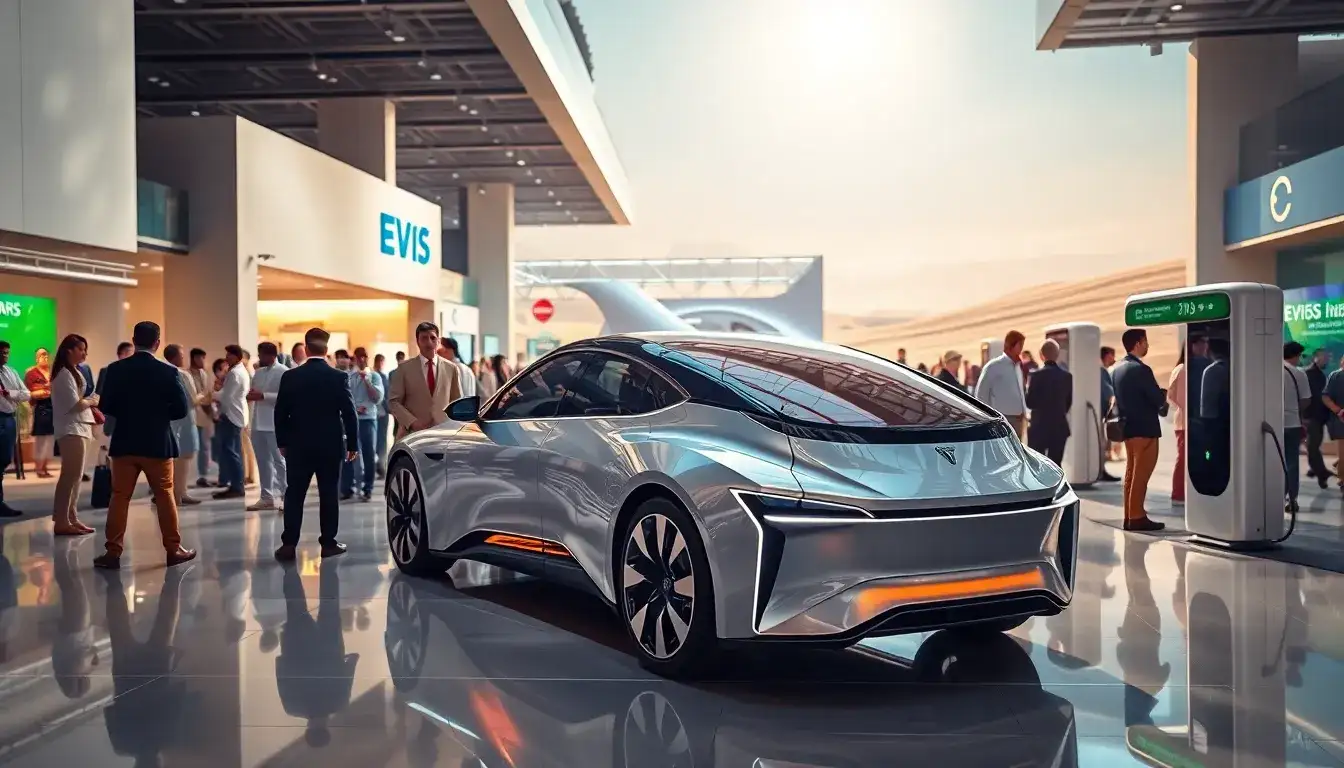
EVIS 2026: Electric Vehicles and Charging Stations Exhibition in Abu Dhabi
Event: 5th EVIS 2026
Date: October 13-14, 2026
Location: Abu Dhabi National Exhibition Centre, UAE
Frequency: Annual
Organizer: Nirvana Holding
Concurrent Events:
- 2026 Abu Dhabi Autonomous Driving and Charging Stations Exhibition
- 2026 Abu Dhabi Hydrogen Energy and Fuel Cell Exhibition
- 2026 Abu Dhabi Photovoltaic Battery Storage Exhibition
Chinese General Agent: Dongfang Futai (Beijing) International Exhibition Co., Ltd.
Exhibition Overview
EVIS 2026 serves as a critical platform for electric vehicles and charging stations in the region, bringing together manufacturers, charging infrastructure providers, energy management solution providers, and various supporting service companies. The exhibition covers multiple application scenarios, including private passenger vehicles, commercial vehicles, logistics transportation, and urban micro-mobility, providing opportunities for industry participants to showcase, communicate, and collaborate.
Over the past few years, the electric vehicle market in the Middle East has advanced due to policy support and infrastructure development. The Abu Dhabi National Exhibition Centre, chosen as the venue, features a convenient transportation network and comprehensive support services to meet the needs of exhibitors and professional attendees.
During the exhibition, there will be not only display areas but also technical forums, project roadshows, and professional seminars designed to help businesses stay informed about policy trends, market dynamics, and technological applications. The layout includes sections for vehicle displays, showcasing passenger cars, commercial vehicles, and special-purpose vehicles, as well as traditional electric vehicles, plug-in hybrids, and new energy logistics vehicles. The charging and energy management area will feature various AC/DC charging equipment, fast charging solutions, intelligent scheduling platforms, and energy storage systems, reflecting the complete industrial chain. Additionally, there will be sections dedicated to micro-mobility and electric light transportation tools, offering attendees real-world experiences of the latest transportation modes and application solutions.
Notably, EVIS 2026 emphasizes local project connections, attracting government procurement representatives, park operators, logistics companies, and new energy project developers from the UAE and surrounding GCC countries for discussions, providing potential collaboration opportunities. This model, which combines market applications with technology displays, makes the exhibition not only a showcase platform but also an important window for business opportunities.
The organizing team has tailored professional guidance and matching services for different enterprises and audience groups, ensuring exhibitors can effectively connect with target customers while helping professional attendees efficiently acquire information and project resources.
Exhibition Categories
EVIS 2026 centers around two core themes: “Electrification Transformation” and “Green Infrastructure”, comprehensively exhibiting the electric travel ecosystem. The main exhibition categories are as follows:
- Electric Vehicles and Mobility Solutions: Featuring models from private cars, taxis, ride-hailing platform vehicles, compact cars, pure electric SUVs, minibuses, large buses, cold-chain logistics vehicles, airport shuttle buses, and electric sanitation vehicles. Also included are multi-purpose tricycles, electric motorcycles, and electric scooters, primarily serving park, scenic area, and community travel scenarios. Several brands will showcase customized vehicles suitable for high-temperature environments and demonstrate rapid deployment solutions (including energy, maintenance, remote monitoring, etc.).
- Charging and Energy Systems: Showcasing slow charging and fast charging systems, dual-gun fast charging piles, high-pressure liquid cooling technology, and integrated outdoor charging cabinets, all designed to withstand the high temperatures and dust conditions typical of the Middle East. Additionally, smart charging scheduling platforms, payment systems, parking detection modules, power access solutions, and integrated energy storage and charging cabinets will be displayed.
- Energy Storage and Battery Management Systems: Covering power batteries, solid-state batteries, lithium iron phosphate, ternary lithium modules, energy storage battery cabinets, and portable and containerized energy storage systems. This section will also showcase BMS battery management systems, thermal management modules, low degradation designs, and battery recycling technologies, emphasizing “high-temperature stability and long lifespan” as key technical highlights for Middle Eastern microgrid and transportation electrification scenarios.
- Hydrogen Energy and Multi-Energy Systems: The newly expanded hydrogen energy display area will feature hydrogen fuel cell commercial vehicles, complete hydrogen refueling station equipment, hydrogen power platforms, and hydrogen refueling operation support solutions, focusing on long-distance transportation and mining operations.
- Smart Mobility and Urban Transportation Systems: Including V2G bidirectional charging technology, vehicle networking platforms, intelligent scheduling systems, charging map services, smart parking solutions, and city-level traffic operation monitoring systems. This section primarily targets government agencies, park developers, and transportation contractors, showcasing an intelligent transportation closed-loop system from connection to operation.
- Key Components and Material Solutions: Integrating electric drive, control, and motor systems, high-voltage connectors, thermal management systems, dustproof materials, lightweight chassis, insulation coatings, and battery structural components, all aimed at creating collaboration opportunities for vehicle manufacturers and system integrators.
Market Overview
1. The UAE electric vehicle market is transitioning from policy-driven to market-driven dynamics, with the government promoting electric vehicle purchases in public transport and park logistics, while the private high-end electric vehicle market is gradually becoming more active.
2. There are regional disparities in charging infrastructure; while urban centers and commercial areas have relatively complete charging stations, communities, suburbs, and industrial parks remain underserved.
3. The demand for high-power fast charging networks is increasing, particularly for logistics, public transport, and park vehicles that require rapid energy replenishment; associated equipment and energy management systems are becoming focal points.
4. Middle Eastern countries have strict requirements for safety, certification, and energy efficiency standards; batteries and vehicles must pass local certification to participate in public projects or government tenders.
5. The application of electric light transportation tools is growing significantly, primarily focused on parks, scenic areas, logistics delivery, and short-distance commuting, with a high proportion of B-end customers; the market is exploring shared rental models.
6. Green energy policies and renewable energy incentives are stimulating corporate investments and project development, with an increasing number of applications involving charging stations combined with photovoltaic power generation and energy storage systems.
7. Companies must consider policies, energy costs, infrastructure, and project scenario compatibilities when planning their market strategies, as these factors directly influence product sales and project implementation efficiency.
8. Enterprises entering the Middle Eastern market face challenges related to logistics, certification, and local operational model adaptation, particularly for charging equipment and vehicle solutions that must be optimized for local climate and energy networks.
Exhibition Q&A
Q1: What is the largest application scenario for electric vehicles in the UAE market?
A1: Currently, the primary focus is on public transportation, airport shuttles, park logistics, property management, and scenic area travel. Government and large corporate procurement projects account for a significant share, while the private user market is still emerging, although demand for high-end electric vehicles is gradually increasing.
Q2: What are the development trends in the Middle East charging station market?
A2: Public charging stations are still insufficient to meet market demand; future priorities include community charging, commercial center charging, and the construction of high-power fast charging networks. Additionally, energy management and intelligent scheduling platforms have become essential market needs, making it easier for companies that can provide complete solutions to enter projects.
Q3: What are the policy requirements for company access in the UAE and surrounding GCC countries?
A3: Countries like the UAE and Saudi Arabia have their certification systems, such as the ESMA certification. Companies looking to participate in public projects or government tenders must meet local standards, with batteries, charging equipment, and vehicles needing to pass relevant safety and performance tests.
Q4: How is the development of electric light transportation tools (motorcycles, tricycles, scooters, etc.) in the Middle East market?
A4: These tools are primarily used for short-distance commuting, scenic areas, parks, and logistics delivery. Some cities have begun experimenting with shared electric vehicle or rental models, though these projects mainly cater to B-end customers. Companies need to plan market strategies based on specific scenarios and operational models.
Disclaimer: The content above (including any images or videos) is uploaded and published by a user of the NetEase Hao platform, which provides information storage services only.
Original article by NenPower, If reposted, please credit the source: https://nenpower.com/blog/evis-2026-the-premier-electric-vehicle-and-charging-infrastructure-exhibition-in-abu-dhabi/

