News
Customers can register on our website to receive regular updates, including new product launches, application articles, and more. If you missed any published material, you can browse the documents below.
EPC’s CEO Analyzes GaN’s Move into Robotics and Data Centers
Posted April 6, 2026
Over the past few years, there has been remarkable growth in the adoption of wide-bandgap semiconductors, reflecting a trend toward replacing traditional silicon products. While silicon carbide has effectively targeted electric vehicles and charging infrastructure, gallium nitride (GaN) HEMTs have primarily made headway in consumer-oriented applications, particularly chargers and adapters. However, GaN is significantly more versatile than merely being a replacement for MOSFETs used to create slimmer and lighter chargers.
High-Voltage GaN Isolated Converters for Server Power Systems
Posted April 6, 2026
In this webinar, Michael De Rooij, GaN Application Fellow at Efficient Power Conversion (EPC), presents a high-performance 800 V (±400 V) to 12.5 V isolated converter designed for next-generation server power systems. He discusses the cascade input (input-series, output-parallel) architecture utilizing eight interleaved modules, which combine a half-bridge primary with a push-pull secondary to reduce ripple current, minimize capacitance, and enhance thermal distribution. The presentation includes details on low-voltage GaN FETs, the isolation and gate-drive scheme, and efficiency measurements exceeding 98%. He concludes by introducing a new design that converts 800 V to 50 V, multi-kilowatt, at 1 MHz, effectively doubling power density.
How GaN Inverters Redefine Motor Control in Humanoid Robots
Posted April 6, 2026
Marco Palma, Director of Motor Drive Systems and Applications at EPC, showcases how GaN inverters are transforming motor control in humanoid robots. In this presentation, he explains how fast-switching GaN devices and zero reverse recovery enable higher PWM frequencies, reduced dead time, and decreased or eliminated reliance on electrolytic capacitors. The outcome is improved efficiency, increased torque per amp, a smaller form factor, and smoother joint operation. Palma provides an overview of EPC’s reference design, which includes integrated three-phase modules and high-current discrete solutions for a range of humanoid joints, with power levels from hundreds of watts to several kilowatts.
APEC 2026 | Microchip and EPC: Digital Control and GaN Technology for Ultra-Compact Power Designs
Posted April 2, 2026
In this video, Microchip and EPC reveal their latest advancements in efficient power conversion technologies for next-generation data centers and AI servers. Microchip’s dsPIC Senior Applications Engineer, Andreas Reiter, and EPC’s GaN Applications Researcher, Michael De Rooij, demonstrate a 5 kW multi-stage flying capacitor PFC and an ultra-compact 800 V to 12 V, 6 kW ISOP converter. They explain how low-voltage GaN devices, advanced DSP-based digital control, and complex LLC startup sequences achieve significant reductions in size, losses, and EMI. This in-depth discussion offers practical insights and implementation ideas for designing high-density server power supplies or exploring cutting-edge digital power architectures.
Understanding GaN Reliability: From Certification to Wear Modeling
Posted April 2, 2026
This presentation by Zhang Shengke, Vice President of Reliability at EPC, addresses a common question regarding the reliability of GaN power devices: How can manufacturers confidently guarantee a 10-year lifespan without waiting a decade for validation? The talk covers the reliability “bathtub curve,” explains the limitations of standard 1000-hour qualification tests, and presents a failure-testing approach for predicting long-term wear behavior. Through a case study on data center 48 V intermediate bus converter (IBC) modules, Zhang emphasizes the importance of temperature cycling, failure mechanism analysis, and physics-based lifetime models for ensuring robust GaN performance in demanding high-power density applications.
EPC Expands the Offering of 100 V Integrated GaN Power Stages Optimized for Motor Drives
Posted April 2, 2026
EPC has introduced a new generation of 100 V integrated GaN power-stage ICs—EPC23108, EPC23109, EPC23110, and EPC23111—targeting high-performance motion and power systems such as humanoid robots, drones, and other compact battery-powered platforms. These devices are designed to simplify implementation and enhance operational robustness in real-world environments while maintaining the efficiency and power-density advantages characteristic of integrated GaN technology.
APEC 2026: Amazing Power Density Achieved with 8 mm Thick Module for 6 kW 800 V to 12 V Converter
Posted March 31, 2026
EPC has developed a new converter specifically designed for AI-based “dumbbell” servers, where power is separated from information technology equipment. This board is a fixed-ratio converter capable of stepping down 800 V to 12 V. To achieve a total output power of 6 kW, the design employs a 750 W rated 100 V to 12 V module. These individual modules are connected in series for input and in parallel for output. The entire 6 kW module features compact dimensions of 106 mm in length, 47 mm in width, and only 8 mm in thickness, made possible through GaN technology.
APEC 2026 | High-Density Motor Drive: 15 A Output from a Small GaN Board Using Only a Motor Top Heat Sink
Posted March 30, 2026
EPC showcased the EPC 91122 board, equipped with the EPC 3111 module, a 100 V three-phase module designed for motor control applications. The board integrates a controller, power module, two current sensors, and a position sensor. Thanks to GaN technology enabling a 100 kHz switching frequency, the design relies entirely on MLCC capacitors, eliminating the need for bulky electrolytic capacitors.
APEC 2026: Fully Utilizing GaN Technology
Posted March 30, 2026
In this webinar, Alex Lidow, CEO of Efficient Power Conversion (EPC), discusses how GaN has surpassed critical performance boundaries and now outperforms the best silicon MOSFETs across all voltage ranges and topologies. Specific data on on-resistance, hard and soft switching losses, and real efficiency improvements in AI, server, and point-load converters will be presented—showing voltage reductions from several tens of volts down to below 1 volt. Lidow also previews future generations focused on integration, pushing GaN toward its theoretical limits.
GaN Fundamentals: 2DEG, Crystal Structure, and Figure of Merit
Posted March 26, 2026
Gallium nitride (GaN) power devices are pushing the boundaries of switching converters by combining wide bandgap physics with lateral HEMT structures optimized for fast, low-loss operation. This article discusses GaN as the natural successor to silicon MOSFETs in the 100–650 V range, demonstrating how material figures of merit translate directly into lower on-resistance, higher switching frequency, and significantly higher power density at competitive costs. Silicon power MOSFETs have driven the evolution of switch-mode power conversion since the late 1970s, replacing bipolar transistors due to their majority-carrier operation, ruggedness, and ease of drive. Continuous structural enhancements—cell pitch, trench, and superjunction—have kept RDS(on) low while maintaining breakdown capability and manufacturability. However, silicon has now reached its theoretical limit for unipolar devices in the 100–600 V range.
Challenges and Solutions in Parallel GaN FETs for Current Sharing
Posted March 25, 2026
One of the oldest challenges in power electronics is paralleling multiple transistors to achieve higher current switching. This task is rarely straightforward, as two or more transistors never exhibit exactly the same electrical parameters, hindering uniform current distribution. Early designers of power converters faced an even tougher challenge, as the components available at the time were current-driven bipolar junction transistors (BJTs). This meant that any inherent stabilization effects could not be utilized for achieving even current sharing. In fact, the required base-emitter voltage (VBE) decreases with increasing temperature (-2 mV/°C) under normal operation, leading to imbalances that cause transistors with lower voltages to conduct more current, generating additional heat and risking failure.
EPC Launches EPC91121 Brushless DC Motor Drive Evaluation Board at APEC 2026
Posted March 23, 2026
At the 2026 APEC conference, Efficient Power Conversion (EPC), a leader in enhancement-mode gallium nitride (eGaN®) power devices, introduced the EPC91121 motor drive inverter evaluation board, built around the seventh-generation EPC2366 40 V eGaN® power transistor. This platform is showcased at the company’s booth (#1935).
EPC Unveils Phase 18 Reliability Report Advancing eGaN® Reliability and Robustness Understanding
Posted March 19, 2026
EPC has released its Phase 18 Reliability Report, which provides new insights into eGaN device reliability, bridging the gap between lab-generated reliability testing and real-world mission profiles. The report introduces new methodologies to better predict device lifetime under application-specific stress conditions, developed through close collaboration with customers and supported by peer-reviewed research and international conference publications.
EPC Launches EPC91202 Evaluation Board: High-Performance 50 ARMS Three-Phase BLDC Inverter Driven by eGaN®
Posted March 12, 2026
The EPC91202 evaluation board, based on a 100 V GaN inverter reference design, delivers 50 ARMS phase current and integrates sensing capabilities with PWM operation up to 150 kHz. This complete three-phase BLDC motor drive inverter is designed to accelerate the development of efficient motor drive applications across robotics, electric mobility, drones, industrial automation, and battery-powered systems.
EEVblog 1737 – Alex Lidow: Inventor of Power MOSFETs
Posted March 6, 2026
This video features a conversation with Alex Lidow, who invented the original power MOSFET and HEXFET during his tenure at International Rectifier. Later, he became the CEO of Efficient Power Conversion (EPC), a company known for producing some of the most efficient GaN FETs in the market. In this discussion, Lidow shares the story of how the power MOSFET was invented on his first day of work and how this breakthrough has shaped modern power electronics technology. The dialogue also explores silicon physics, the rise of GaN technology, and the increasing power demands of AI data centers and humanoid robots, providing an intriguing perspective on connecting the origins of power semiconductors with the technologies driving the future of computing and electrification.
Transient Current Sharing in Parallel GaN FETs: The Role of Parasitic Capacitance
Posted March 4, 2026
This article investigates the impact of parasitic capacitance on the dynamic current sharing behavior of gallium nitride (GaN) field-effect transistors (FETs) in parallel configurations. As GaN technology becomes increasingly prominent in high-performance power electronic systems, paralleling multiple devices has emerged as a common strategy for increasing current handling capability.
Using Low-Voltage GaN in 800 V AI Server Architectures with ISOP Converters
Posted March 3, 2026
Over the past decade, AI workloads have relied on server architectures not originally designed to meet their rapidly growing power demands. In recent years, the concept of the “AI factory” has emerged, redefining data centers as productivity-oriented systems optimized for high computational density.
CHIIPS #27 – Alex Lidow from EPC Talks About Power Semiconductors
Posted February 27, 2026
In this episode of Chips, Efficient Power Conversion (EPC) CEO and co-founder Alex Lidow reflects on his life in the field of power semiconductor innovation. From his early involvement in the development of HEXFET power MOSFETs to pioneering gallium nitride (GaN) technology, Alex shares the pivotal decisions, lessons learned, and foresight that have shaped his career. The discussion covers the impact of GaN on efficiency improvements, AI data centers, robotics, and satellites, and why engineers should “aim for the target ahead” when planning future pathways.
EPC Showcases 7th Generation GaN Technology and Integrated Circuits for Robotics at APEC 2026
Posted February 26, 2026
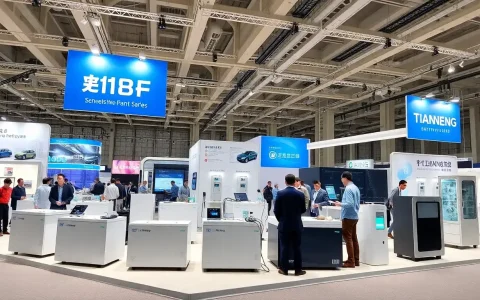
EPC will showcase its latest generation GaN technology and highly integrated GaN ICs aimed at AI infrastructure and robotics applications at the 2026 Applied Power Electronics Conference (APEC 2026). During the exhibition, EPC will highlight how the 7th generation GaN technology and integrated solutions enable scalable deployment in high-density computing and next-generation robotic systems, transitioning power architectures from demonstration platforms to volume production applications at booth #1935. EPC engineers will conduct a series of technical presentations covering system architecture, reliability methodologies, and application implementations.
EPC Accelerates Robotics Innovation with Integrated Three-Phase BLDC Motor Drive Inverter
Posted February 23, 2026
EPC has introduced the EPC91122, a high-performance three-phase BLDC motor drive inverter evaluation board designed for humanoid robot joint applications. This product features EPC’s highly integrated EPC33110 three-phase ePower™ Stage module, providing up to 20 ARMS (28 A peak) phase current in an ultra-compact form factor, optimized for space-constrained robotic joints, and integrating all essential functions for a complete motor drive inverter, including microcontrollers, motor shaft angle sensors, auxiliary power, and high-precision voltage and current sensing capabilities.
Original article by NenPower, If reposted, please credit the source: https://nenpower.com/blog/epc-introduces-advanced-gan-power-solutions-for-robotics-and-data-center-applications-at-apec-2026/