

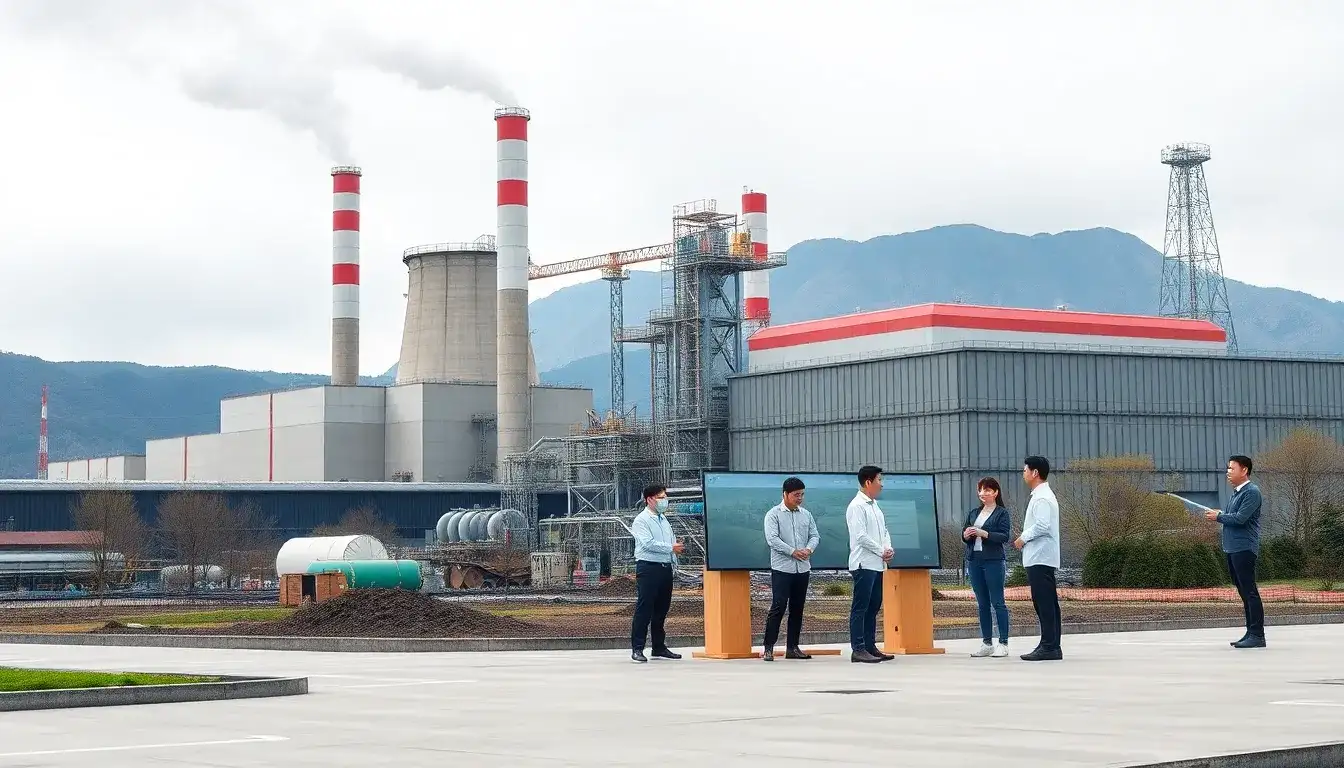
This week, from April 14 to April 18, the National Development and Reform Commission and the National Energy Administration jointly issued the Implementation Plan for the New Generation of Coal Power Upgrade Special Action (2025–2027). This initiative aims to establish a robust technical indicators system for coal power focusing on four key areas: clean carbon reduction, safety and reliability, efficient adjustment, and intelligent operation.
In industry news, the National Bureau of Statistics released the energy production data for March, indicating an acceleration in the growth rates of raw coal, crude oil, natural gas, and electricity production. Additionally, <b>Tsinghua University</b> announced plans to establish four new colleges, including one focused on energy.

On April 14, the new generation of coal power upgrade special action was launched. The plan includes a comprehensive assessment of the effectiveness of the "three reforms linkage" work and aims to promote upgrades to existing units, striving to enhance the performance of new units and actively conduct pilot demonstrations for the new generation of coal power. Industry analysts estimate that the national thermal power flexibility upgrade market could exceed <b>10 billion yuan</b> annually.

On April 15, the first pilot work guide for product carbon footprint labeling certification was released. This guide aims to address common issues during the certification process and supports the scientific, stable, and efficient advancement of pilot work.

The Ministry of Ecology and Environment announced that industries with annual carbon emissions reaching <b>26,000 tons</b> of CO2 equivalent, including power generation, steel, cement, and aluminum smelting, will be included in the key emissions unit directory.

On April 16, the Ministry of Industry and Information Technology initiated the <b>2025 Annual Industrial Energy Saving and Carbon Reduction Diagnosis Service Work</b>. This initiative encourages energy-saving and carbon reduction service agencies to provide ongoing support to enterprises that received industrial energy-saving diagnosis services since the start of the 14th Five-Year Plan.

In terms of safety, the National Mine Safety Administration reported a stable safety production situation in the mining sector for the first quarter, with a year-on-year decrease of <b>3.7%</b> in accidents and <b>29.3%</b> in fatalities.

On April 17, the National Energy Administration disclosed that <b>174 million green certificates</b> were issued in March, representing a year-on-year increase of <b>939%</b>. Of these, <b>144 million</b> were tradable green certificates, accounting for <b>82.26%</b> of the total, covering over <b>70,700</b> renewable energy projects.

Fuel prices were adjusted, with gasoline and diesel prices decreasing by <b>480 yuan</b> and <b>465 yuan</b> per ton, respectively, effective from April 17.

On April 14, exports of wind turbines increased by <b>43.2%</b> in the first quarter, highlighting China's continued significant role in the global green transition.

Tsinghua University also announced plans to establish four new colleges focusing on AI+, international STEAM, energy direction, and future engineering. The energy direction college aims to nurture innovative leaders in energy with a comprehensive understanding of both national and global perspectives.

China's coal imports for the first quarter totaled <b>115 million tons</b>, slightly down by <b>0.9%</b> year-on-year, while the cumulative import value reached <b>$9.34 billion</b>, a decrease of <b>22.5%</b>.

On April 16, the National Bureau of Statistics reported an acceleration in energy production for March, with industrial raw coal output reaching <b>440 million tons</b>, up <b>9.6%</b> year-on-year.

Additionally, the total power consumption for March was reported at <b>828.2 billion kWh</b>, a growth of <b>4.8%</b> year-on-year.

On April 14, Sinopec announced the operation of China's first cross-regional hydrogen energy heavy truck corridor, spanning approximately <b>1,150 kilometers</b> from Chongqing to Qinzhou Port in Guangxi, equipped with four hydrogen refueling stations.

Ningde Times reported a net profit of <b>13.963 billion yuan</b> for the first quarter, significantly exceeding market expectations.

The 4th TERA-Award for smart energy innovation attracted <b>785 projects</b> from <b>76 countries</b>, marking a <b>74%</b> increase in participation compared to the previous year.

China Resources Recycling Group has registered <b>eight new subsidiaries</b>, focusing on various sectors including battery recycling and new energy technology.

On April 15, the installed power generation capacity in Guangxi exceeded <b>100 million kW</b> for the first time, with renewable energy accounting for <b>45.7%</b> of the total capacity.

China's first <b>24,000 TEU dual-fuel container ship</b> was named and delivered, marking a milestone in maritime energy efficiency.

China National Petroleum Corporation has launched an open recruitment for its "foreign trade quality products" initiative, leveraging its vast retail network.

The first unit of the <b>Hualong One</b> nuclear power project in Fujian has commenced the installation of its core system equipment.

China's first <b>700 MW supercritical fluidized bed boiler</b> has successfully entered operation, setting a new benchmark in energy efficiency.

On April 14, the <b>Beijing Carbon Emission Trading and Settlement Rules</b> were published to regulate carbon trading and protect market participants' rights.

The <b>Jiangdong-Hubei Ultra-High Voltage Direct Current Project</b> has achieved full connectivity, marking a significant step in renewable energy transmission.

In Shandong Province, a new tiered time-of-use electricity pricing system has been implemented, leading to cost reductions exceeding <b>3 billion yuan</b> for enterprises.

As of the first quarter of 2025, Guangdong's installed power generation capacity reached <b>227 million kW</b>, with renewable energy sources growing by <b>35%</b>.
Original article by NenPower, If reposted, please credit the source: https://nenpower.com/blog/energy-weekly-report-launch-of-next-generation-coal-power-upgrade-initiative-tsinghua-universitys-new-energy-colleges-and-establishment-of-subsidiaries-by-china-resources-recycling-group/

