

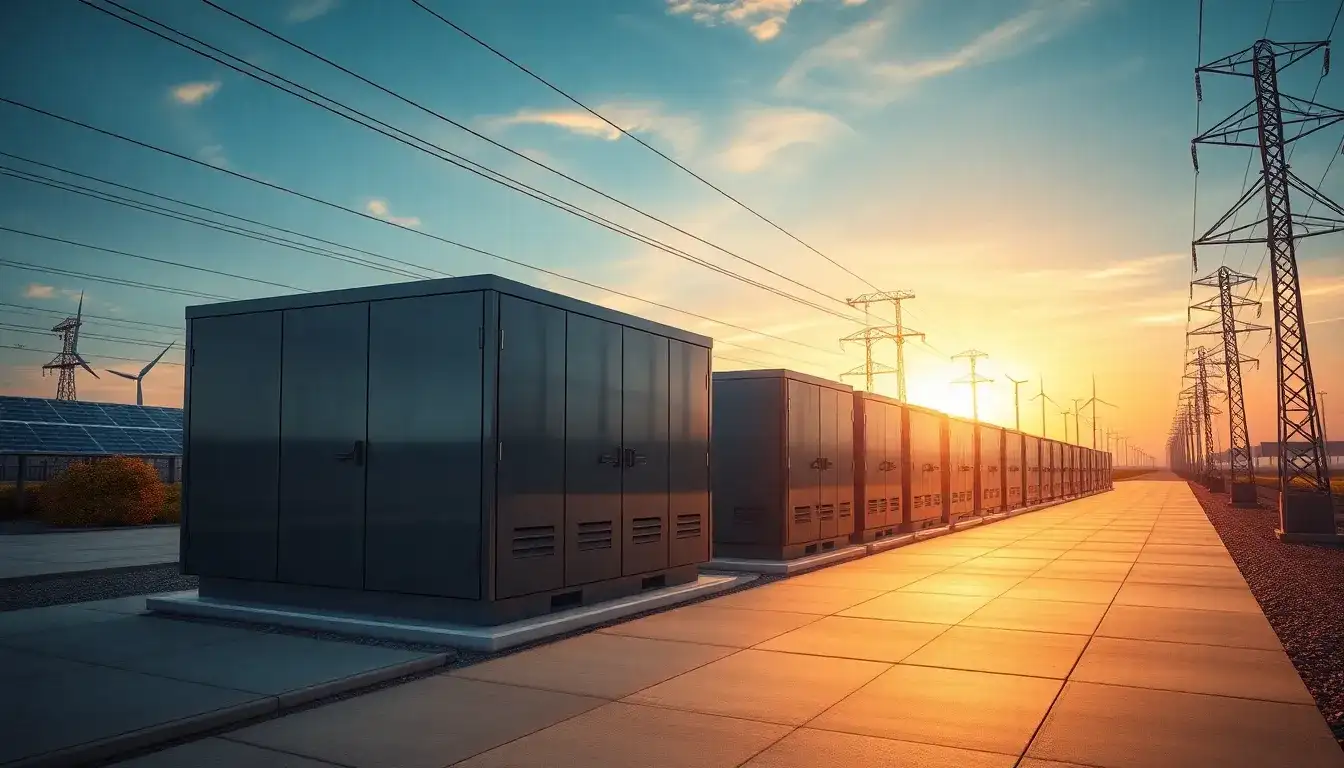
Hot Trends | Energy Storage Inverters: The Intelligent Heart of Energy Transition
Energy storage inverters (PCS, Power Conversion System) are the core devices of energy storage systems, playing a crucial role in the bidirectional conversion of electrical energy. During charging, they convert alternating current (AC) from the grid or renewable energy sources into direct current (DC) for storage in batteries. When discharging, they convert DC back into AC for use by loads. Acting as a “bridge” connecting energy storage batteries with the grid or loads, the performance of PCS directly affects the efficiency, stability, and economic viability of energy storage systems.
With the increasing share of wind and solar energy in global generation and a surge in demand for flexibility in power systems, the energy storage inverter market is experiencing significant growth. According to data from GGII, global shipments of energy storage PCS exceeded 150GW in 2023, with China accounting for over 60%. It is expected that the market scale will surpass 100 billion yuan by 2025.
In terms of technological advancements, integrated solar storage systems, high voltage cascaded systems, and grid-forming solutions are becoming industry focal points, pushing PCS from a single inverter function to an “intelligent grid regulator.” The technology roadmaps for energy storage inverters primarily revolve around the evolution of topologies, control strategies, and application scenarios.
Energy storage inverters can generally be categorized into three types based on connection methods: grid-tied, off-grid, and DC types. Grid-tied inverters are primarily used in grid-connected or commercial settings and must support functions such as grid connection/disconnection and frequency/voltage regulation. Off-grid inverters are suited for microgrids or island modes, requiring independent voltage and frequency support. DC inverters are mainly used in solar storage DC systems or DC microgrids, achieving voltage matching and energy regulation through DC/DC conversion.
In terms of topology, energy storage inverters are transitioning from traditional unidirectional structures to highly efficient, high-density bidirectional topologies. Common structures include bidirectional Buck-Boost, full bridge, and Dual Active Bridge (DAB), with DAB being particularly prominent in medium to high power scenarios due to its strong bidirectional energy transmission capacity and support for high-frequency isolation. Additionally, multi-port inverters are gradually emerging to facilitate multi-source collaboration and system integration, especially in integrated solar storage systems.
Regarding control strategies, early systems predominantly employed current or voltage control methods such as PI control and current loop-voltage loop control. As system complexity has increased, more advanced model predictive control (MPC), virtual synchronous generator (VSG) control, and AI-based adaptive control algorithms have been introduced to enhance dynamic response capabilities and system intelligence.
Energy storage inverters are critical devices for safe and efficient operation, currently undergoing rapid development and structural upgrades. In terms of applications, energy storage inverters are serving an increasingly diverse range of scenarios, such as grid frequency regulation, peak shaving and filling for commercial and industrial users, and integrated solar storage generation, demanding higher performance in terms of rapid response and multi-mode operation capabilities. In solar storage systems, inverters must not only enable bidirectional energy flow but also coordinate photovoltaic output with energy storage charging and discharging strategies to enhance overall system economics and stability.
The energy storage inverter industry chain can be broadly divided into three segments: upstream, midstream, and downstream, with each segment interconnected and collaboratively promoting the development of the energy storage industry. The upstream focuses on supplying core components and raw materials, including power semiconductors (such as IGBT and SiC MOSFET), magnetic components, capacitors, inductors, control chips, and circuit boards. As wide bandgap semiconductor materials like silicon carbide (SiC) and gallium nitride (GaN) mature, their advantages in high voltage, high frequency, and high efficiency applications are increasingly evident, gradually replacing traditional silicon-based devices and becoming a key driving force for high-performance inverters. Furthermore, the localization of control chips and driver circuits has become a key area of technological focus, directly influencing the response speed and control precision of inverter systems.
The midstream segment encompasses the design, manufacturing, and system integration of energy storage inverters, serving as the core value of the entire industry chain. Companies in this stage are primarily responsible for the structural design of inverters, circuit topology selection, control algorithm development, and the integration of hardware and software systems, with relatively high technical barriers. Currently, several domestic enterprises possess independent research and development capabilities, offering a range of energy storage inverter products suitable for various applications, such as high-voltage high-power inverters for grid-side applications and modular multifunctional devices for commercial and residential use. As market demand for high efficiency, high power density, and intelligent control continues to grow, midstream companies are also optimizing designs, adopting new materials, improving heat dissipation solutions, and developing more sophisticated energy management systems to enhance product stability and adaptability.
The downstream segment includes energy storage system integrators, power investors, industrial and commercial users, and grid operators. This segment represents the final application scenarios for inverters, directly determining their product forms and technical requirements. With the advancement of new power system construction, energy storage is gradually transitioning from an auxiliary regulating role to a more central power resource, expanding application scenarios from traditional grid frequency regulation to peak shaving and filling, integrated solar storage, virtual power plants, microgrids, and even vehicle-to-grid interactions for electric vehicles. Different scenarios present varying performance demands for inverters; for instance, grid-side energy storage prioritizes response speed and grid connection capabilities, while residential systems emphasize efficiency, size, and cost-effectiveness. This dynamic drives continuous integration and upgrading of inverter functionalities in downstream applications.
Overall, the upstream, midstream, and downstream of energy storage inverters are closely linked, with technological innovation primarily concentrated in the midstream. However, the release of developmental potential heavily relies on breakthroughs in upstream core components and the ongoing expansion of downstream application scenarios. Against the backdrop of the “dual carbon” goals and the trend of energy transition, energy storage inverters are positioned as vital supports for energy storage systems.
In April 2021, the National Development and Reform Commission and the National Energy Administration jointly issued the “Guidance on Accelerating the Development of New Energy Storage (Draft for Soliciting Opinions),” which outlines China’s “14th Five-Year Plan” for new energy storage, aiming for installed capacity to exceed 30GW by 2025. In February 2025, to promote the high-quality development of the new energy storage manufacturing industry, the Ministry of Industry and Information Technology and eight other departments jointly issued the “Action Plan for High-Quality Development of New Energy Storage Manufacturing Industry.”
Recent financing trends in the energy storage inverter sector reveal an overall increase followed by a decline from 2020 to 2024, with financing events peaking at 30 in 2021 and then decreasing annually to just 5 by 2024, signaling a significant drop. In terms of financing amounts, 2023 reached a peak, but 2024 saw a sharp decline, indicating that the energy storage inverter sector experienced an investment boom from 2021 to 2023, but capital enthusiasm rapidly cooled post-2023, leading to a market correction.
Key Companies:
Qianfan Digital Energy was founded in December 2022 and is a provider of core power equipment and solutions for energy storage systems. Its offerings include energy storage inverters, power quality management, and intelligent energy monitoring systems applicable in various scenarios such as assisting renewable energy grid connection, power frequency regulation, peak shaving, demand response, microgrids, and commercial and residential applications. The core team consists of seasoned experts from the power supply industry, with the founder having participated in the development of Huawei’s first-generation UPS inverter algorithm and serving as a technical leader in a leading charging pile company, gaining comprehensive experience in the charging pile industry’s evolution from inception to large-scale development.
As a technology-driven enterprise, Qianfan Digital Energy has established a complete product matrix, offering standardized PCS modules ranging from 50kW to 215kW, along with supporting products such as smart STS and DC/DC converters. These products are currently undergoing applications for international certifications such as CGC, CE, and TUV. The company’s featured products utilize a four-bridge arm topology, integrating silicon carbide devices with a string centralized design, covering power ranges from 50kW to 2.5MW, suitable for diverse applications including commercial energy storage, large-scale energy storage on the grid side, and solar-storage microgrids. Notably, its 130kW PCS product, using an all-silicon carbide solution, has achieved a conversion efficiency of 99.16%, setting a new industry benchmark and being the first to receive certification for the new national standard for 130kW PCS.
In February 2025, Qianfan Digital Energy completed a Series A financing of several tens of millions of yuan, led by Yongzhou Capital. This round of financing will be primarily used for overseas certification of Qianfan’s energy storage inverter (PCS) products, new product development, and market expansion.
Huazhi Energy, established in June 2022, focuses on the research, production, and system integration of core new energy devices. The company has over a decade of accumulated technical and equipment development experience in energy storage, photovoltaics, wind power, charging piles, and artificial intelligence. Its energy storage products and systems are widely applied across various countries and regions globally, playing a stable and significant role in assisting renewable energy grid connection, demand response, and microgrid applications. Huazhi Energy is concentrating on the commercial energy storage market, developing the Zhihui Energy Storage Treasure based on self-developed commercial PCS, which employs an industry-first vertical patent heat dissipation design, achieving the highest energy density in the industry within a limited area, catering to installation close to walls, flexible deployment, and easy maintenance, effectively addressing the industry’s common challenges of economy, safety, and intelligence.
In 2023, Huazhi Energy was the first to launch a 125kW energy storage system paired with 280Ah battery cells, enhancing the system’s energy capacity to 250KWh. While maintaining product stability, it continues to lead the industry in cost reduction.
In January 2025, Huazhi Energy completed a Series A+ financing of over 100 million yuan, led by October Capital, with Dongping Capital and Hefei Innovation Investment participating. In July 2024, Huazhi Energy secured Pre-A+ funding, fully invested by Fenghe Capital. Within less than six months, it completed a Series A financing of several tens of millions of yuan, with Chaowei Group as the investor. The funds will be used to increase technological innovation, product iteration, overseas market expansion, and capacity expansion.
Shengyun Energy, established in April 2014, specializes in researching new energy storage technologies and product development, positioning itself as an integrated service provider encompassing energy storage devices, system integration, and energy storage services. The company collaborates deeply with upstream and downstream partners to provide safe and efficient one-stop solutions for the development, design, construction, and operation of energy storage stations. In terms of PCS product development, Shengyun Energy focuses on developing various models of energy storage inverters to meet the increasingly diverse needs of source-side and user-side applications. Through flexible designs and optimized control systems, Shengyun Energy aims to provide more efficient and stable energy storage support. Innovations within this product series will offer reliable guarantees for energy storage and dispatch across different scenarios, thereby supporting users in enhancing energy efficiency and achieving clean energy goals. In November 2024, Shengyun Energy secured nearly 100 million yuan in Series A financing, with undisclosed investors. The funds from this round will be utilized for constructing energy storage equipment production facilities, in-depth R&D of PCS equipment, and developing multiple models for large energy storage and commercial storage, fully promoting Shengyun Energy’s strategic planning and technological upgrades in the energy storage sector while accelerating market expansion.
Recent Developments:
In March 2025, the first mixed grid-forming energy storage project in China successfully connected to the grid. On March 6, the National Energy Group’s Ningdong photovoltaic base completed the successful operation of the “Key Technology Research and Demonstration Project for ‘Lithium Battery + Supercapacitor’ Hybrid Energy Storage.” This project is a major technological breakthrough for the National Energy Group in 2023, developed collaboratively by the New Energy Institute and Ningxia Electric Power, based on the construction of the first energy storage station in Ningxia.
In February 2025, Tesla’s Shanghai energy storage super factory began operations, successfully launching the first large-scale commercial electrochemical energy storage system, Megapack, marking a new phase for Tesla’s operations in China.
In January 2025, the State Grid Xinjiang Electric Power Research Institute released the nation’s first set of standards for grid-forming energy storage systems, filling a gap in the industry. Recently, a technical team from the State Grid Xinjiang Electric Power Research Institute embarked on a journey from Urumqi, Xinjiang, to Lhasa, Tibet, to conduct testing and support work for grid-forming energy storage stations. They have meticulously developed an implementation plan for on-site testing of grid-forming energy storage and clarified that the related tests will be conducted per the guidelines of the “Technical Specifications for Grid-Forming Energy Storage Systems” and “Testing Specifications for Grid-Forming Energy Storage Systems.”
In December 2024, Envision Energy’s globally largest liquid-cooled energy storage inverter began mass production. The 5.X MW energy storage inverter (PCS) was officially produced at the Jiangyin factory, representing the largest single-unit power storage inverter globally, compatible with standard 20-foot 5MWh+ DC side solutions, characterized by high reliability, high protection, and high power density. It can also be equipped with Envision’s proprietary next-generation system-level grid-forming technology—GenGrid, which has passed comprehensive real-world performance tests by the China Electric Power Research Institute, demonstrating internationally leading performance.
In April 2024, Huawei unveiled the world’s first wind-liquid intelligent cooling commercial energy storage product, launching an intelligent string-type energy storage system. This product reportedly features groundbreaking innovations in safety, thermal management, and power supply architectures.
Original article by NenPower, If reposted, please credit the source: https://nenpower.com/blog/energy-transition-revolution-the-role-of-energy-storage-converters-as-smart-heartbeat-of-the-grid/

