

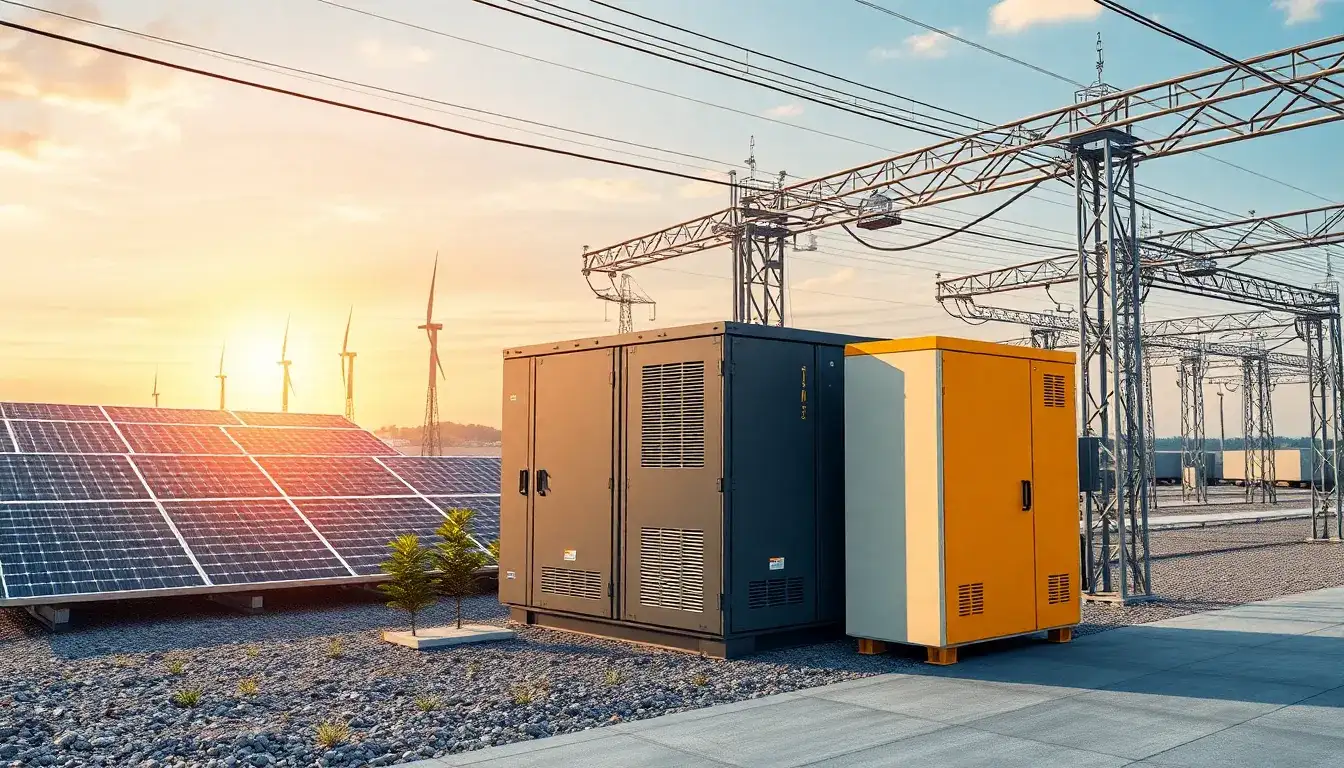
**Energy Storage System Market Expected to Reach $329.1 Billion by 2032 Amid Global Focus on Grid Resilience**
According to a recent report by Allied Market Research, the Energy Storage System (ESS) market, valued at **$198.8 billion** in 2022, is projected to grow to **$329.1 billion** by 2032, reflecting a compound annual growth rate (CAGR) of **5.2%** from 2023 to 2032. Energy Storage Systems are essential to modern energy infrastructure as they enable the storage and timely deployment of electricity, contributing significantly to grid stabilization, renewable energy integration, and industrial energy optimization.
### Market Drivers and Growth Opportunities
**Grid Resilience and Renewable Integration**
As nations increasingly adopt renewable energy sources, maintaining a balance between power supply and demand becomes more complex. ESS provides the necessary stability to the grid, particularly during periods of intermittent energy generation from sources like solar and wind.
**Industrial Energy Optimization**
Industries represent a significant portion of global electricity consumption. ESS facilitates:
– Demand response
– Peak shaving
– Backup power
– Load management
By storing excess energy during off-peak hours and utilizing it during peak demand, industries can reduce costs and enhance operational efficiency.
**Supportive Government Policies**
Incentives, subsidies, and mandates worldwide continue to drive the growth of the Energy Storage System market. Noteworthy initiatives include:
– The U.S. Inflation Reduction Act (2022), which offers investment tax credits for standalone storage
– India’s National Electricity Plan, targeting **51-84 GW** of battery storage by 2031-32
– China’s Storage Roadmap, aiming for **30 GW** of new storage by 2025
– ARENA Funding for **2 GW** of grid-scale storage in Australia
### Energy Storage System Market Segmentation
**By Technology:**
– Pumped Hydro Storage: Holds over **80%** market share as of 2022
– Battery Energy Storage
– Compressed Air Energy Storage
– Flywheel Energy Storage
– Others
Pumped hydro remains the dominant technology due to its long operational life and large-scale applications, while battery storage is rapidly gaining traction in residential and commercial sectors.
**By End-Use Sector:**
– Residential (fastest-growing segment, CAGR **6.0%**)
– Commercial
– Industrial
The residential segment is experiencing a surge in smart energy adoption, with homeowners seeking cost-effective and sustainable backup power solutions.
**By Application:**
– Stationary Storage: Accounts for **80%** of market share
– Transportation
Stationary storage is widely deployed across utilities, buildings, and industrial sites.
### Regional Insights
**Asia-Pacific Leading the Market**
In 2022, the Asia-Pacific region captured over **40%** of the Energy Storage System market share and is expected to grow at the highest CAGR of **5.7%** through 2032. Contributing factors include:
– Increasing energy demand
– Massive renewable energy investments in India, China, and Southeast Asia
– Strategic grid infrastructure investments
Countries in this region are making significant investments in battery manufacturing, smart grids, and grid-forming inverters to improve their power systems.
### Key Players in the Energy Storage System Market
Leading participants in the ESS market include:
– Schneider Electric
– SMA Solar Technology AG
– Exide Industries Ltd.
– SK Holdings
– Autobat
– Enerbrax Acumuladores Ltda
– Eguana Technologies
– Imergy Power Systems
– Ionotec Ltd
– Tata Power
These companies are heavily investing in technological innovations, strategic partnerships, and regional expansion to maintain their competitive edge.
### Challenges and Risk Perception
Despite the numerous benefits, risk perception poses a barrier to market growth, including:
– Reliability concerns
– Performance variability
– Lack of long-term performance data
– Absence of stable revenue models
Additionally, uncertainties in regulatory frameworks and market mechanisms can deter large-scale investments. Addressing these challenges will be crucial for unlocking the full potential of the Energy Storage System market.
### Conclusion
The Energy Storage System market is poised for transformation, driven by global initiatives focused on energy sustainability, grid reliability, and industrial energy optimization. With increasing investments, supportive policies, and advancements in technology, ESS is evolving from a mere backup option to a strategic component of future energy systems. As the world moves towards net-zero goals, the integration of reliable energy storage will be vital for managing peak demand, enhancing power quality, and ensuring uninterrupted energy supply in a renewable-driven future.
Original article by NenPower, If reposted, please credit the source: https://nenpower.com/blog/energy-storage-system-market-expected-to-reach-329-1-billion-by-2032-driven-by-global-demand-for-grid-resilience/

