

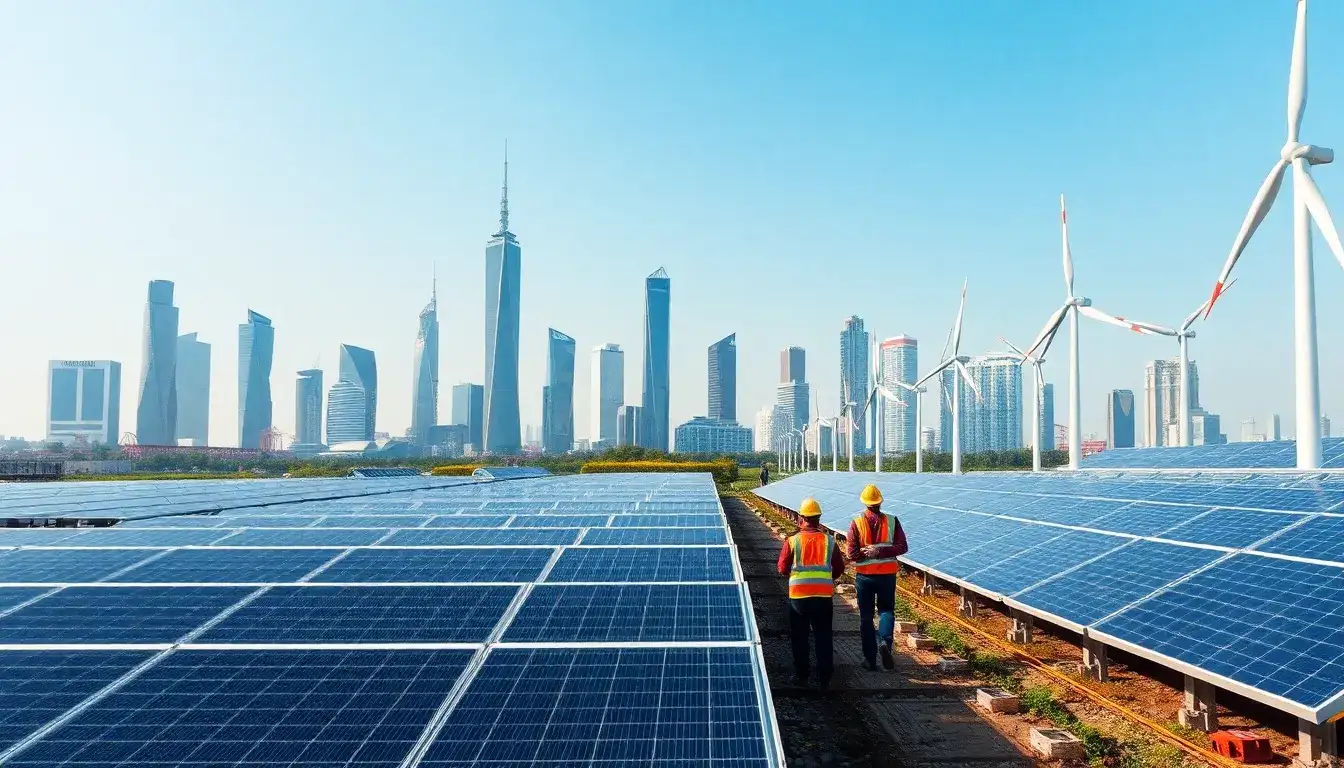
The “531” Policy Will Accelerate Energy Transition in the Renewable Energy Market
On May 28, 2025, at 11:14 AM, it was reported that the “531” policy would significantly influence the renewable energy market, marking a critical step in China’s energy transition. According to reports, by early 2025, the country is set to launch 136 new energy projects worldwide. This initiative aims to expedite the adoption of renewable energy sources, pushing for advancements in clean energy technologies and systems.
The central government’s approach ranges from “policy support” to “market-oriented value creation,” indicating a shift towards greater efficiency in the renewable energy sector. This transition will not only optimize resource allocation but also stimulate technological innovation and the establishment of sustainable energy systems.
As of February 9, 2025, significant improvements are anticipated in the energy market, following the release of the “136 Document” by the National Energy Administration. This document outlines the guidelines for enhancing the market structure and promoting the development of new energy sectors. It emphasizes the need for efficient electricity pricing and regulatory policies to ensure the stability and reliability of energy supply.
By June 1, 2025, the “531” policy will officially come into effect, aiming to optimize the electricity market and facilitate innovative energy projects. The government encourages investments in renewable energy technologies that will contribute to the overall growth of the energy market.
As of May 20, 2025, there are 487 projects under development in the new energy sector, with a total scale of 11.9 GW/32.32 GWh, reflecting a growth rate of 70.98% in total capacity. Among these, 62 projects focused on renewable energy sources account for a total scale of 6.34 GW/14.63 GWh, indicating robust growth in both installed capacity and energy output.
In addition, the implementation of this policy will lead to two significant impacts on the energy market. One is the reduction of policy constraints, which will facilitate a more streamlined and effective market response. The other is the introduction of more stable pricing mechanisms, which will ensure that renewable energy projects can operate profitably and sustainably.
According to the latest market data, the renewable energy sector is expected to achieve a compound annual growth rate (CAGR) of 156% by 2025. This rapid expansion is driven by various factors, including advancements in technology, supportive government policies, and increasing demand for clean energy solutions.
Overall, the “531” policy represents a significant milestone in China’s journey towards a sustainable energy future, setting the stage for a greener and more resilient energy market.
Original article by NenPower, If reposted, please credit the source: https://nenpower.com/blog/energy-sector-transformation-the-impact-of-the-531-policy-on-chinas-renewable-energy-market/

