

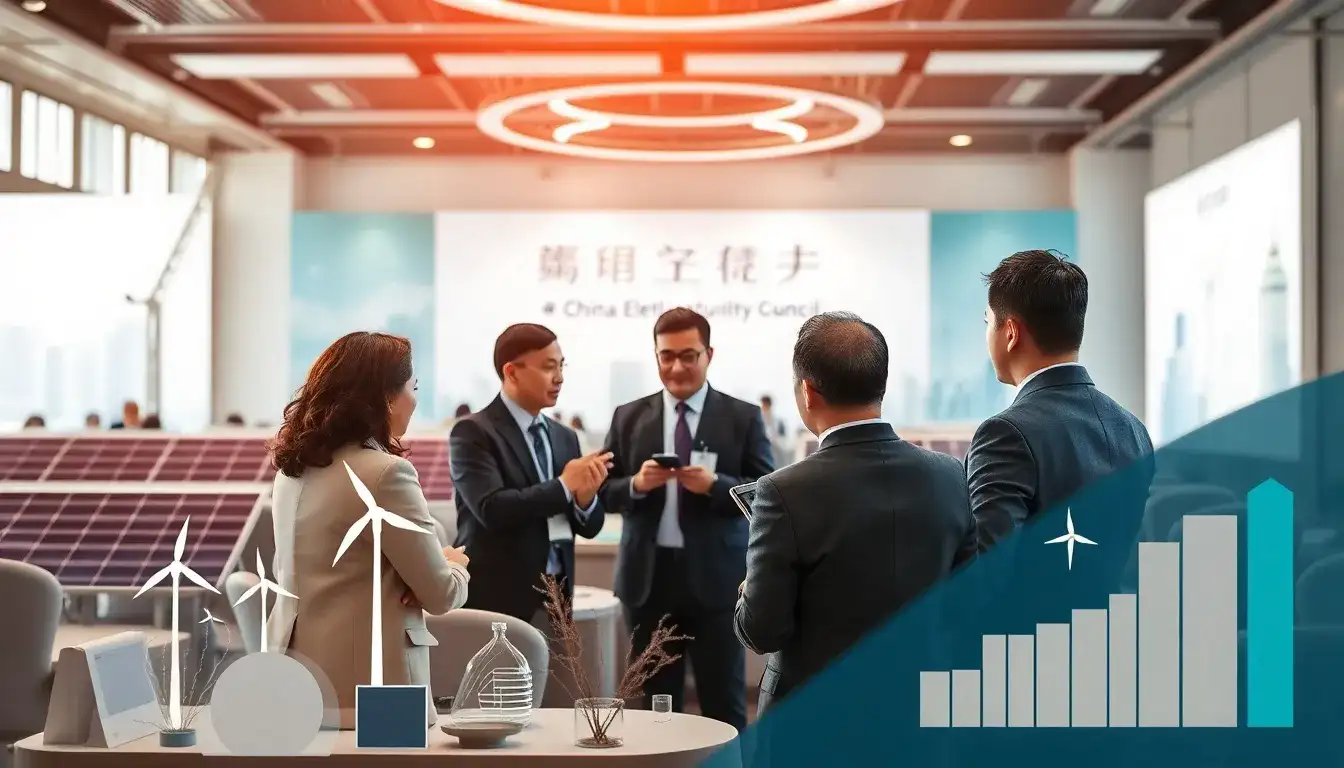
The China Electricity Council’s (CEC) Small and Medium Enterprises (SME) Branch is actively promoting innovative integration to facilitate high-quality development under the energy transition. The energy and electricity sector in China is currently undergoing a crucial transformation phase. With the advancement of the “dual carbon” goals, the scale of new energy installations is continuously expanding, and the construction of new power systems is accelerating. Trends such as cleaner low-carbon energy consumption, diversified and secure energy supply, and coordinated optimization of energy layout are becoming increasingly evident.
In this context, how small and medium enterprises can seize opportunities and tackle challenges has become a vital topic for high-quality industry development. From September 24 to 25, the CEC SME Branch successfully held a forum on promoting high-quality development for SMEs and the 2025 CEC SME Branch Work Meeting in Chongli, Hebei. Against the backdrop of accelerated energy transition and rapid construction of new power systems, the event focused on policy guidance, technological empowerment, and ecological collaboration. It showcased the strategic layout and practical paths of the CEC SME Branch in promoting innovation between large and small enterprises to support high-quality industry development through forums, annual work summaries, result sharing, and the initiation of special plans.
Policy guidance shapes direction and fosters a positive development ecosystem. China has officially announced a new round of nationally determined contribution targets: by 2035, net greenhouse gas emissions across the economy are expected to decrease by 7% to 10% from peak levels. The share of non-fossil energy consumption in the total energy mix should exceed 30%, with the total installed capacity of wind and solar power reaching more than six times that of 2020, aiming for 3.6 billion kilowatts. Additionally, forest carbon stock should exceed 24 billion cubic meters, and new energy vehicles should become the mainstream of new vehicle sales. The national carbon emission trading market will cover major high-emission industries, and a climate-resilient society will be essentially established.
The “dual carbon” goals and the new round of national contributions are reshaping the landscape of the energy sector. China’s energy transition is progressing in five key directions: first, energy consumption is rapidly shifting towards clean, low-carbon development; second, energy supply is diversifying and enhancing safety; third, energy layout is optimizing for synergy; fourth, modernizing the energy governance system; and fifth, fostering self-reliance and strength in energy technology through deeper integration of digital technology and the energy industry.
During this profound transformation, small and medium enterprises play a crucial role as sources of technological innovation and market vitality. Their development quality directly impacts the resilience and competitiveness of the energy and electricity industry chain. Gao Yufeng, a member of the CEC’s Party Committee, affirmed the value of SMEs at the forum, analyzed the challenges they face, and offered hopes and suggestions for promoting their high-quality development. He emphasized that fostering high-quality development for SMEs is a long-term and daunting task that requires collaborative efforts from the government, industry organizations, enterprises, and society to build a healthy ecosystem.
The CEC, as an industry service platform, is committed to acting as a bridge to help SMEs maximize their value in the new energy system and industry chain.
Building a precise service system to help enterprises overcome development challenges is key. With a clear policy direction, the focus shifts to how to translate macro guidance into tangible development momentum for enterprises. As Gao Yufeng emphasized, there is a need for stronger responsibility and concrete measures to implement policies effectively. This requirement has translated into specific actions for the SME Branch to provide precise services.
Zhang Wenjian, the full-time vice president of the CEC SME Branch, pointed out in the annual work report that the branch has consistently upheld the principle of “service first” as its core value. The branch prioritizes addressing the pain points of SMEs and uses their needs as a guiding compass for its work. This service philosophy was fully practiced in the past year, as the branch expanded its service range and upgraded its platform through a “three services” system: basic services, professional services, and precise services.
In terms of policy transmission, the branch aims to bridge the “last mile” to ensure that policy benefits reach enterprises directly. By organizing specialized interpretation sessions and policy briefings, it helps enterprises accurately understand the implications of regulations such as the Energy Law of the People’s Republic of China and the Private Economy Promotion Law, enabling them to effectively utilize policy tools and fully enjoy the benefits.
Technical innovation services have shown significant results. The branch officially launched its third annual call for new technologies and new products in October 2024, relying on the CEC’s membership network to ensure deep participation from upstream and downstream enterprises in the power industry. By holding advanced training courses for technology innovation outcomes in power enterprises, integrating policy interpretation, practical exercises, and interdisciplinary discussions, the branch has effectively enhanced the quality of project applications and the capacity for technological innovation. After expert evaluations in August 2025, a directory of new technologies and products in the power industry will be published to provide authoritative references for technological application.
Addressing enterprise development pain points, the branch’s Enterprise Growth Care Program demonstrates unique value. This program focuses on the actual bottlenecks and needs faced by small and medium enterprises in the power industry during their growth process. By leveraging the CEC’s industry platform resources and expertise, it offers targeted guidance and suggestions for strategic planning, product direction, and organizational operations. As of now, several member units have reached cooperation intentions, leading to joint bidding and the establishment of joint ventures, achieving collaboration throughout the industry chain.
The outcomes of these precise service initiatives ultimately manifest in the promotion of innovation results and the facilitation of industrial synergy. This aligns with Gao Yufeng‘s call to “help small and medium enterprises boost confidence and develop steadily,” which serves as an important standard for evaluating the effectiveness of the branch’s work. One significant aspect of the work meeting was the release of results from the call for new technologies and products in the power industry. Since 2022, the CEC has conducted this initiative for three consecutive years, focusing on “innovation-driven, integrated development” to explore potential technologies across the entire industrial chain. The initiative received enthusiastic responses from enterprises, resulting in over 300 technologies being submitted, covering cutting-edge fields such as smart grids, new energy, energy storage, and the Internet of Things in electricity. After strict evaluations, 190 technologies passed the review, with 90 receiving “recommendation for targeted communication” recognition, effectively promoting deep integration of production, learning, and application.
During the 2025 exchange event for new technologies and products, representatives from seven enterprises shared innovative achievements across various advanced fields, including green energy efficiency, intelligent operation and maintenance, and microgrid technology. These results directly address industry pain points such as renewable energy consumption, system security, and energy efficiency enhancement, providing concrete solutions for the construction of new power systems. Notably, the branch has developed a one-stop service system that facilitates the rapid market entry of innovative outcomes, encompassing activities from project cultivation to testing, evaluation, promotion, communication, and application for technology innovation awards.
Additionally, the branch actively constructs a multi-level promotion system, organizing thematic exchange meetings in cities like Beijing, Guangzhou, Chengdu, and Yinchuan to promote key technologies based on the recommendations received. By conducting technical salons and on-site visits, a high-level interactive platform is established to facilitate the integration of innovative resources and deep collaboration between industry, academia, and application. This “innovative collaboration, shared capacity, and interconnected supply chain” industrial ecology is becoming a significant force driving high-quality industry development.
Positive feedback from member units has confirmed the effectiveness of the branch’s efforts. As a representative of a new member, Huang Chunyan, chairman of Hubei Jinxiu Talent Technology Group Co., Ltd., expressed, “The branch has successfully transformed national policies on new energy and digital transformation into development momentum for enterprises, creating a resource connection platform that helps us accurately grasp policy directions and adjust service strategies. As a member unit, our participation in the branch’s enterprise visits and discussion activities allows us to directly understand the real needs of power enterprises in areas such as talent recruitment, team building, and digital management, aiding us in upgrading the functions of our ‘Jinxiu Smart HRO’ platform to better fit the digital transformation needs of power enterprises.”
The collaborative network built by the branch, which integrates government, industry, academia, and application, helps enterprises break down industry barriers and connect with deeper needs. Liu Zhiming, the executive vice president of the CEC SME Branch, pointed out that the branch has achieved significant results in policy transmission, resource connection, and enterprise cultivation. Looking ahead, the branch will continue to adhere to its mission of “rooted in the industry, serving enterprises,” fully leveraging its role as a bridge to deeply integrate SMEs into the broader energy transition and the construction of new power systems. Through continuous innovation in service models, improving regional collaboration mechanisms, and implementing precise support measures, the branch is poised to inject new innovative vitality into the high-quality development of the electricity industry.
Original article by NenPower, If reposted, please credit the source: https://nenpower.com/blog/empowering-high-quality-development-of-smes-in-energy-transition-insights-from-the-china-electricity-council-forum/

