

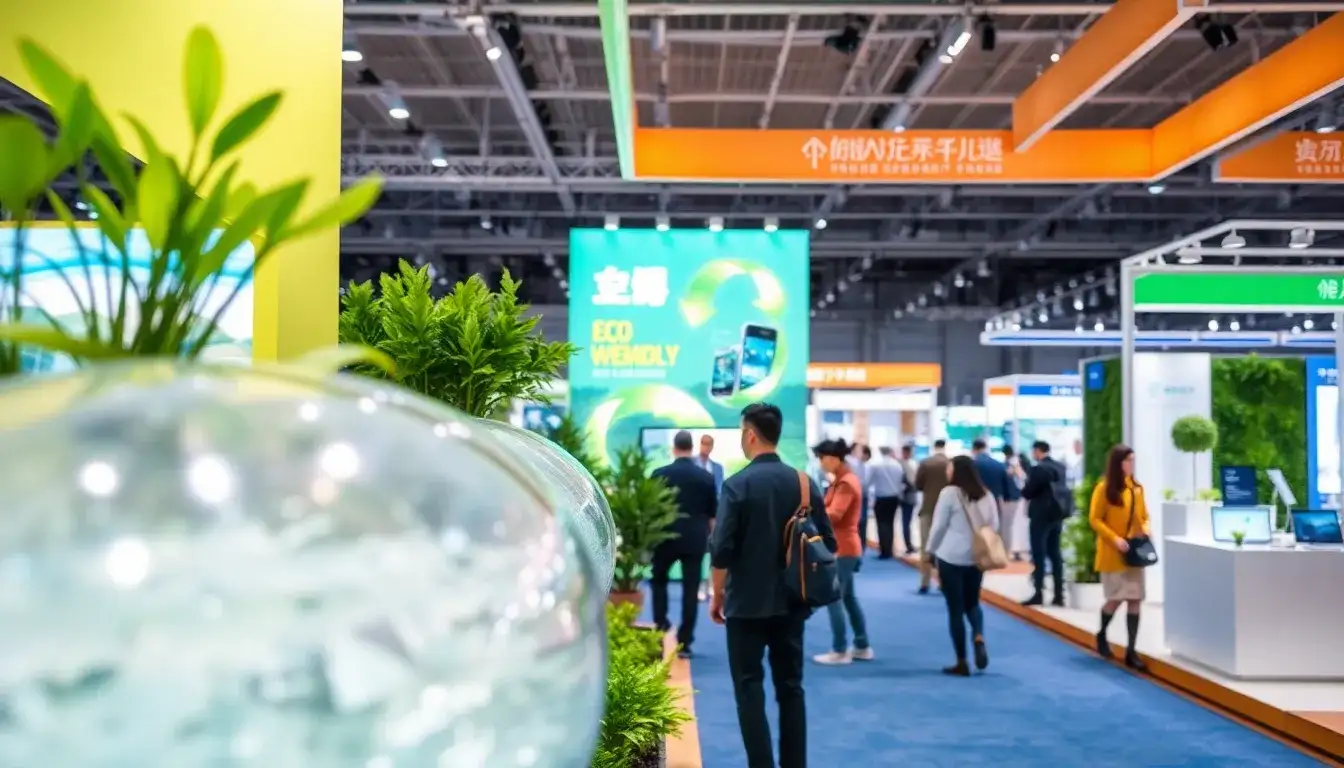
New Technologies, New Demands, New Spaces — Observing Trends in the Ecological and Environmental Protection Industry from the China International Environmental Protection Exhibition
On April 14, 2025, the 23rd China International Environmental Protection Exhibition and the 7th Ecological Environmental Protection Industry Innovation Development Conference were held in Beijing. This event attracted participation from ecological and environmental protection enterprises and industry experts from both domestic and international backgrounds to discuss new industry dynamics and a low-carbon future.
What is the current state of the ecological and environmental protection industry in China? What challenges and opportunities does it face? This event serves as a window to observe the new characteristics and trends in the development of China’s ecological and environmental protection industry.
New Technologies Empowering Industry Quality and Upgrading
Inside the exhibition hall, a green smart oil barrel caught the attention of visitors. Staff from Guangxi Recycling Group explained that these sensor-equipped smart oil barrels are placed at factories and waste-producing units, helping to standardize the collection and storage of hazardous waste such as waste oil. Each barrel can connect to Guangxi’s hazardous waste collection and transportation information service platform, achieving digital management of hazardous waste throughout its lifecycle. In Guangxi, over ten thousand of these smart barrels have already been deployed.
The handling and disposal of hazardous waste have always been a focal point, with various environmental violations related to hazardous waste occurring from time to time. Promoting comprehensive information-based environmental supervision is one of the key strategies to address the environmental risks posed by hazardous waste. This is a vivid example of how new technologies are empowering the ecological and environmental protection industry.
At the exhibition, various new technologies and products were showcased, including environmental intelligent robots, air quality monitoring stations, and unmanned algae-control boats. “Technologies such as 5G, digital environments, and AI are becoming deeply ingrained in the ecological and environmental protection industry. A digital future has already become a reality,” stated Guo Chengzhan, president of the China Environmental Protection Industry Association. He emphasized that traditional environmental protection technologies, equipment, and materials can no longer meet the current needs for carbon neutrality and the construction of a beautiful China. The ecological and environmental protection industry faces new demands for intelligent upgrades and integrated transformations.
New Demands Driving Industry System Optimization
Academician and vice president of the China Environmental Protection Industry Association, Qu Jiuhui, pointed out that China’s ecological and environmental protection industry has formed a system encompassing key areas such as water, air, solid waste, soil, environmental monitoring, and ecological restoration, with industry revenue exceeding 2.2 trillion yuan. Simultaneously, the industry is gradually shifting from traditional end-of-pipe treatment models to a comprehensive approach that emphasizes pollution reduction, carbon neutrality, and clean production.
During the event, Zhang Xingying, deputy director of the Guangxi Zhuang Autonomous Region’s Department of Ecology and Environment, raised multiple demands. As a major sugar cane-producing area, Guangxi faces air quality issues due to the burning of millions of tons of sugar cane leaves each year, necessitating enhanced comprehensive utilization of these leaves to reduce pollution. Additionally, the unique Karst landscape poses challenges for underground water pollution control, calling for a precise tracing and soil remediation technology system. To combat marine pollution, Guangxi urgently needs to develop an integrated intelligent monitoring platform for floating marine debris. These varied demands reflect the diverse and refined needs for ecological and environmental technologies across different regions and industries, presenting both challenges and opportunities for industrial innovation.
Industry insiders believe that in the pursuit of a beautiful China, strategies focused on pollution reduction and carbon neutrality, collaborative pollutant reduction, climate change adaptation, biodiversity preservation, management of new pollutants, and the application of emerging technology innovations will become new spaces for industrial development.
New Markets Expanding Industry Prospects
In contrast to the various pollution control and environmental monitoring equipment featured in the exhibition hall, Wanhua Eco Group showcased decorative panels and model kitchens and bathrooms. Chairman Guo Xingtian explained that the company uses straw and other annual agricultural residues to replace wood in producing formaldehyde-free engineered wood, which not only alleviates domestic wood supply and demand conflicts but also contributes to carbon reduction and carbon sequestration. The company is also focusing on green industrial customization, efficiently integrating home renovation components like integrated walls, ceilings, and wardrobes to promote resource recycling.
In the domestic market, the ecological and environmental protection industry’s market is gradually expanding from traditional end-of-pipe treatment to a green transformation of production methods and further promoting green lifestyles among the public. Internationally, Qu Jiuhui noted that many ecological and environmental enterprises with new technologies and products are actively pursuing opportunities abroad, with key players in waste incineration and water services successfully venturing overseas. Amid the global green transformation wave, China’s ecological and environmental protection industry is gradually transitioning from a follower to a leader.
Liu Zhenmin, China’s special envoy on climate change affairs, suggested expanding industrial space through global cooperation, encouraging Chinese ecological and environmental enterprises to participate deeply in the “Belt and Road” green investment initiatives, sharing Chinese technologies, standards, and solutions with the world, and jointly building low-carbon industrial chains to make green the foundation for global recovery.
Original article by NenPower, If reposted, please credit the source: https://nenpower.com/blog/emerging-trends-in-chinas-eco-environmental-industry-insights-from-the-international-environmental-protection-exhibition/

