

Energy Storage Insights from Ma Jinpeng at Xinneng An: A Vision for the Leading Brand in Domestic Industrial and Commercial Energy Storage Solutions by 2025
Recently, I attended the 7th Energy Storage Carnival and the 2024 Annual Global Shipment Ranking of Chinese Energy Storage Companies, hosted by the Energy Storage Leader Alliance in Wuhan. The event attracted battery manufacturers, system integrators, investors, and asset operators, all eager to discuss the latest industry developments. After reviewing the released statistics, I felt a mix of emotions. During the evening banquet, a leader from a newly listed energy storage company expressed their concerns about the industry's intense competition, becoming visibly emotional. Despite their commendable financial performance in 2024, many in attendance were grappling with losses, leaving me with a heavy heart.

The development of new energy storage in China has rapidly progressed, achieving in just two years what took solar and wind energy a decade. It feels as though the sector has skipped over some of the crucial transitional periods from policy-driven growth to market-driven success. While the growth of solar and wind energy can be likened to navigating a river by feeling for stones, energy storage development seems to be dictated by those who have already crossed over, perhaps reflecting a lack of patience or a distortion of market behaviors based on supply and demand dynamics.

From the discussions at the conference and exchanges with industry colleagues, I distilled five key insights:

<ol>
    <li>The annual shipment rankings for domestic industrial and commercial energy storage from 2022 to 2024 have shown significant fluctuations, indicating that the industry landscape is still evolving.</li>
    <li>Alongside the launch of a 472Ah square cell at the conference, the market has seen a variety of specifications for energy cells, such as 2XX, 3XX, 4XX, 5XX, and 6XX, many of which are now ready for delivery, making it even more complex than solar panel specifications.</li>
    <li>One company introduced a 125 kW/261 kWh energy storage cabinet with a conventional sales price approaching 0.5 yuan per watt-hour. System integrators are currently facing poor profit margins, and very few companies have achieved positive net profits. During the afternoon forum, I urged, “The sustained profitability of system integrators is the foundation for the sustainable and healthy development of the industry, and it guarantees the sustainable operation of energy storage investors and asset operators.”</li>
    <li>We are beginning to see a differentiation in the roles of investors, asset operators, and system integrators. Specialized asset operators, such as Xingji Yuneng and Huagong Energy, are emerging, leveraging their expertise in load characteristics, demand management, electricity sales integration, and demand-side response to generate significant returns that exceed peak-valley price differences. I believe this is a positive phenomenon for the industry.</li>
    <li>The concept of virtual power plants (VPP) should be the ultimate form of industrial and commercial energy storage, with overall energy management on the distribution network being the ultimate goal for investors and asset operators, making the establishment of independent departments unnecessary.</li>
</ol>

Since I last wrote about “my view on domestic industrial and commercial energy storage” over a year ago, the development of industrial and commercial energy storage in China has experienced significant ups and downs. Various aspects, such as development cycles, costs, profit-sharing ratios, delivery periods, financing costs, and contract periods, are all under intense pressure. However, as the first sector to establish a viable technological and economic closed loop, it still shows signs of sustainable development.

In 2024, I will complete 150 trips, most of which involve discussions with investors, developers, and operators. This interaction with investors and operators, along with product and solution suppliers, has reshaped my understanding of the industry. Building on this, I aim to draft a vision for 2025: the leading brand in domestic industrial and commercial energy storage solutions.

Before looking forward to 2025, I want to revisit some issues discovered in 2024:

<ol>
    <li>There is an overemphasis on investment and a lack of focus on operations. Early investors relied too heavily on a single revenue stream from peak-valley price differences, making them vulnerable to policy changes and operational data falling short of expectations.</li>
    <li>Reliability of technical indicators is another pressing issue. Metrics like charge/discharge efficiency, capacity retention, online reliability, fault recovery time, and adaptability to scenarios have faced scrutiny. Last year, several integrators exited the market due to these challenges.</li>
</ol>

As we enter 2025, both national and local governments are introducing a series of energy and power policies, reflecting their commitment to building a new power system and promoting the sustainable, high-quality development of new energy. According to the International Energy Agency's definition of low-carbon power system transitions, China has entered the third stage, characterized by increased difficulty in balancing power supply and demand, necessitating systematic enhancements in power system flexibility.

Investment in new flexibility is required as existing facilities and operational improvements alone cannot meet current demands. Historically, energy storage revenues have depended heavily on leasing capacities from renewable energy sources, which is a temporary phase and not sustainable in the long term. The 136 document will effectively guide the transition of energy storage from a cost-oriented to a value-oriented asset, while the accelerated transition of the electricity spot market and the expected widening of price differences will leverage the trading attributes of energy storage to enhance the consumption of renewable energy and improve grid penetration rates.

Looking ahead to 2025 and the following years, as a supplier of domestic industrial and commercial energy storage products and solutions, we must focus on more than just competitive pricing. Long-term, continuous price competition will not benefit investors, operators, or product and solution suppliers. We must consider which solutions can position a company to be a leading brand.

To summarize, the value proposition of a leading brand should always align with the financial models of investors and asset operators. Providing the lowest cost per kilowatt-hour solution focuses on how to effectively safeguard better financial metrics for investors, including overall return on investment, static payback periods, and cumulative net cash flow over the entire lifecycle. The foundational elements that support these financial metrics range from project development to project recovery, including static investment, operational costs, capacity assessments, revenue guarantees, financing viability, state of health (SOH) retention, charge/discharge efficiency, depth of discharge (DoD), fault rates, recovery times, insurance measures, algorithm strategies, and operation friendliness.

These can be broadly categorized into eight key value points, which serve as the foundation for a leading brand in solutions:

<ol>
    <li>Optimal static investment that returns to the financial model. The market supply chain has become increasingly clear, with easy access to BOM pricing. However, different components and cell choices can significantly impact price, lifespan, and performance. Choosing cells reflects the investor's patience and value proposition.</li>
    <li>The construction of a closed-loop, guaranteed system operation and maintenance management capability. Effective operation and maintenance are critical; preventive and corrective maintenance are equally important. Proper preventive maintenance can minimize or eliminate minor damages before they escalate into larger issues.</li>
    <li>The establishment of an evolving capacity assessment capability is crucial for investors' returns. As commercial energy storage revenue diversifies, capacity assessments must consider multiple factors beyond just 15-minute load data.</li>
    <li>The capability to support the financing of projects through product and solution providers. Currently, private investors primarily rely on financing leasing companies, facing high costs. Leading brands can leverage their healthy financial status to collaborate with financing institutions to offer better financing solutions.</li>
    <li>The development of refined operational capabilities at the project level. Whether viewed as a standalone financial asset or as a critical scheduling element in a virtual power plant, refined operations are increasingly in the spotlight.</li>
    <li>Building the core technical indicators of energy storage systems: capacity retention (SOH), charge/discharge efficiency, and depth of discharge (DoD) are critical metrics that impact the system's throughput capabilities.</li>
    <li>Constructing insurance and risk management capabilities for energy storage systems. The government is beginning to recognize the importance of insurance products that align with the healthy development of the energy storage industry.</li>
    <li>Managing the recycling and residual value of energy storage systems. A comprehensive lifecycle solution must address both the sustainability of the provider and the feasibility of a real closed loop for recycling.</li>
</ol>

In summary, as we approach 2025, we anticipate several new developments: the demand for energy storage paired with existing distributed solar projects is expected to grow, particularly as policy changes restrict full grid access for commercial solar after April 30. Furthermore, international markets, particularly in Europe and North America, are set to experience rapid growth in commercial energy storage due to advanced market maturity and clear economic models.

Large-scale industrial and commercial energy storage projects are likely to become the norm, with modular solutions gaining traction. From 2022 to 2024, the domestic industrial and commercial energy storage shipment rankings have fluctuated significantly, revealing that the industry’s competitive landscape is still far from established. Ultimately, this is a competition of comprehensive capabilities and value combinations, where the final oligopoly may still be emerging.

As Warren Buffett wisely noted, "It takes 20 years to build a reputation and five minutes to ruin it." Keeping this in mind will change our approach. Strengthening self-discipline within the industry and fostering a greater respect for safety will enable us to guide technology towards the lowest cost per kilowatt-hour, facilitating a more sustainable and healthy development trajectory.

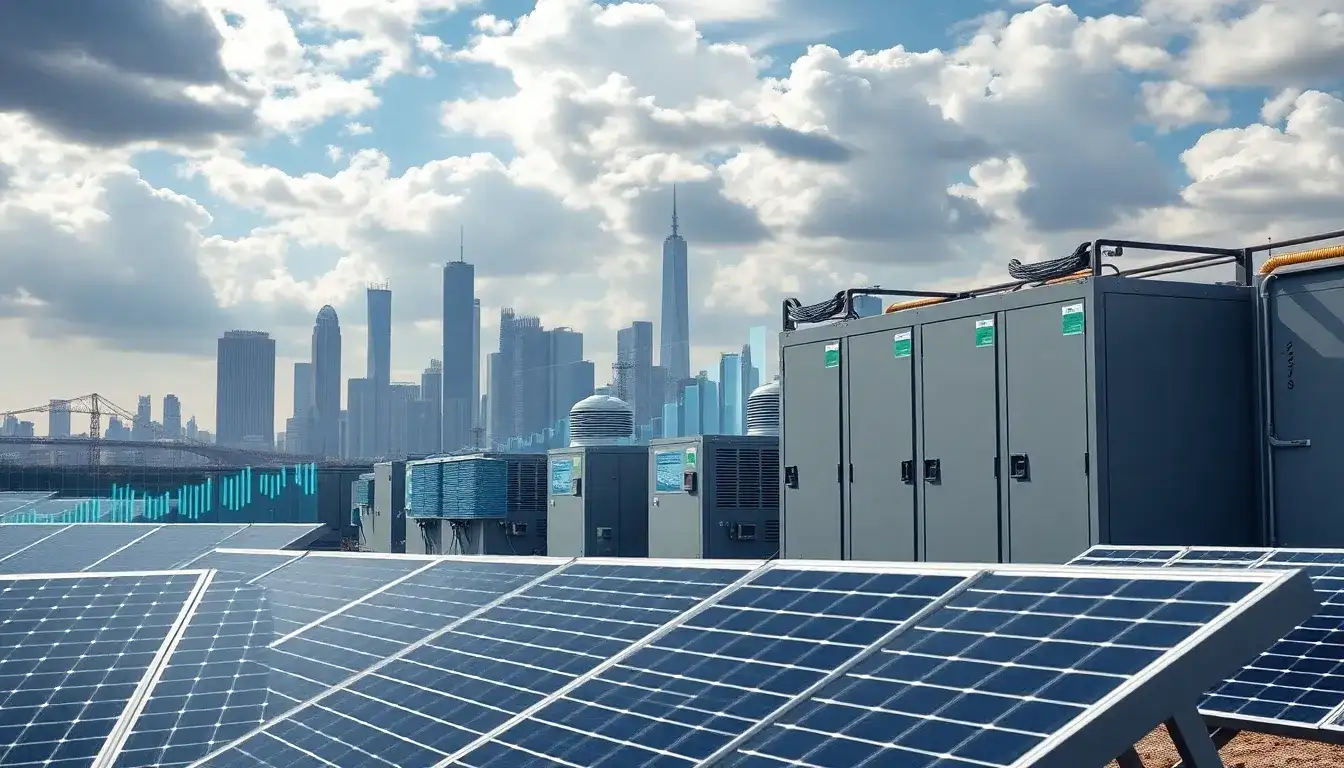
As I wrap up these thoughts, the sunlight outside breaks through the clouds, casting a bright glow on the solar panels on the roof. I’d like to conclude this report with a poetic sentiment: <b>“Shoulder the weight of great responsibility, let us sing our song; achievements are not in vain, as they shape our legacy.”</b> My team and I will adhere to these principles as we advance industry development, and I look forward to unveiling our solutions.
Original article by NenPower, If reposted, please credit the source: https://nenpower.com/blog/emerging-trends-and-challenges-in-chinas-commercial-energy-storage-solutions-insights-for-2025/

