

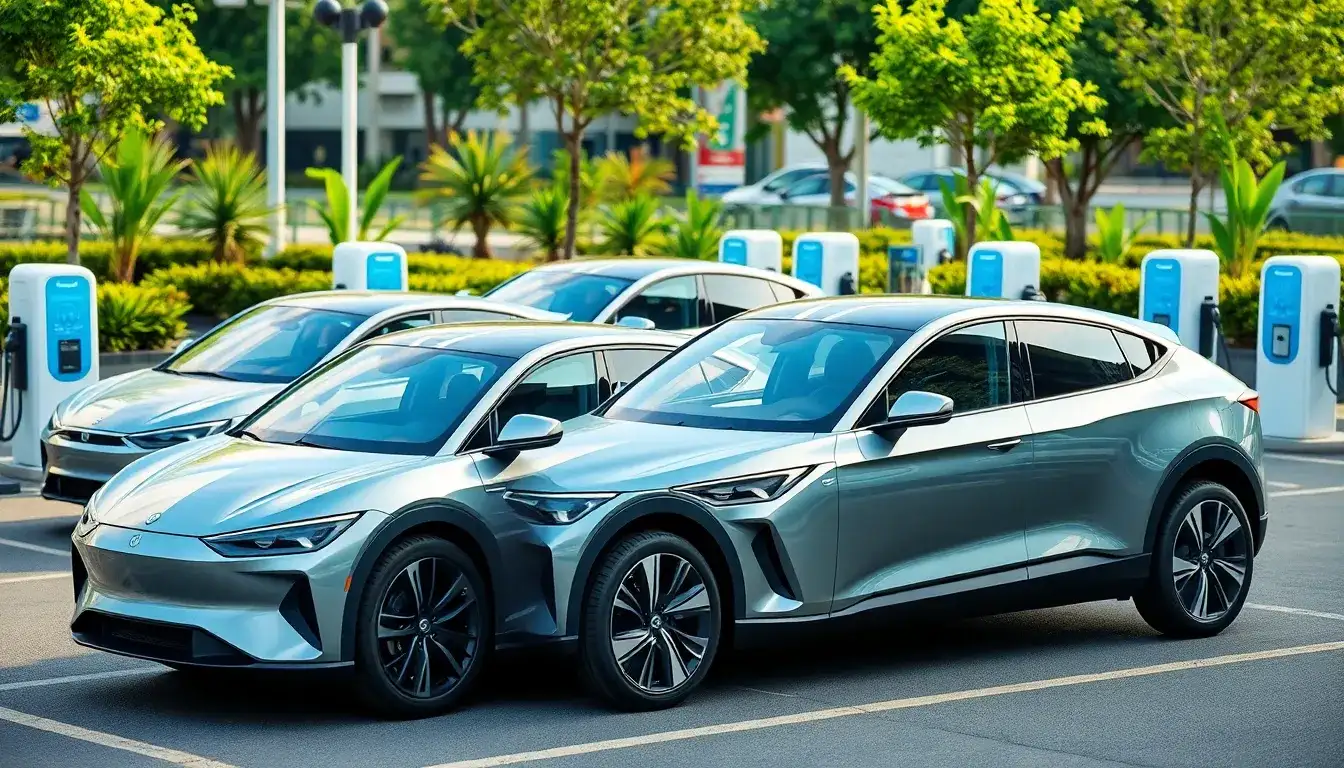
In a world where the development of hydrogen fuel commercial vehicles is slowing down, several automakers are quietly revisiting the hydrogen fuel passenger vehicle market. Recently, BMW Group announced the launch of its third-generation hydrogen fuel cell system and has commenced the prototype production of its first models, which are set to go into mass production by 2028. The new generation BMW X5 will be the first to feature this technology. Similarly, at the 2025 Munich Motor Show, Renault unveiled the Embleme hydrogen fuel cell concept car, a family sedan with a driving range of up to 1,000 kilometers. Earlier, Toyota, in collaboration with the Tokyo Metropolitan Government, initiated the “TOKYO H2” program, committing to introduce 200 hydrogen fuel cell taxis by 2025. With multiple companies taking action, could it be that hydrogen fuel passenger vehicles, which have been somewhat overlooked in recent years, are making a comeback?
BMW, known for its diversified approach, has consistently led the charge in new energy developments among the top German automakers, whether through electric vehicle technology or hydrogen fuel cell advancements. According to information on BMW’s official website, the company developed its first experimental liquid hydrogen-powered vehicle based on the 5 Series 520 model (E12) back in 1979. Over the following years, more hydrogen-powered prototypes based on the 7 Series models (E23 and E32) emerged. By 2000, the BMW 750hL hydrogen-powered model achieved small-scale production and began a global exhibition tour. Starting from 2023, the BMW iX5 Hydrogen fuel cell vehicle has been undergoing road tests in various regions worldwide, demonstrating exceptional performance even in challenging conditions such as extreme heat, dust, steep slopes, and humidity fluctuations, as well as in extremely cold environments where its range remains unaffected.
BMW’s commitment to hydrogen technology is driven by a strategy that avoids reliance on a single technology. Diversified development is crucial for maintaining a leading market position. This strategy explains why BMW was quicker to embrace electrification compared to many multinational automakers that were less optimistic about hydrogen. As stated on their website, “Given that fuel cell electric vehicle technology falls under the category of electric vehicle technology, BMW Group clearly views it as a complement to battery electric vehicle technology and develops it alongside plug-in hybrids and internal combustion engine models.” Notably, developing hydrogen fuel cell vehicles incurs lower costs compared to creating an entirely new powertrain from scratch. Jürgen Guldner, General Manager of BMW Group’s Hydrogen Technology and Vehicle Projects, mentioned in a recent interview that “hydrogen vehicles are essentially electric vehicles. They simply use a different energy storage method, which allows us to reuse many components from battery electric vehicles, such as electric motors.”
Furthermore, hydrogen, as a secondary energy source with zero carbon emissions, has a wide range of applications. BMW’s interest in hydrogen extends beyond the automotive sector; they have been utilizing hydrogen technology in factory logistics for over a decade. In 2013, BMW established Germany’s first indoor hydrogen refueling station at its Leipzig plant. Additionally, as a partner in research projects like H2HAUL and HyCET, BMW is promoting decarbonization in external logistics transportation through hydrogen technology trials. Internally, the Leipzig plant’s paint shop is currently piloting the use of hydrogen energy in the automotive production process.
In contrast to BMW, Toyota’s approach to hydrogen fuel cell development can be described as a “bet.” Despite starting later than BMW, Toyota has made larger investments, accumulated more experience, and achieved greater results. Public records indicate that Toyota began researching hydrogen fuel cell technology in 1992 and launched the EVS13 hydrogen energy concept vehicle in 1996. Subsequently, several hydrogen energy concept cars were introduced, culminating in the FCV-R concept car at the 2011 Tokyo Motor Show, which featured a hydrogen fuel power system and 70 MPa high-pressure hydrogen tank technology, with a theoretical range of 700 kilometers. This vehicle laid the groundwork for the renowned Toyota Mirai in the hydrogen fuel cell vehicle market.
The Mirai was officially launched in Japan on December 15, 2014, becoming the first hydrogen fuel cell vehicle to be sold globally (excluding China). For Toyota, the Mirai was expected to replicate the success of the Prius, with sales targets set at 40,000 units by 2020, 200,000 units by 2025, and over 800,000 units by 2030. Unfortunately, more than a decade later, hydrogen fuel cell vehicles have yet to enter a phase of true market development. According to a report by the Tokyo News, as of June 2024, Japan had only 8,479 hydrogen fuel cell vehicles registered.
Despite Toyota’s early advantage in hybrid and hydrogen fuel cell technologies, it did not anticipate the rapid rise of battery electric vehicles, which have disrupted its vision for the future of new energy vehicles in less than a decade. Additionally, even in the hydrogen fuel cell vehicle sector, China has taken a different path, opting for a “commercial first, then passenger” development strategy, attracting numerous partners to promote and apply hydrogen fuel commercial vehicles.
When will hydrogen fuel passenger vehicles gain traction? Currently, the top three markets for hydrogen fuel cell vehicles are China, South Korea, and Japan. According to the latest statistics from South Korean company SNE Research, 4,102 fuel cell electric vehicles (FCEVs) were registered globally in the first half of 2025, marking a 27.2% decrease from the same period last year. China, as the world’s largest market for hydrogen fuel cell vehicles, saw an 18.4% decline in sales, totaling 2,040 vehicles primarily in the commercial vehicle sector. South Korea followed, with sales dropping from 1,742 vehicles in the first half of 2024 to 1,218 vehicles, a decrease of 30.1%. Japan’s market also experienced a significant drop, from 442 to 216 vehicles. The US market fell from 322 to 132 vehicles, and Europe saw a decline from 605 to 485 vehicles.
Some analysts suggest that under current conditions, hydrogen fuel cell vehicles are unlikely to make significant progress in the passenger car market over the next one to two years. However, in the heavy truck and specialized vehicle sectors, there may be localized growth due to policy guidance and demonstration project orders, indicating that certain regions and routes could gradually achieve scale effects. Zhang Shuai, Managing Director of Yonghua Investment, stated that “for hydrogen fuel cell passenger vehicles to achieve large-scale growth, three preconditions are necessary.” First, the fuel cell vehicle market must have a certain initial scale to encourage the establishment of sufficient infrastructure. Second, the shipment volume of fuel cell stack systems must be substantial, leading to continuous improvement in system completeness. This will not only provide a solid technical foundation for the development of hydrogen fuel passenger vehicles but also foster the maturity and completeness of the related industry chain. Lastly, the cost of fuel cell systems and hydrogen must be relatively low to ensure that hydrogen fuel passenger vehicles are economically competitive.
The B-end market may present an opportunity, but the current conditions are not yet favorable. However, initiatives like the “TOKYO H2” plan, launched by Toyota and the Tokyo Metropolitan Government, aim to have 600 hydrogen fuel cell taxis on the roads by 2030. Industry experts believe this can serve as a visible demonstration of the maturity and convenience of hydrogen energy technology, acting as a mobile advertisement. Additionally, it can collect valuable data during actual operations to support larger-scale promotions in the future. Zhang Shuai believes that if hydrogen fuel cell vehicles can target the B-end passenger vehicle market, the scale will be relatively controllable, and management can form a closed loop, although the high price of vehicles and operating costs remains a drawback.
Another potential breakthrough lies in technology. At the International Hydrogen Fuel Cell Passenger Vehicle Technology Forum held at the end of October last year, Professor Yu Zhuoping from Tongji University noted that range extender systems essentially belong to a composite power source, and hydrogen fuel cells are also composite power sources, making them very similar; one could argue that hydrogen fuel cells are inherently range extenders. Du Changhong, Deputy General Manager of Deep Blue Automotive’s Power Development Department, highlighted that the market’s high recognition of range extender new energy vehicles provides important insights for the development of hydrogen fuel cell passenger vehicles. He stated, “With the significant reduction in battery costs, we can reduce the hydrogen attributes while enhancing the electric attributes in hydrogen fuel cell models, which is beneficial for achieving a commercial closed loop.” Du Changhong suggested that at least one city cluster focused on fuel cell passenger vehicles should be piloted in future new demonstration city clusters, with Chongqing potentially seeking relevant pilot policy support.
The China Hydrogen Energy Alliance predicts that by 2025, the output value of China’s hydrogen energy industry will reach 1 trillion yuan, and from 2026 to 2035, it will reach 5 trillion yuan. Guolian Securities’ research report analyzes that 2020 to 2025 is the introduction period for hydrogen fuel cells, while the next 5-10 years will be the cultivation and development period for fuel cell vehicles, with projections of reaching 1 million units between 2030 and 2035. Perhaps when the market finally explodes, hydrogen fuel passenger vehicles will no longer be relegated to “overlooked corners” but will emerge as a significant force in the new energy vehicle market. Companies that have made early investments will reap substantial rewards.
Original article by NenPower, If reposted, please credit the source: https://nenpower.com/blog/emerging-players-in-the-overlooked-hydrogen-fuel-cell-passenger-vehicle-market/

