

Latest Report: 2025 China Photovoltaic Module Recycling Industry Research and In-depth Analysis (Summary)
Published on: May 11, 2025
1. Composition and Application of Photovoltaic Modules
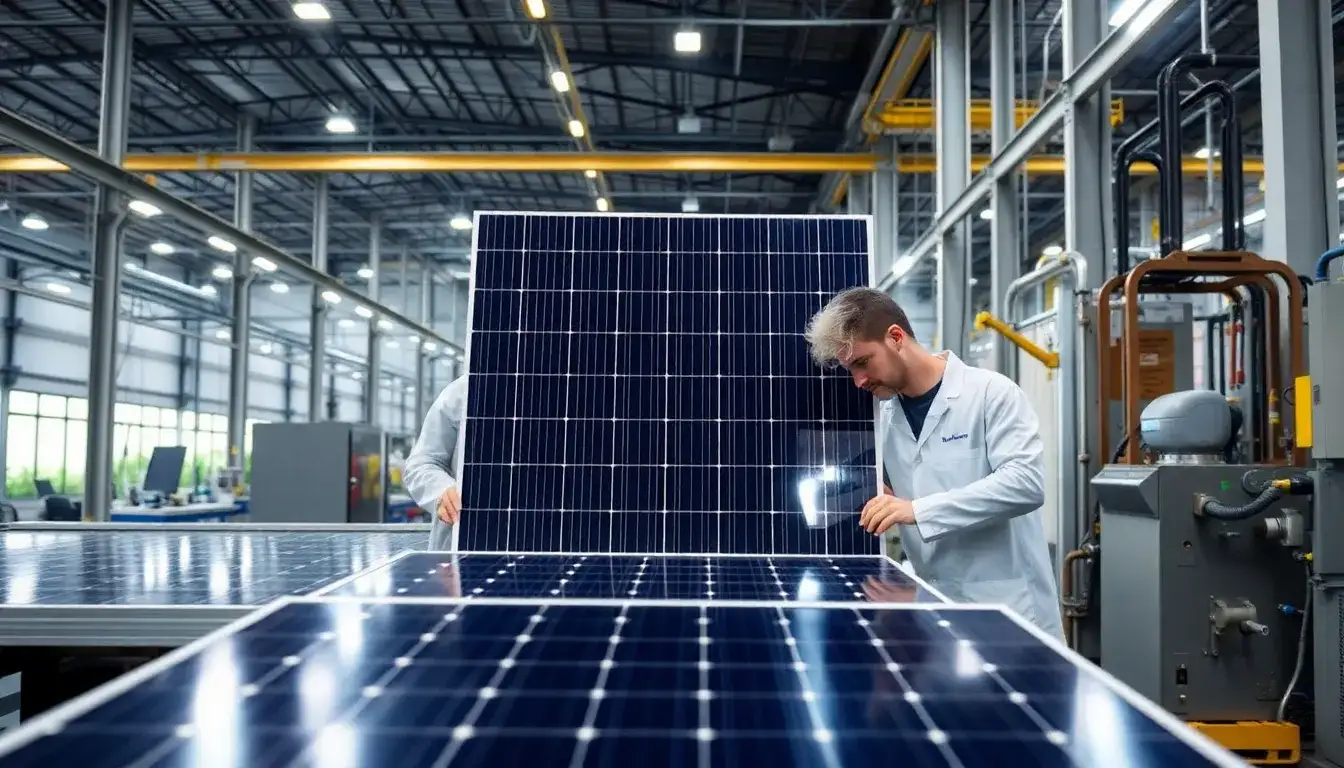
Photovoltaic modules, also known as solar panels or PV modules, are devices that convert light energy directly into electrical energy. The main components of photovoltaic modules include:
- Solar Cells: The basic unit of the photovoltaic module responsible for converting light into electricity.
- Glass: Usually made of tempered glass, which serves a protective function.
- EVA (Ethylene Vinyl Acetate): Used to bond solar cells and the backsheet.
- Backsheet: Protects the rear of the module and prevents moisture ingress.
- Frame: Secures the module and prevents breakage.
- Junction Box: Connects the solar cells to ensure current transmission.
- Busbars and Silicone: Used for connecting and securing the solar cells.
Photovoltaic modules have a wide range of applications, including solar energy systems that provide electricity for homes and integration into buildings, such as windows and skylights. As technology advances, the efficiency of photovoltaic modules continues to improve while costs decrease, leading to widespread adoption globally.
2. Overview of the Photovoltaic Module Supply Chain
The photovoltaic module supply chain consists of several stages:
- Upstream: Includes components and equipment such as solar cells, photovoltaic glass, EVA films, backsheets, aluminum frames, junction boxes, and welding ribbons, as well as equipment like laser cutters, string welders, laminators, framing machines, and testers.
- Midstream: Involves assembly and testing of photovoltaic modules.
- Downstream: Focuses on power generation and applications, including photovoltaic power systems, grid delivery, photovoltaic applications, and building-integrated photovoltaics.
3. Composition of Photovoltaic Module Materials and Recycling Process
Although there is currently only a small amount of photovoltaic waste in the global waste market, dedicated photovoltaic module recycling facilities have started to operate. The general process for handling photovoltaic modules begins with transporting discarded modules to facilities operated by recyclers. The core steps involve specialized processes to separate valuable materials from the modules, including glass, metals, and their compounds. Downstream companies, such as metal refining manufacturers, then purify and refine the recovered materials, allowing them to re-enter the market, not limited to the photovoltaic industry.
3.1 Recycling Technology
The recycling technology for crystalline silicon modules involves two main steps: module disassembly and component recovery.
- Module Disassembly: This primarily relies on three techniques: mechanical disassembly, pyrolysis disassembly, and chemical disassembly.
- Mechanical Method: Uses machinery to separate glass from other materials for glass recovery.
- Pyrolysis Method: Involves heating to decompose the EVA encapsulation layer between the glass and photovoltaic cells for glass separation.
- Chemical Method: Dissolves the polymer encapsulation layer in a chemical solvent for glass separation.
- Component Recovery: The recovery of precious metals (such as silver and copper) from the solar cells is primarily achieved through selective leaching, precipitation, and extraction methods. Additionally, complete solar cells that are disassembled can be repaired to restore their photovoltaic conversion efficiency, allowing them to re-enter the photovoltaic application chain.
4. Necessity of Photovoltaic Module Recycling
The necessity for recycling photovoltaic modules includes:
- High Recycling Value: The materials recovered have significant market value.
- Reducing Waste of Precious Metal Resources: Efficient recovery minimizes resource depletion.
- Preventing Environmental Pollution: Proper recycling avoids improper disposal issues.
- Reducing Carbon Emissions: Recycling contributes to achieving carbon neutrality.
While the photovoltaic industry generates green energy, the carbon emissions throughout the lifecycle of photovoltaic modules—from production to installation and eventual recycling—contribute to their carbon footprint, which is increasingly being scrutinized by importing countries.
5. Rapid Growth of the Photovoltaic Industry and Urgent Need for Recycling
China’s photovoltaic industry has consistently developed at a leading pace globally, with new and cumulative installations accounting for over one-third of the world’s total photovoltaic capacity. For eleven consecutive years, China’s new photovoltaic installations have ranked first globally.
In 2023, global photovoltaic capacity reached an impressive 420 GW, marking an 85% increase year-on-year. Notably, China’s new installations amounted to 261 GW, representing over 60% of the global increase, further highlighting China’s pivotal role in the global photovoltaic market.
As of the end of 2023, global photovoltaic module capacity and production reached 1103 GW and 612.2 GW, respectively, representing year-on-year growth of 61.6% and 76.2%. Crystalline silicon modules remain the market’s mainstream product, with China’s production capacity reaching 920 GW, accounting for 83.4% of global capacity.
With a lifespan of approximately 25 years for solar panels, significant numbers of modules will begin to retire starting in 2025. Properly addressing the disposal of retired photovoltaic modules is becoming increasingly urgent.
6. Global Photovoltaic Recycling Market Exceeds $10 Billion
The global photovoltaic recycling industry has vast market potential. Reports from IRENA and IEA indicate that the global volume of discarded photovoltaic modules could reach 78 million tons by 2050, translating to approximately 4.3 billion discarded modules that will need processing.
By 2030, the recoverable raw materials from photovoltaic panels are estimated to be valued at $450 million (at 2016 prices), equivalent to the raw materials required for approximately 60 million new solar panels or 18 GW of generating capacity. By 2050, this recoverable value could exceed $15 billion, representing 2 billion panels or 630 GW of generating capacity.
7. Global Predictions for Photovoltaic Module Disposal
According to forecasts by the International Energy Agency, around 8 million tons of photovoltaic modules are expected to be recycled by 2030, marking the beginning of a recycling wave. By 2050, nearly 80 million tons of photovoltaic modules will enter the recycling phase. Notably, China will need to recycle approximately 1.5 million tons of modules by 2030, increasing to about 20 million tons by 2050.
8. China’s Recoverable Value from Photovoltaic Modules Exceeds $100 Billion
Predictions from CPIA state that by 2030, China will recycle 1.5 million tons of discarded modules, with this figure rising to 20 million tons by 2050. Due to recent large-scale upgrades of existing projects, the peak of photovoltaic module recycling in China is expected to arrive sooner. For crystalline silicon photovoltaic modules, materials such as glass, aluminum, and semiconductor materials can comprise up to 92%, with about 1% being precious metals like silver. If all materials are recycled, it is estimated that by 2030, 1.45 million tons of carbon steel, 1.1 million tons of glass, 540,000 tons of plastic, 260,000 tons of aluminum, 170,000 tons of copper, 50,000 tons of silicon, and 550 tons of silver could be obtained, with a total recoverable material value of 7.7 billion yuan. By 2040, the cumulative recoverable value could reach 110 billion yuan.
For comprehensive data and in-depth research on the photovoltaic module recycling industry, please refer to the latest exclusive report, “2025 China Photovoltaic Module Recycling Industry Research and In-depth Analysis.”
Original article by NenPower, If reposted, please credit the source: https://nenpower.com/blog/emerging-insights-2025-china-photovoltaic-module-recycling-industry-research-and-analysis-report/

